
Top 10 Most Popular Bird Species in Uganda: Shoebill, Pitta & More
You're planning a Uganda birding tour because you've heard the legends of the prehistoric Shoebill, the jewel-like Pitta, and the elusive forest endemics. We agree: with over 1,100 species crammed into a country the size of Great Britain, Uganda isn't just a birding destination; it's a concentrated avian spectacle where a two-week tour can yield a life list others take decades to build.
This guide promises to be your strategic blueprint. We will move beyond a simple list to give you a clear, actionable plan for encountering Uganda's most celebrated star bird species. You'll learn not just what to see, but precisely where and when to find them, along with the expert tips that turn hopeful glimpses into guaranteed sightings.
We’ll preview the definitive list of ten star birds that define a world-class Uganda birding tour, complete with targeted locations and behavioral insights. You'll then discover how to structure your itinerary, the critical role of specialist guides, and how to time your visit for the ultimate success.
Why Uganda Is a World-Leading Birding Safari Destination
Before we meet the avian celebrities, understand the stage. Uganda's unique selling proposition for birding tours is unparalleled diversity in a compact area. You can search for a rare montane endemic in the morning and cruise a papyrus swamp for a prehistoric giant in the afternoon. This connectivity of vastly different ecosystems, Albertine Rift forests, vast savannas, the Nile basin, and immense wetlands makes every day of a Uganda birding safari uniquely thrilling and productive.
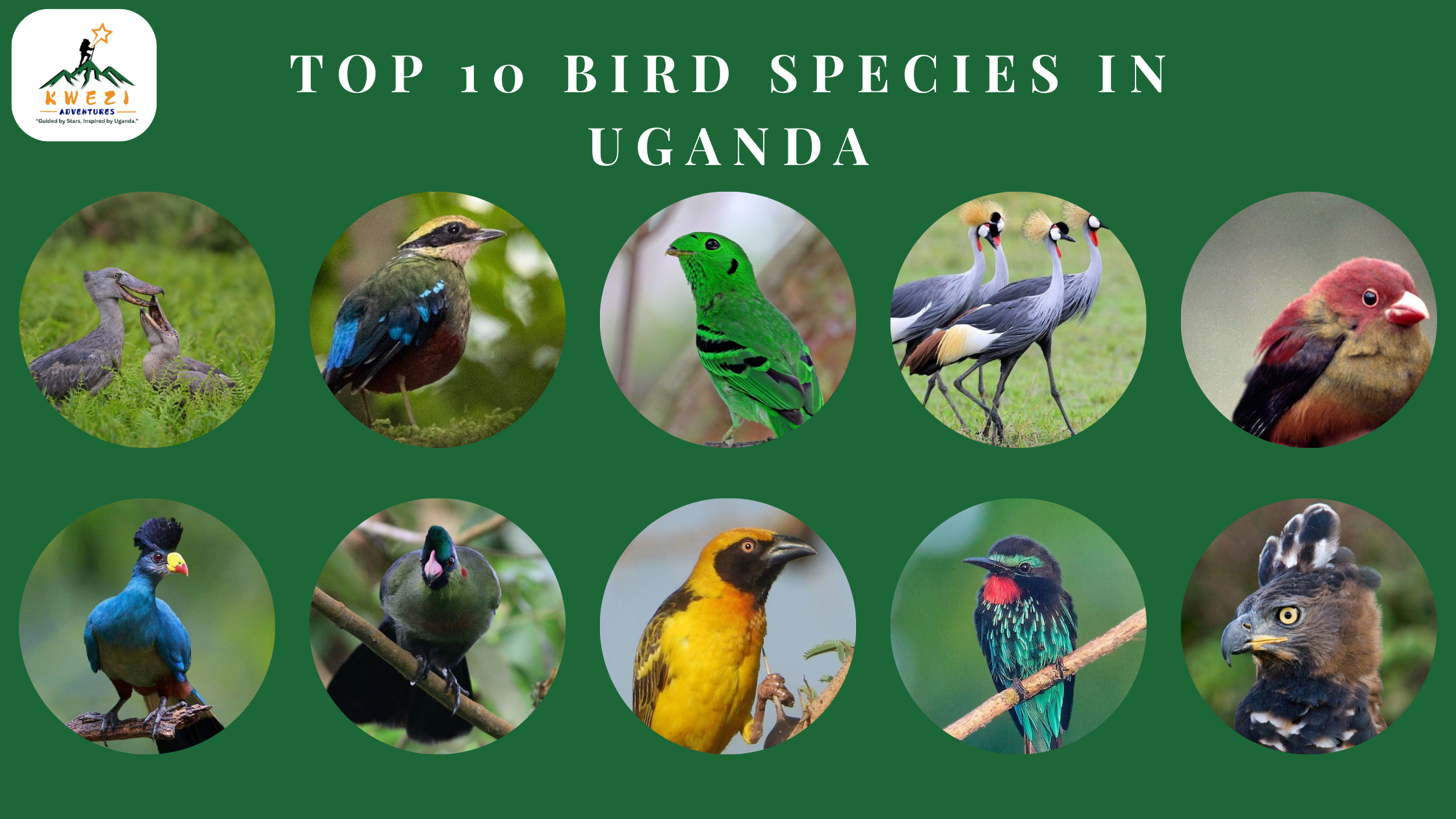
The Definitive List: Uganda's Top 10 Star Bird Species
These are the birds that form the cornerstone of any premier Uganda birding tour. Here is your essential guide to finding them.
1. The Shoebill (Balaeniceps rex)
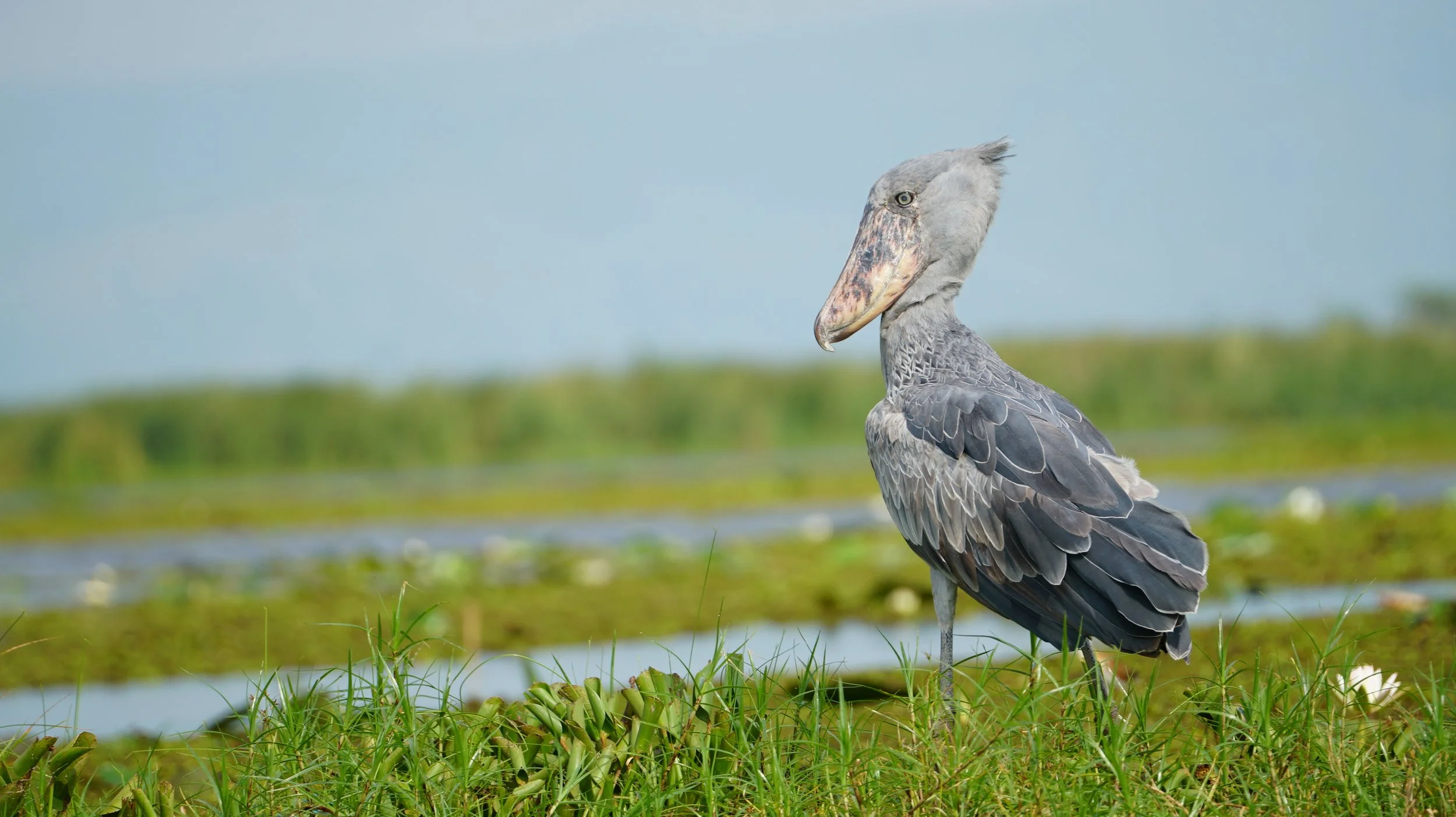
Why it's a star: Africa's most iconic and sought-after bird. A living dinosaur whose sheer size and unique bill make it a bucket-list obsession.
Prime Location: Mabamba Bay Wetland (a 3-hour boat trip from Entebbe). Also in Murchison Falls National Park (Delta area) and Ziwa Rhino Sanctuary.
Key Insight: Early morning canoe trips in Mabamba offer the highest success rate. They are statuesque hunters; patience is key as you watch them stand motionless before a strike.
2. The Green-breasted Pitta (Pitta reichenowi)

Why it's a star: One of Africa's most dazzling and elusive birds, a splash of rainbow colors hidden in the forest floor.
Prime Location: Bwindi Impenetrable Forest, particularly the Buhoma and Ruhija sectors.
Key Insight: Target the breeding season (November to February) when males are vocal. A specialist guide who knows their territories and call playback protocols is non-negotiable.
3. The African Green Broadbill (Pseudocalyptomena graueri)
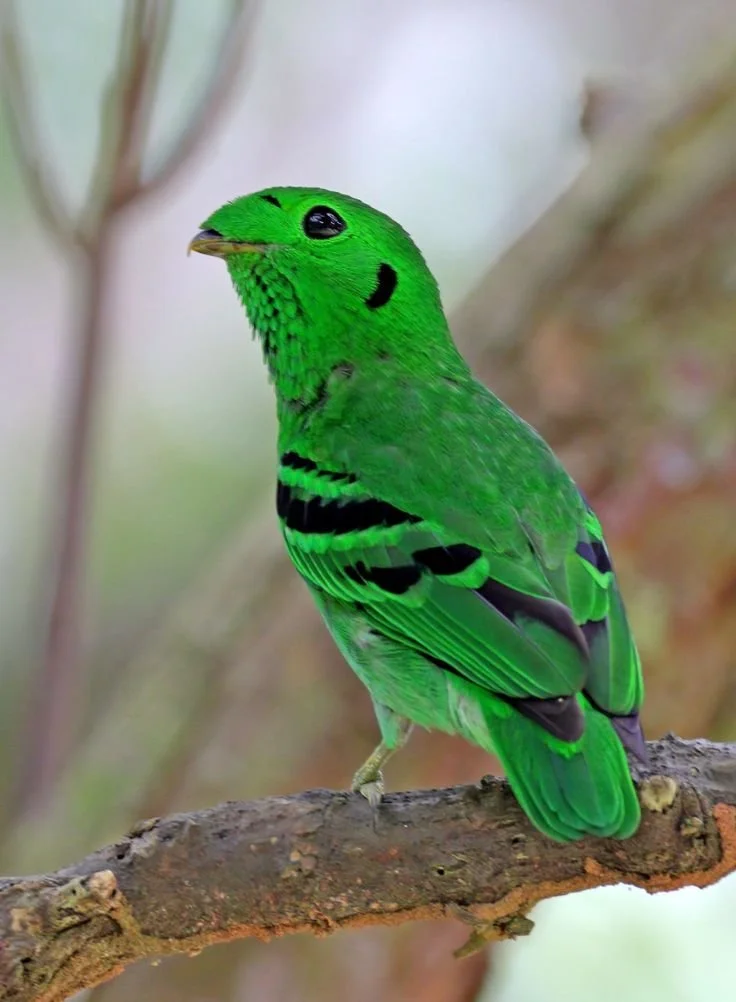
Why it's a star: A charming, vibrant green Albertine Rift endemic that behaves more like a warbler, often found in mixed-species flocks.
Prime Location: Bwindi Impenetrable Forest (Ruhija & Nkuringo sectors) and the Rwenzori Mountains.
Key Insight: Listen for their distinctive, soft trilling calls in the canopy of montane forest. They are more reliable than the pitta but still a prized find.
4. The Grey Crowned Crane (Balearica regulorum)

Why it's a star: Uganda's national bird, elegant and regal, but sadly vulnerable. Seeing it in the wild is a cultural and conservation highlight.
Prime Location: Lake Mburo National Park (easily seen on a walking safari) and wetlands across the country.
Key Insight: Lake Mburo offers incredibly close viewing opportunities, often with families of cranes feeding near the lakeshore.
5. Shelley's Crimsonwing (Cryptospiza shelleyi)
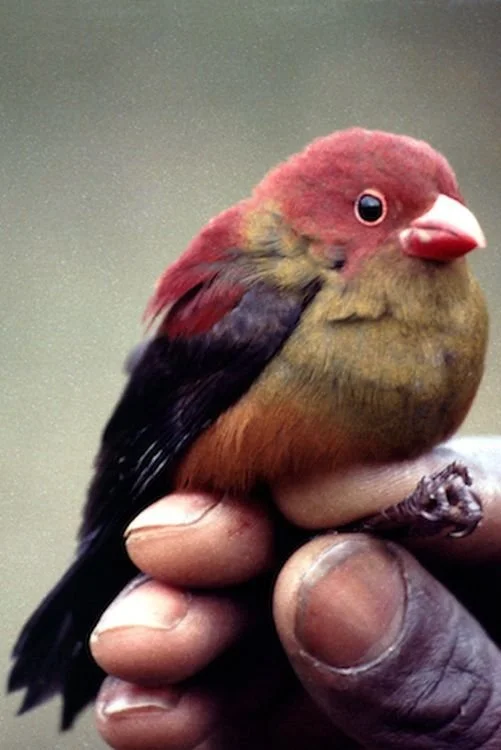
Why it's a star: Perhaps Africa's most elusive finch. This deep crimson and olive bird is a "ghost" of the high-altitude bamboo zones.
Prime Location: Bwindi Impenetrable Forest (Ruhija sector specifically, in bamboo and dense undergrowth).
Key Insight: This is a test of patience and guide skill. Success often involves quiet waits at known feeding areas or bamboo breaks.
6. The Great Blue Turaco (Corythaeola cristata)
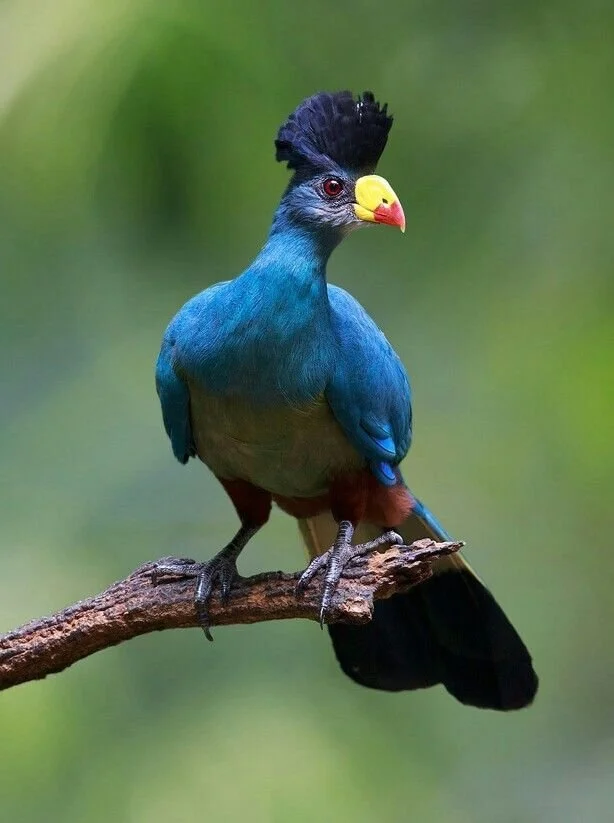
Why it's a star: A large, spectacular, and noisy bird that is surprisingly common in forest canopies. Its brilliant blue and yellow plumage is unforgettable.
Prime Location: Kibale National Park and Budongo Forest. Often heard before it's seen.
Key Insight: An easy "win" on a birding tour, offering fantastic photographic opportunities as they clamber through fruiting trees.
7. The Rwenzori Turaco (Ruwenzorornis johnstoni)
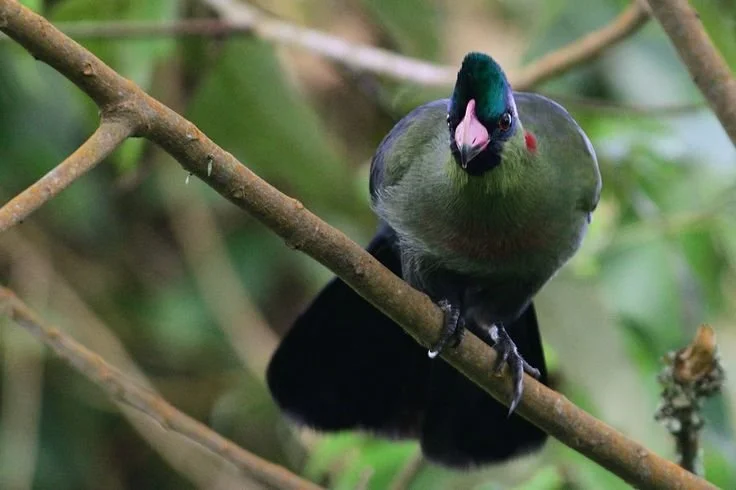
Why it's a star: A stunning Albertine Rift endemic, cloaked in iridescent purple, blue, and green with a bold red crest.
Prime Location: Rwenzori Mountains National Park and Mgahinga Gorilla National Park.
Key Insight: Its raucous call echoes through the montane forest. It's a reliable and photogenic highlight of trekking in the Rwenzoris.
8. The Fox's Weaver (Ploceus spekeoides)
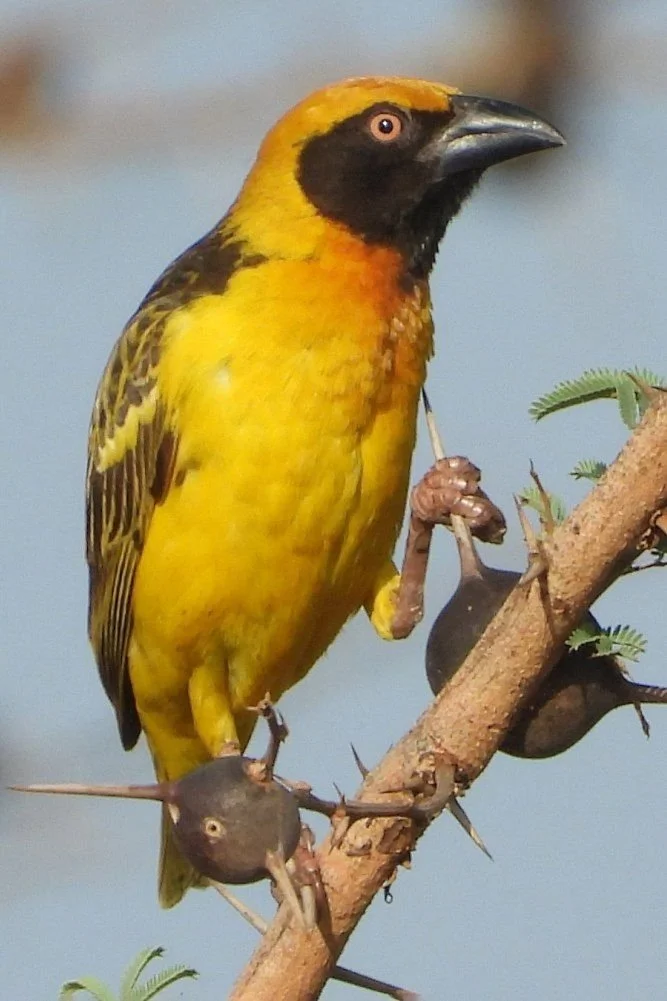
Why it's a star: A Ugandan endemic, found nowhere else on Earth. Identifying this weaver among similar species is a badge of honor for birders.
Prime Location: Lake Mburo National Park and the surrounding savanna-woodland areas.
Key Insight: Look for their messy, colonial nests in acacia trees near water. Breeding males (black-headed) are most distinctive.
9. The Black Bee-eater (Merops gularis)
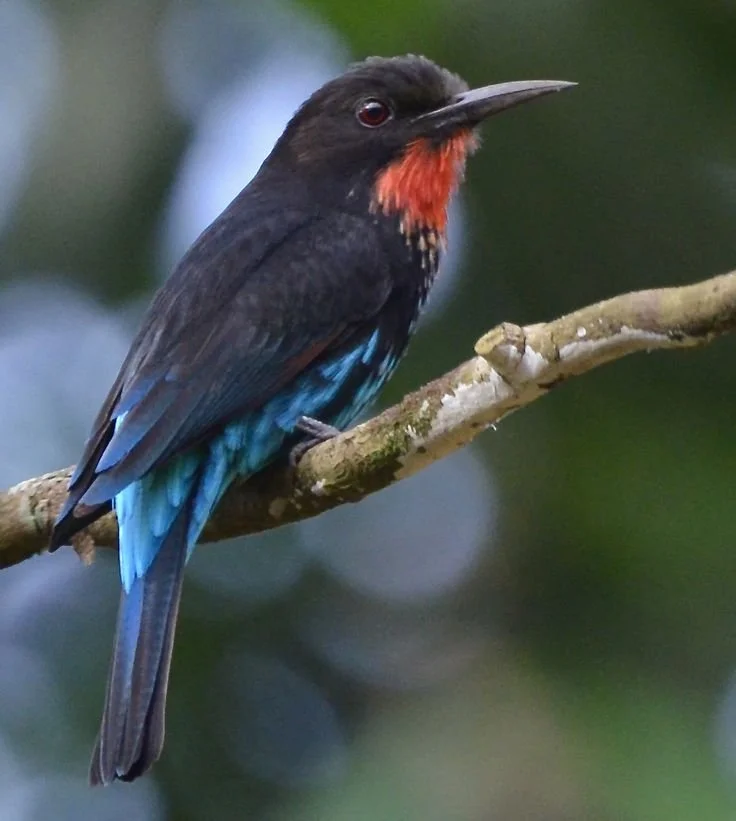
Why it's a star: A stunning, jewel-like bird of forest edges and streams, with contrasting black, blue, and scarlet plumage.
Prime Location: Kibale National Park (especially along the main road) and Queen Elizabeth NP (Mweya area).
Key Insight: Often seen perched conspicuously on dead branches, hawking for insects. They are reliable around the crater lakes near Kibale.
10. The African Crowned Eagle (Stephanoaetus coronatus)
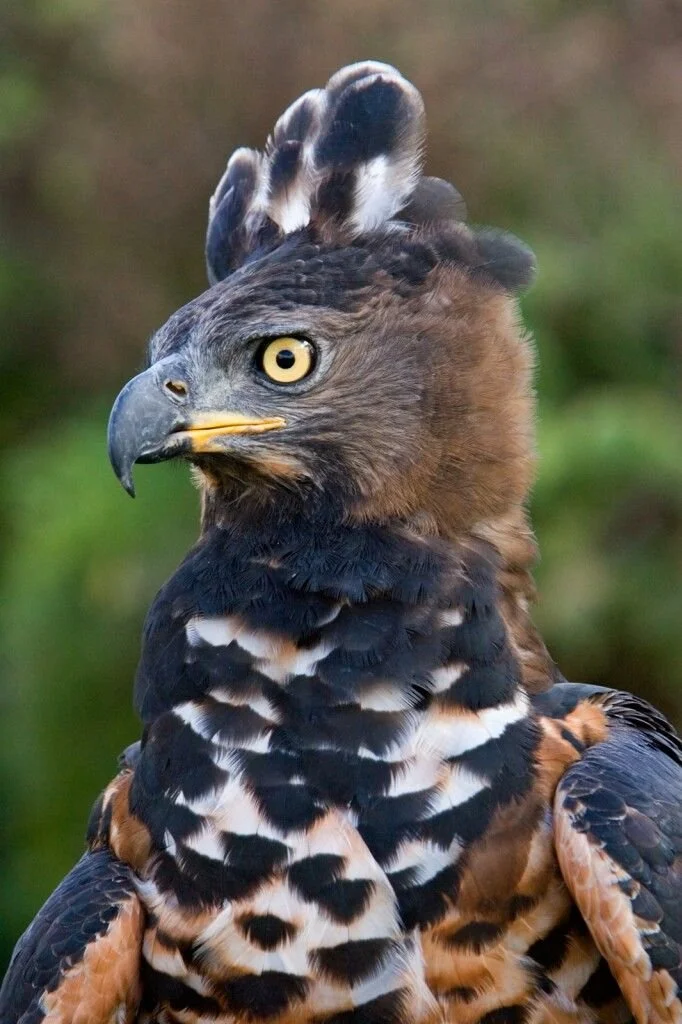
Why it's a star: Africa's most powerful eagle, capable of taking small antelope. A sighting of this apex predator is a thrilling event.
Prime Location: Mature forests like Bwindi and Kibale. Often spotted soaring above forest clearings.
Key Insight: Listen for the distinctive, far-carrying call of a pair. Sightings are often a matter of luck and being in the right habitat.
Structuring Your Ultimate Uganda Birding Tour
A successful tour isn't a random collection of sites; it's a strategic circuit. A classic 10-14-day birding safari might follow this route:
Entebbe & Mabamba: Arrive, target the Shoebill.
Kibale Forest: Chimpanzee tracking and forest birding (turaco, pitta, and bee-eater).
Queen Elizabeth: Combine big game drives with savanna and wetland birding.
Bwindi Impenetrable: The pinnacle for Albertine Rift endemics (pitta, broadbill, and crimsonwing), often combined with gorilla trekking.
Lake Mburo: A finale of relaxed walking safaris for cranes, weavers, and acacia-associated species.
People Also Ask: Your Uganda Birding Tour Questions Answered
Q: What is the absolute best time of year for a Uganda birding tour?
A: It depends on your target. June-August & December-February (dry seasons) offer easier travel and higher shoebill success. November-February is best for breeding activity and seeing the Green-breasted Pitta. March-May & September-November (wet seasons) have lush scenery and high bird activity with fewer tourists.
Q: Can I realistically see all 10 star birds on one tour?
A: A well-designed 14-day tour covering Mabamba, Kibale, Bwindi, and Lake Mburo gives you an excellent chance at 9 out of 10. The most challenging is Shelley's Crimsonwing, which requires luck and dedicated effort in Bwindi. The Crowned Eagle is also never guaranteed.
Q: How important is a specialist bird guide versus a general safari guide?
A: For a serious birding tour, a specialist guide is essential. They possess expert knowledge of bird calls, specific territories (e.g., known pitta display grounds), and identification subtleties (e.g., Fox's vs. other weavers). They are your single greatest asset for finding elusive species.
Q: Is Uganda birding suitable for beginner birdwatchers?
A: Absolutely. While the star species excite experts, the sheer volume and visibility of commoner species, from spectacular turacos and hornbills to colorful sunbirds and bee-eaters, make every day rewarding for beginners. The learning curve is steep and immensely satisfying.
Conclusion: Your Gateway to Africa's Avian Wonders
A Uganda birding tour is an immersion into the heart of African ornithology. It's where legendary birds transition from page to life, and every trail holds the promise of a new discovery.
Ready to turn this list into your life list? Contact Kwezi Adventures to design your customized Uganda birding safari. We partner with Uganda's finest specialist bird guides, own the logistics of permits and transport, and will craft an itinerary focused on your target species, ensuring an efficient, comfortable, and truly unforgettable birding adventure.
