
What to Wear on a Safari in Uganda
Planning your dream safari to Uganda, the "Pearl of Africa," is an exhilarating experience. From tracking majestic mountain gorillas in Bwindi to witnessing the thunderous Murchison Falls, every moment promises adventure. But a common and crucial question arises: what to wear on a safari in Uganda? The right clothing is not about fashion; it’s about comfort, protection, and enhancing your wilderness experience. This definitive guide from Kwezi Adventures will ensure you pack perfectly for Uganda's unique climate and diverse activities.
Why Your Safari Wardrobe Matters in Uganda
Understanding what to pack for an African safari starts with understanding Uganda’s environment. You’ll encounter variable conditions: cool mornings, hot midday sun, sudden rain showers, and dusty trails. Your clothing needs to be a versatile shield. The right safari attire protects you from the sun, insects, and thorny brush while respecting local cultures and ensuring you remain comfortable during long game drives or challenging treks.
The Golden Rule: Layering with Neutral Safari Colors
The cornerstone of any Uganda safari packing list is layering. Mornings in a safari vehicle can be chilly, but temperatures rise quickly.
Base Layer: Start with a moisture-wicking, breathable t-shirt or vest. Avoid cotton, as it retains sweat and dries slowly.
Mid Layer: A long-sleeved shirt is your best friend. It provides sun and insect protection. A lightweight fleece or sweater is perfect for early starts.
Outer Layer: A compact, waterproof windbreaker or light jacket is essential for rain showers and wind in the open vehicle.
Color is critical. Opt for neutral, earthy safari colors like khaki, olive green, beige, and brown. Avoid bright colors (blue, red, and white) and black/dark blue (which attracts tsetse flies). Neutral tones help you blend into the environment, causing less disturbance to wildlife.
Essential Clothing for Game Drives & General Safari
For your daily game viewing adventures in Queen Elizabeth, Murchison Falls, or Kidepo Valley National Parks, comfort in the vehicle is key.
Tops: Long-sleeved safari shirts and short-sleeved tees in neutral tones.
Bottoms: Convertible hiking pants (zip-off to shorts) are incredibly practical. Lightweight, quick-dry chinos or cargo pants are also excellent.
Footwear: Closed-toe shoes are a must. Comfortable sneakers or lightweight hiking shoes are ideal for getting in and out of the vehicle. Pack camp shoes or sandals for relaxing at the lodge.
Specialized Gear for Gorilla & Chimpanzee Trekking
Your gorilla trekking packing list requires more robust items. Trekking in Bwindi Impenetrable or Kibale Forest is a hands-on, muddy, and potentially wet experience.
Must-Haves: Durable, waterproof hiking boots with excellent ankle support and grip. Break them in long before your trip!
Clothing: Tough, long-sleeved shirts and long pants (like gardening gloves) are vital to protect against stinging nettles and thorny vegetation.
Accessories: Waterproof gaiters to keep mud and debris out of your boots and sturdy gardening gloves for grasping vegetation.
Key Accessories for Your Uganda Safari Packing List
These small items make a huge difference in comfort.
Headwear: A wide-brimmed hat or safari hat for sun protection.
Eye Protection: Polarized sunglasses with UV protection.
Daypack: A small, waterproof backpack for your camera, water, and sunscreen.
Sun & Bug Protection: High-SPF, eco-friendly sunscreen and insect repellent with DEET or picaridin.
What NOT to Wear on Your Uganda Safari
To fully answer what to wear on a safari in Uganda, let’s cover what to avoid:
No camouflage clothing: It is often reserved for military personnel in many African countries.
Avoid loud patterns and bright colors.
Leave valuable jewelry at home.
Do not pack heavy denim jeans. They are difficult to clean and dry slowly.
Seasonal Considerations: Packing for Rainy & Dry Seasons
Dry Seasons (June-August, December-February): Focus on sun protection. Nights can be cooler, so a warmer layer is advisable.
Rainy Seasons (March-May, September-November): A high-quality, packable rain jacket or poncho is non-negotiable. Waterproof covers for your camera and daypack are essential. Quick-dry clothing is even more important.
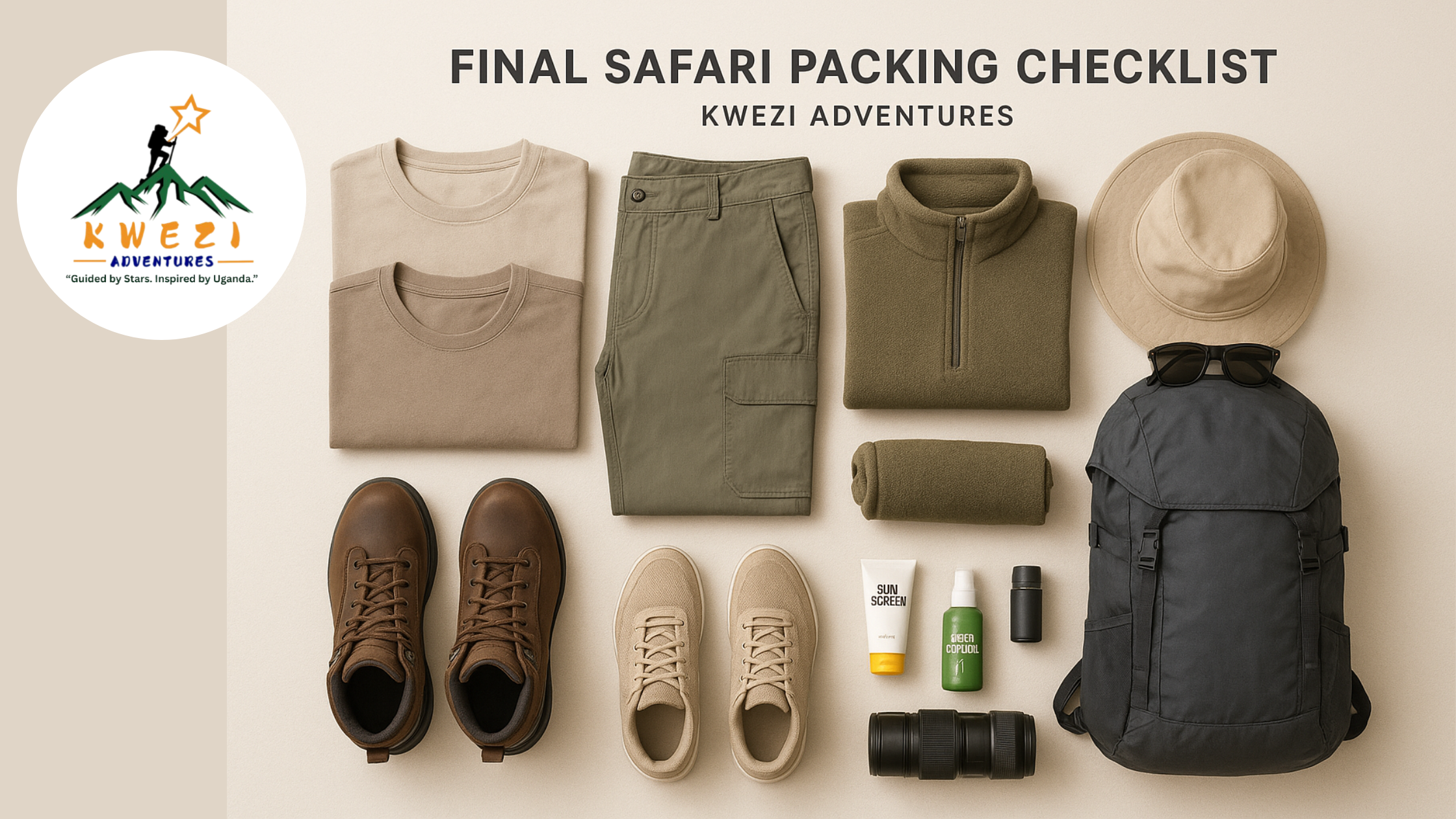
Final Safari Packing Checklist from Kwezi Adventures
Here’s a quick summary of your essential safari packing list:
Neutral-colored long- & short-sleeved shirts
Convertible hiking pants / lightweight trousers
Lightweight fleece or sweater
Waterproof windbreaker/rain jacket
Sturdy hiking boots (for trekking) & comfortable shoes
Wide-brimmed hat and sunglasses
Daypack with rain cover
Sunscreen and insect repellent
Binoculars and camera equipment
By carefully selecting what to wear on a safari in Uganda, you prepare yourself for a seamless and immersive adventure. The right gear allows you to focus on what truly matters: the breathtaking landscapes, the incredible wildlife, and the unforgettable memories you’ll create.
Ready to embark on your perfectly planned Ugandan safari? Contact Kwezi Adventures today to book your tailor-made itinerary. Let our expertise guide you from packing your bag to encountering the majestic gorillas and the Big Five. Your adventure awaits.
