
Anatomy of a Silverback Gorilla
The Kwezi Adventures blog provides a detailed analysis of a silverback gorilla’s physique, focusing on its gorilla anatomy muscles and skeletal structure to explain immense strength, while also noting distinct gorilla anatomy organs (like the specialized jaw and head crest) and offering key points of gorilla anatomy compared to human anatomy, such as bone density and muscle composition.
The moment a majestic silverback gorilla emerges from the dense rainforest, his presence is undeniable. More than just an impressive sight during a gorilla trekking safari, the anatomy of a silverback gorilla is a masterwork of natural engineering, built for undisputed strength, protection, and dominance. At Kwezi Adventures, we guide you to witness these magnificent creatures, and understanding their physical prowess makes the encounter even more awe-inspiring. A past guest, Sarah, shared, 'Seeing the silverback up close was breathtaking. I never imagined I could be so moved by its sheer power and grace. It was the highlight of our trip!' Her experience is what we strive to offer every adventurer who embarks on this journey with us.
But what exactly gives the dominant male of the gorilla troop this legendary, formidable power? It's a combination of unique physical features, muscle composition, and sheer size.
The Defining Physical Features of a Silverback Gorilla
A "silverback" is not a species but an adult male gorilla, typically 12 years or older, identified by the striking saddle of silvery-grey hair that runs down his back. I recall a time when our guide, Sam, first spotted that telling silver streak as we trekked through the early morning mist. His excitement was palpable as he whispered, 'There he is, our gentle giant.' This sign of maturity coincides with the development of the physical features that define the silverback’s supremacy.
Immense Size and Weight
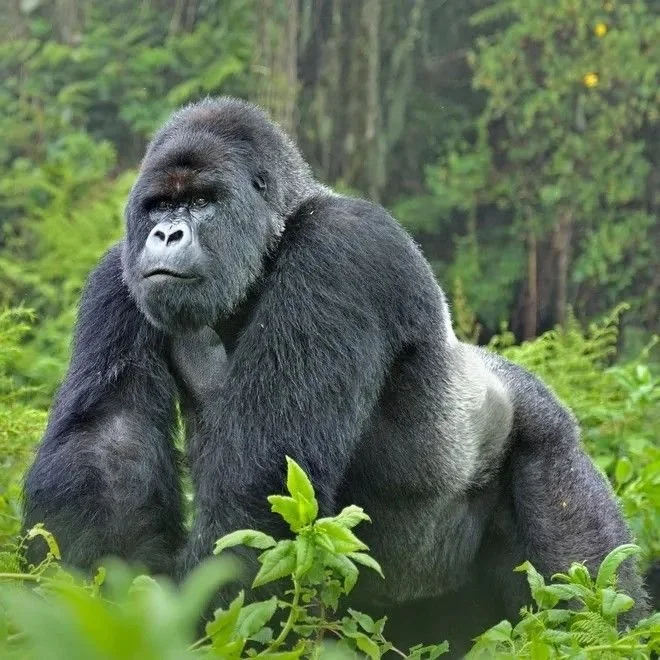
The sheer scale of a silverback is the first indicator of its strength. Standing upright, they can reach heights of up to 6 feet (1.8 meters), but their broad, muscular bodies make them appear even larger. Weighing in at 300 to 440 pounds (136–200 kg), a mature silverback is about the same weight as a large refrigerator or an American professional linebacker, illustrating their formidable presence in the animal kingdom.
Weight: A mature silverback typically weighs between 300 and 440 pounds (136–200 kg) in the wild, often double the weight of an average adult male human. Captive gorillas can weigh even more.
Arm Span: Their arms are disproportionately long and incredibly muscular, with a span that can stretch over 8.5 feet (2.6 meters), significantly longer than their standing height. This extended reach is crucial for climbing, foraging, and their unique mode of travel.
Dense Bone and Robust Skeletal Structure
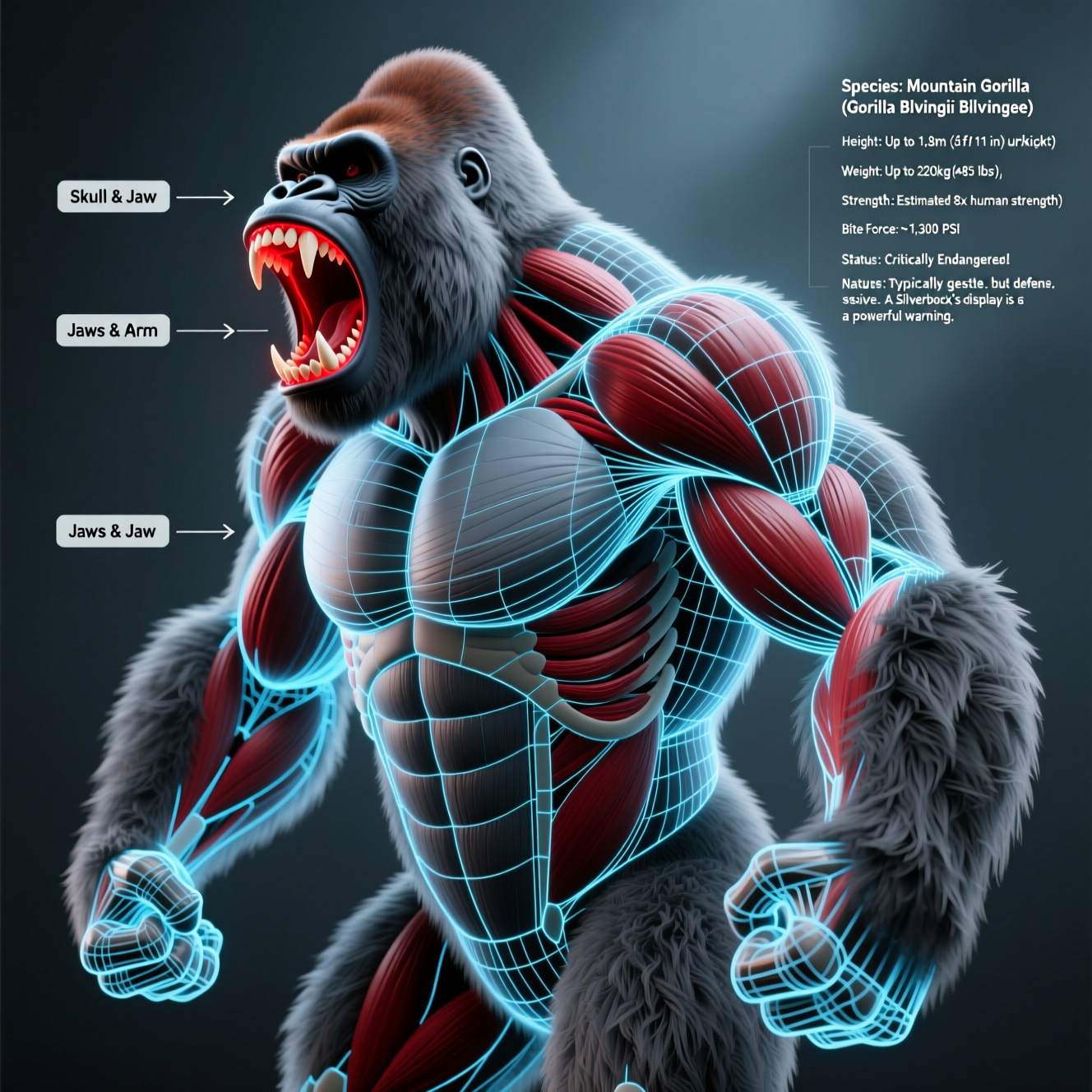
Unlike human bones, gorilla bone structure is exceptionally thick and dense. This robust framework provides the essential foundation needed to support their immense muscle mass and withstand the rigors of their physical lifestyle, from climbing to the explosive mock charges they use to defend their family. The result is a body structure optimized for functional, raw power.
Superior Muscle Composition
A significant part of the anatomy of a silverback gorilla is its muscle tissue. Their muscles are denser and possess a high proportion of "fast-twitch" fibers, which are ideal for short, intense bursts of effort like lifting heavy objects or explosive defensive movements.
Upper Body Strength: The arms, shoulders, and chest are disproportionately massive. This upper body dominance enables their primary mode of movement, known as knuckle-walking, which requires constant exertion.
Strength-to-Weight Ratio: Experts estimate that a silverback gorilla is approximately 4 to 9 times stronger than an average man, capable of lifting dead weights exceeding 1,700 pounds (800 kg).
The Specialized Head: Jaws and Cranial Features
Even the silverback’s head is engineered for power and dominance.
The Powerful Jaw and Canine Teeth
Despite being primarily herbivores, a silverback's teeth are formidable. Their massive jaws, anchored by powerful muscles that stretch over their skull, produce a staggering bite force estimated at around 1,300 pounds per square inch (PSI). This is necessary for grinding tough, fibrous vegetation, but it is also a lethal weapon.
In adult males, the canine teeth are particularly long and sharp. They are not used for hunting prey but are primarily for display and combat, used to intimidate rivals or fend off threats.
The Sagittal Crest and Brow Ridge
If you look at the skull of a silverback gorilla, you’ll notice a prominent ridge running along the top of the head. This is the sagittal crest. This bony ridge acts as an anchor point for the incredibly powerful temporalis muscles, which are the main muscles used for chewing, directly supporting their phenomenal jaw strength.
Additionally, a prominent, continuous brow ridge sits above their eyes, offering protection and further reinforcing the skull structure.
Strength with a Purpose: Dominance and Protection
The anatomy of a silverback gorilla is ultimately an adaptation for survival and leadership. The silverback gorilla's strength is rarely used in outright aggression but is constantly on display to assert his role as the protector of his family troop.
Their iconic chest-beating display, often accompanied by charging and vocalizations, is a warning and an impressive demonstration of their physical prowess intended to deter rivals or predators without resorting to a costly physical fight. It is a calculated use of their incredible silverback features to maintain peace and order within the family.
Experience the Majesty of the Largest Primate
Witnessing these majestic creatures in their natural habitat is a truly humbling experience. The intricate anatomy of a silverback gorilla tells a story of evolutionary power and dedicated leadership.
Ready to see these awe-inspiring leaders in the rainforests of Uganda or Rwanda? Contact Kwezi Adventures to book your unforgettable gorilla trekking safari and come face-to-face with the gentle giants of the Bwindi Impenetrable Forest.
