
Habituated Gorilla Families in Uganda 20+ Groups
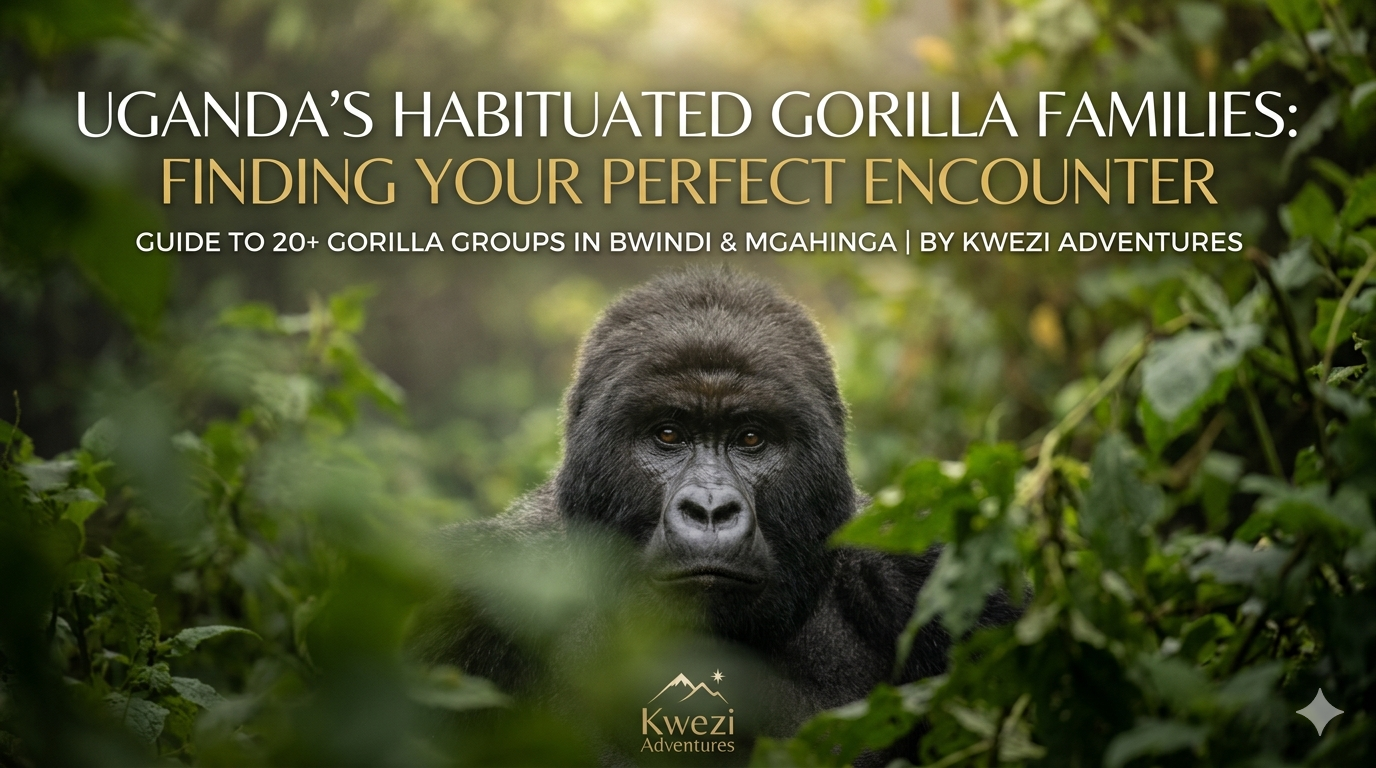
For over a decade, Kwezi Adventures has guided discerning travelers into the misty forests of Bwindi and the volcanic slopes of Mgahinga. We've witnessed the heart-stopping moment when a silverback first emerges from the foliage, the gentle curiosity of a juvenile reaching toward visitors, and the profound silence that falls over a group observing a mother nursing her infant. Each encounter is unique because each gorilla family has its story, personality, and history.
Uganda is home to more than 20 habituated gorilla families in Uganda, representing nearly half of the world's remaining mountain gorilla population. Understanding these families, where they live, how they formed, and what makes each distinct is essential to crafting your perfect gorilla trekking experience. As Uganda-based specialists, we know these groups intimately, from the pioneering Mubare family to the newly established families emerging in Rushaga.
The Uganda Wildlife Authority (UWA) regulates gorilla trekking with rigorous protocols that prioritize conservation while enabling transformative visitor experiences. The habituation process takes years, requiring daily contact with researchers before a family is deemed ready for tourism. This careful approach has contributed to mountain gorilla populations rising from 620 individuals in 1989 to over 1,000 today. Our information draws from UWA sources and direct field experience.
This comprehensive guide provides current information on each gorilla family, their sectors, trekking difficulty, and unique characteristics. We update this data regularly as families split, form, or change leadership. When you book with Kwezi Adventures, you benefit from our up-to-the-minute knowledge of which families offer the experiences you seek, whether that's a relatively easy trek, a challenging high-altitude adventure, or the rare opportunity for extended observation.
We'll introduce you to the four trekking sectors of Bwindi Impenetrable National Park, profile each of the 20+ habituated gorilla families, explore Mgahinga's unique Nyakagezi group, explain the difference between standard trekking and the Gorilla Habituation Experience, and answer all your questions about planning your encounter with these magnificent creatures.
Understanding Gorilla Habituation: What It Means and Why It Matters
Before we meet the families, it's essential to understand what "habituation" truly means. Mountain gorillas are wild animals, and the process of acclimating them to human presence is neither quick nor simple. It takes two to three years of daily contact by researchers and conservationists before a gorilla group is considered fully habituated for tourism.
During this period, trackers spend hours each day with the gorillas, gradually reducing their fear of humans while maintaining their wild nature. The result is a family that tolerates human presence for a limited time, typically one hour, without altering their natural behaviors. This careful balance ensures both visitor safety and gorilla well-being.
Uganda pioneered this approach, with the first successful habituation occurring in Bwindi's Buhoma sector in the 1990s. Today, over 20 habituated gorilla families in Uganda represent one of conservation's greatest success stories.
The Four Sectors of Bwindi Impenetrable National Park
Bwindi's 20+ gorilla families are distributed across four distinct sectors, each offering different terrain, trekking difficulty, and accommodation options.
Buhoma
Northern Mubare, Habinyanja, Rushegura, and Katwe have gentle terrain and the easiest access.
Ruhija
Eastern Bitukura, Oruzogo, Kyaguriro, Mukiza Higher altitude, forest views
Rushaga
Southern Nshongi, Mishaya, Bweza, Kahungye, Busingye, Rwigi, Mucunguzi, and Bikyingi are mostly families home to the Habituation Experience.
Nkuringo
Southern Nkuringo, Christmas, Bushaho, Posho High altitude, challenging treks, spectacular views
Buhoma Sector: Where Gorilla Trekking Began
Buhoma holds a special place in Uganda's conservation history. Here, in the late 1990s, the first gorilla families were habituated, opening the door to what would become one of the world's most sought-after wildlife experiences.
Mubare Family: The Pioneers
Habituated: 1998
Characteristics: The oldest habituated group in Uganda. Led by a dominant silverback, this family has weathered leadership changes while maintaining its place as a trekker favorite.
This family was the first to welcome visitors into the world of mountain gorillas. Their long history with humans means they are often more relaxed than younger families. The Mubare group typically resides in relatively accessible areas of Buhoma, making them a good choice for first-time trekkers.
Habinyanja Family: The Experienced
Habituated: 1997 (first visited in 1999)
Characteristics: One of the largest families in Buhoma, known for strong silverback leadership.
Habinyanja was habituated alongside Mubare and has developed its own distinct social dynamics. The family has experienced leadership changes over the years, with different silverbacks taking charge, offering fascinating glimpses into gorilla social structure.
Rushegura Family: The Calm Group
Formed: 2000
Characteristics: Known for its peaceful demeanor, this group split from Habinyanja and established its own territory.
Rushegura is often recommended for those seeking a calmer, more relaxed encounter. The group has proven stable over decades, with consistent leadership and steady growth.
Katwe Family: The Newcomers
Characteristics: A newer group in Buhoma, adding to the sector's diversity.
Katwe represents the ongoing evolution of Bwindi's gorilla families. As groups split and new families form, this sector continues to grow its resident population.
Ruhija Sector: High Altitude, Spectacular Views
Ruhija sits at a higher elevation than other sectors, offering trekkers breathtaking views across the forest canopy. The altitude adds a physical challenge but rewards with unique encounters.
Bitukura Family: The Peaceful Ones
Habituated: 2008
Characteristics: Known for being exceptionally peaceful and relaxed with visitors.
Bitukura's gentle nature makes it popular among trekkers. The family lives in the forested hills of Ruhija, and their calm demeanor allows for unhurried observation of natural behaviors.
Oruzogo Family: The Baby Boom Group
Characteristics: Famous for having many infants and juveniles, making for lively, engaging treks.
Oruzogo is a favorite for families and photographers, as the constant activity of young gorillas provides endless photographic opportunities. The playful antics of juveniles against the backdrop of Ruhija's high-altitude forest create unforgettable moments.
Kyaguriro Family: The Research Group
Characteristics: Often used for research purposes, offering insights into gorilla behavior beyond typical trekking.
Researchers have studied Kyaguriro extensively, contributing valuable data to mountain gorilla conservation. Treks to this family provide opportunities to learn about ongoing scientific work.
Mukiza Family: The Split Group
Characteristics: Formed from Kyaguriro, representing the dynamic nature of gorilla social structures.
Mukiza's emergence demonstrates how gorilla families evolve, with younger silverbacks forming their own groups. This family offers trekkers insight into gorilla social dynamics.
Rushaga Sector: Home to the Most Families and the Habituation Experience
Rushaga is Bwindi's most active sector, hosting the highest concentration of gorilla families and the exclusive Gorilla Habituation Experience. The terrain varies from moderate to challenging, and the sector offers the widest range of accommodations.
Nshongi Family: The Original Giant
Characteristics: The largest group initially, which has since split into several other families.
Nshongi was once the largest habituated family in Bwindi. Its subsequent splits created Mishaya, Bweza, and other groups, demonstrating how successful conservation leads to population growth and new family formation.
Mishaya Family: The 2010 Split
Split from Nshongi: 2010
Characteristics: Formed by a charismatic silverback, this family has established its own distinct territory.
Mishaya's silverback was known for his assertive leadership during the split. Today, the family continues to thrive in Rushaga's forests.
Bweza Family: The 2013 Split
Split from Nshongi: 2013
Characteristics: Another successful split from Nshongi, establishing a stable territory.
Bweza has since grown and even experienced its own splits, with Mucunguzi emerging as a separate family.
Kahungye Family: The Research Family
Opened for trekking: 2011
Characteristics: A large family that has since experienced internal splits.
Kahungye has been a rich source of research data, with multiple silverbacks leading to the formation of the Busingye and Rwigi groups.
Busingye Family: The Kahungye Split
Split from Kahungye: Part of the family's ongoing evolution
Characteristics: Named for its dominant silverback, this group has established its own territory.
Rwigi Family: The Kahungye Split
Split from Kahungye: Another branch from this productive family
Characteristics: A newer group adding to Rushaga's diversity.
Mucunguzi Family: The Bweza Split
Split from Bweza: Demonstrating ongoing population growth
Characteristics: A new family formed from Bweza, showing the dynamic nature of gorilla communities.
The Bikyingi Family: The Newest Arrival
Characteristics: A recently habituated group adding to Rushaga's offerings.
Bikyingi represents the continued expansion of Uganda's habituated gorilla population, with new families being added as conservation efforts succeed.
Nkuringo Sector: High Altitude, Challenging Treks, Spectacular Views
Nkuringo sits on the southern edge of Bwindi, offering some of the park's most dramatic scenery and most physically demanding treks. The sector rewards trekkers with unforgettable encounters against breathtaking backdrops.
Nkuringo Family: The Pioneers of the South
Characteristics: The first group habituated in this region, opening the southern sector to tourism.
Nkuringo was habituated to provide trekking opportunities in what was then a remote part of the park. The family has adapted to human presence while maintaining the wild character of this challenging terrain.
Christmas Family: The Border Dwellers
Characteristics: Known to live near the park boundary, offering unique trekking experiences.
This family's territory near the forest edge provides interesting opportunities to observe how gorillas interact with protected area boundaries.
Bushaho Family: From Research to Trekking
Characteristics: Formerly a research-only group, now available for trekking.
Bushaho's transition from research focus to tourism demonstrates how conservation priorities evolve as populations grow.
Posho Family: The Newest Addition
Characteristics: A new family in the Nkuringo area, expanding the sector's offerings.
Posho represents the ongoing habituation work that continues to add families to Uganda's gorilla tourism portfolio.
Mgahinga Gorilla National Park: The Nyakagezi Family
Nyakagezi Family: The Virunga Wanderers
Characteristics: The only habituated family in Mgahinga, known for its stability after previously roaming between Uganda, Rwanda, and Congo.
Nyakagezi has a fascinating history. Unlike Bwindi's families, which remain within the park's boundaries, this group once regularly crossed international borders. In recent years, however, the family has established a more stable territory within Uganda, allowing consistent trekking opportunities.
With its multiple silverbacks and unique location on the volcanic slopes of the Virunga massif, Nyakagezi offers a distinct experience from Bwindi's forest families. Only eight permits are available daily, making this one of the most exclusive gorilla encounters in Africa.
Standard Trekking vs. Gorilla Habituation Experience
For most visitors, the standard gorilla trekking experience provides one hour with a fully habituated family. However, Uganda offers something truly special: the Gorilla Habituation Experience.
Standard Gorilla Trekking
Permit Cost (2026): $800
Duration with Gorillas: 1 hour
Group Size: Maximum 8 visitors
Location: Any habituated family across Bwindi's sectors or Mgahinga
Best For: Most travelers seeking the classic mountain gorilla encounter
Gorilla Habituation Experience
Permit Cost (2026): $1,500
Duration with Gorillas: Up to 4 hours
Group Size: Maximum 4 visitors
Location: Rushaga sector (families in active habituation)
Best For: Photographers, researchers, and travelers seeking deeper immersion
During the Habituation Experience, you accompany researchers as they continue the years-long process of acclimating a gorilla group to human presence. You'll witness behaviors rarely seen during standard treks, spend extended time observing, and contribute directly to conservation science.
As one participant noted, "The extra cost is well worth it for the extended time and the privilege of being part of the habituation process itself."
Choosing Your Gorilla Family: Factors to Consider
When planning your Uganda safari, several factors influence which family you'll trek:
Trekking Difficulty
Buhoma offers easier terrain; Nkuringo and Rushaga can be more challenging.
Family Size
Larger families offer more social interactions; smaller groups may feel more intimate.
Location
Sector choice affects logistics and accommodation options.
Time of Year
Families move seasonally; guides know current locations.
Personal Interests
Habituation experience for deeper immersion; specific families for known characteristics
Our recommendation: Trust your tour operator to match you with the right family based on your fitness level, interests, and current conditions. At Kwezi Adventures, we communicate directly with UWA rangers to ensure your assignment aligns with your expectations.
People Also Ask About Gorilla Families in Uganda
Q: How many habituated gorilla families are there in Uganda?
A: Uganda has over 20 habituated gorilla families across Bwindi Impenetrable National Park and Mgahinga Gorilla National Park. The majority are in Bwindi, with Mgahinga hosting one family, Nyakagezi.
Q: What is the difference between trekking in Bwindi vs Mgahinga?
A: Bwindi offers over 20 families across four sectors, providing more flexibility in permit availability and trek difficulty. Mgahinga offers a single family, Nyakagezi, with only 8 daily permits, creating a more exclusive experience on volcanic terrain.
Q: What is the Gorilla Habituation Experience, and where can I do it?
A: The Gorilla Habituation Experience allows up to four hours with a gorilla family undergoing habituation. It's available exclusively in Bwindi's Rushaga sector. The permit costs $1,500, compared to $800 for standard trekking.
Q: How often do gorilla families split, and why?
A: Family splits occur when younger silverbacks leave to form their own groups, typically every few years. This is natural population growth and a sign of successful conservation. Recent splits include Mucunguzi from Bweza and Busingye from Kahungye.
Q: Which gorilla family is best for first-time trekkers?
A: Families in the Buhoma sector, particularly Mubare or Rushegura, are often recommended for first-time trekkers due to relatively accessible terrain and calm group dynamics. However, the best assignment depends on your fitness level and current gorilla locations.
Q: Can I request a specific gorilla family?
A: While you can express preferences, final assignments are made by UWA rangers on the trekking day based on family locations, visitor fitness levels, and daily permit allocations. Your tour operator can advocate for preferences during permit booking.
Q: How long does it take to habituate a gorilla family?
A: The full habituation process typically takes two to three years of daily contact before a family is ready for tourism. The Gorilla Habituation Experience offers a window into this ongoing process.
Q: What is the largest gorilla family in Uganda?
A: Family sizes fluctuate as groups split and new members are born. Kahungye was once one of the largest, and the Rushaga sector generally hosts the highest concentration of families.
Q: Are all gorilla families in Bwindi accessible year-round?
A: Yes, all habituated families are accessible year-round, though trekking conditions vary by season. During wet seasons (March–May, October–November), trails become muddier, and some families may be deeper in the forest.
Your Encounter with Uganda's Gorilla Families Awaits
Each of Uganda's 20+ habituated gorilla families in Uganda represents a remarkable conservation success story. From the pioneering Mubare group that first welcomed visitors in 1998 to the newly habituated families emerging in Rushaga and Nkuringo, these gorillas embody the triumph of dedicated protection, scientific research, and community involvement.
When you trek to meet them, whether for a standard hour or the extended Habituation Experience, you become part of this story. Your permit fees fund the ongoing protection that ensures these families continue to thrive.
At Kwezi Adventures, we've guided travelers to every sector, every family, and every type of encounter. We know which groups are currently calm, which offer the best photography opportunities, and which require extra preparation. Let us match you with the perfect gorilla family for your dream safari.
Ready to meet the mountain gorillas of Uganda?
Contact Kwezi Adventures today. Together, we'll craft a journey that brings you face-to-face with one of these extraordinary families and leaves you forever changed by the encounter.
