
The Role of Silverback Gorillas in Their Ecosystem: How silverbacks contribute to forest health and biodiversity.
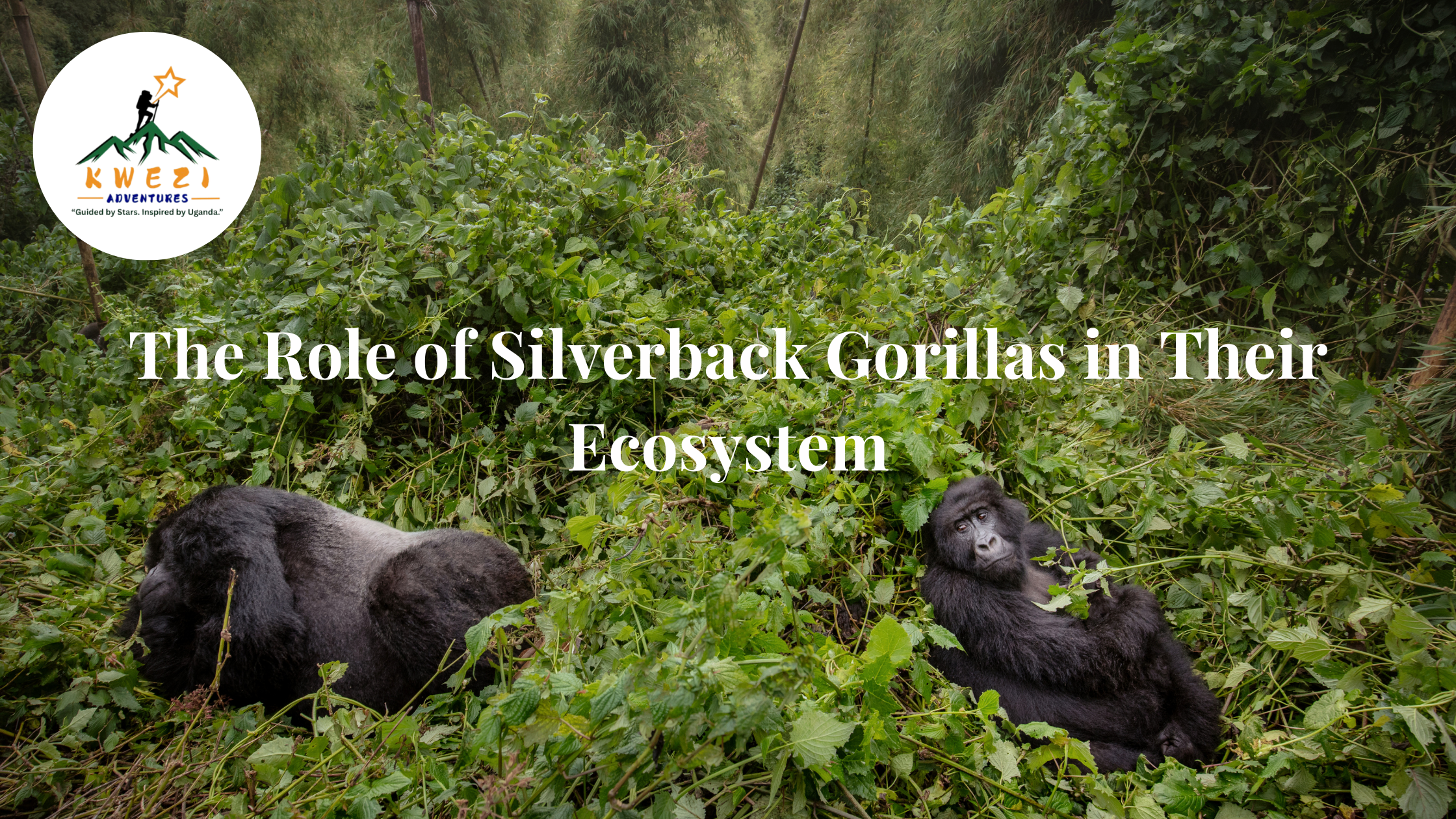
When you encounter a mighty silverback gorilla during a Kwezi Adventures trekking safari, you are witnessing more than just a magnificent primate; you are observing a true ecological engineer. While often celebrated for their immense size, protective leadership, and sheer strength, the role of silverback gorillas in their ecosystem is far more subtle and profound. They are the unsung gardeners of the tropical rainforests, playing a critical role in maintaining forest health and the biodiversity that makes these habitats so rich.
Understanding this vital contribution transforms a simple sighting into a lesson in natural balance. Let's delve into the fascinating ecological services provided by these powerful herbivores.
Forest Gardeners: Gorillas as Dispersers of Seed
One of the most significant aspects of the role of silverback gorillas in their ecosystem is their function as seed dispersers. As large-bodied, herbivorous primates, gorillas consume vast quantities of vegetation daily—up to 18 kilograms (40 pounds) for a silverback.
The Mechanics of Seed Dispersal
Ingestion and Passage: When gorillas eat fruits, the seeds are often swallowed whole. Their digestive system is highly efficient at processing the tough, fibrous outer layers of plants, but is gentle enough on many seeds to pass them through intact.
Widespread Distribution: Unlike smaller animals, gorillas have large home ranges and travel several kilometers each day while foraging. This mobility is key to forest regeneration; they can consume fruit in one location and deposit the seeds in their nutrient-rich feces hours later, far away from the parent plant. This prevents seeds from competing with the mature tree and allows new life to colonize different parts of the forest.
Scarification and Germination: For some plant species, the passage through the gorilla’s gut actually improves the seeds' chances of germination. The mild abrasion (scarification) of the seed coat helps water penetrate, preparing the seed to sprout.
This specialized method of spreading viable seeds of numerous plant species is essential for maintaining genetic diversity and ensuring the continued life of the forest.
Maintaining Understory Health and Plant Diversity
Beyond seed dispersal, the feeding habits of the silverback and his troop actively sculpt the forest environment, contributing directly to forest health.
Selective Foraging and Biomass Management
Gorillas are primarily folivores (leaf-eaters), but their diet also includes stems, pith, bark, and, when available, fruits.
Preventing Monocultures: By consuming large amounts of specific plants, they prevent dominant plant species from overgrowing the forest floor. This natural clearing creates pockets of light and space, allowing smaller, less competitive plant species to access sunlight and grow. This promotes greater plant diversity within the forest.
Nutrient Cycling: The large volume of plant material they consume is processed and returned to the soil as nutrient-rich fertilizer via their feces. This recycling of nutrients is fundamental to the overall health and fertility of the forest soils, effectively acting as a nutrient pump for the ecosystem.
Keystone Species Status: A Symbol of Forest Balance
Because of their significant influence on both forest structure and plant regeneration, silverback gorillas are considered a keystone species in their habitat. A keystone species is one that, despite its relatively small abundance, has a disproportionately large impact on its environment.
The continued existence of a robust gorilla population is a barometer for the health of the entire ecosystem. If silverbacks and their troops decline, the entire forest structure would change over time due to the loss of their specialized dispersal and foraging functions, leading to reduced tree diversity and an imbalanced understory.
The Conservation Connection
For Kwezi Adventures, our commitment to responsible gorilla trekking is rooted in the recognition of the role of silverback gorillas in their ecosystem.
Tourism Funds Conservation: The revenue generated from gorilla safaris in countries like Uganda and Rwanda directly funds anti-poaching patrols, habitat protection, and community development. Protecting the gorillas means protecting the entire forest, benefiting thousands of other species, from rare birds to medicinal plants.
Guardians of Biodiversity: The silverback is, therefore, not only the protector of his troop but also a guardian of the massive biodiversity of the Virunga Massif and Bwindi Impenetrable Forest.
By choosing Kwezi Adventures, you are supporting the conservation efforts that ensure these incredible forest gardeners can continue their vital work for generations to come.
FAQS
1. How does my presence on a gorilla trek affect the gorillas and their habitat?
Your presence, when guided by responsible tourism practices, has a minimal and carefully managed impact on gorillas and their environment. At Kwezi Adventures, we strictly adhere to guidelines set by national park authorities and conservation organizations, such as maintaining a safe distance (minimum 7 meters), limiting group size (typically 8 visitors per gorilla group), and restricting visit duration to one hour. These measures reduce stress on the gorillas, limit disease transmission, and help preserve natural behaviors.
Importantly, regulated gorilla trekking plays a vital role in conservation. Permit fees and tourism revenue fund anti-poaching patrols, habitat protection, and community development, all of which directly benefit gorilla populations. In fact, mountain gorillas are one of the few great ape species whose numbers are increasing, largely thanks to responsible ecotourism.
2. What specific conservation projects or initiatives does Kwezi Adventures support with safari revenue?
A portion of every safari booking with Kwezi Adventures contributes directly to on-the-ground conservation and community initiatives, including:
Support for park rangers and anti-poaching units in Bwindi Impenetrable National Park (Uganda) and Volcanoes National Park (Rwanda).
Funding for habitat restoration, including reforestation and invasive species removal.
Partnerships with local NGOs like the Dian Fossey Gorilla Fund and the International Gorilla Conservation Programme (IGCP).
Community-based programs, such as healthcare access, clean water projects, and educational scholarships in villages bordering gorilla habitats, help reduce human-wildlife conflict and foster local stewardship.
We are transparent about our partnerships and can share impact reports with interested guests upon request.
3. Are there ways for visitors to further contribute to gorilla conservation beyond booking a safari?
Absolutely! We encourage guests who are passionate about gorilla conservation to get involved in the following ways:
Donate directly to trusted conservation partners we work with (we can provide verified links and guidance).
Adopt a gorilla symbolically through organizations like the Dian Fossey Gorilla Fund.
Volunteer (where permitted) in community education or reforestation programs arranged in advance through Kwezi Adventures.
Spread awareness by sharing your ethical travel experience and educating others about sustainable tourism.
Purchase locally made crafts during your trip; proceeds support community livelihoods and reduce pressure on forest resources.
We’re happy to help tailor meaningful conservation engagement opportunities to your interests.
4. What should I expect during a gorilla trekking experience with Kwezi Adventures?
Your gorilla trekking day begins early (typically around 7:00 AM) with a briefing by park rangers at the national park headquarters. After being assigned to a small group and a habituated gorilla family, you’ll set off into the forest with experienced trackers and your Kwezi guide.
The trek can last anywhere from 30 minutes to several hours, depending on the gorillas’ location, so be prepared for uneven terrain, mud, and dense vegetation. Our guides carry essentials like water, snacks, and first-aid kits, and porters (available for hire) can assist with your daypack.
Once you locate the gorilla family, you’ll spend one unforgettable hour observing them from a respectful distance, watching them feed, play, rest, and interact. Photography is allowed (without flash), and our guides ensure you follow all park etiquette.
After your trek, you’ll receive a certificate of participation, and we’ll debrief over lunch while sharing insights about what you witnessed. It’s not just a safari; it’s a deeply moving encounter with our closest wild relatives.
