
Start Your Nighttime Primate Adventure
Kwezi Adventures designs night walks to see Uganda's nocturnal primates. Explore our night tour packages →
Introduction
Uganda is renowned for its mountain gorillas and chimpanzees. Travellers come from around the world to spend an hour with these magnificent primates in the wild. But there is a hidden world of primates that most visitors never see. It is a world that only emerges after sunset.
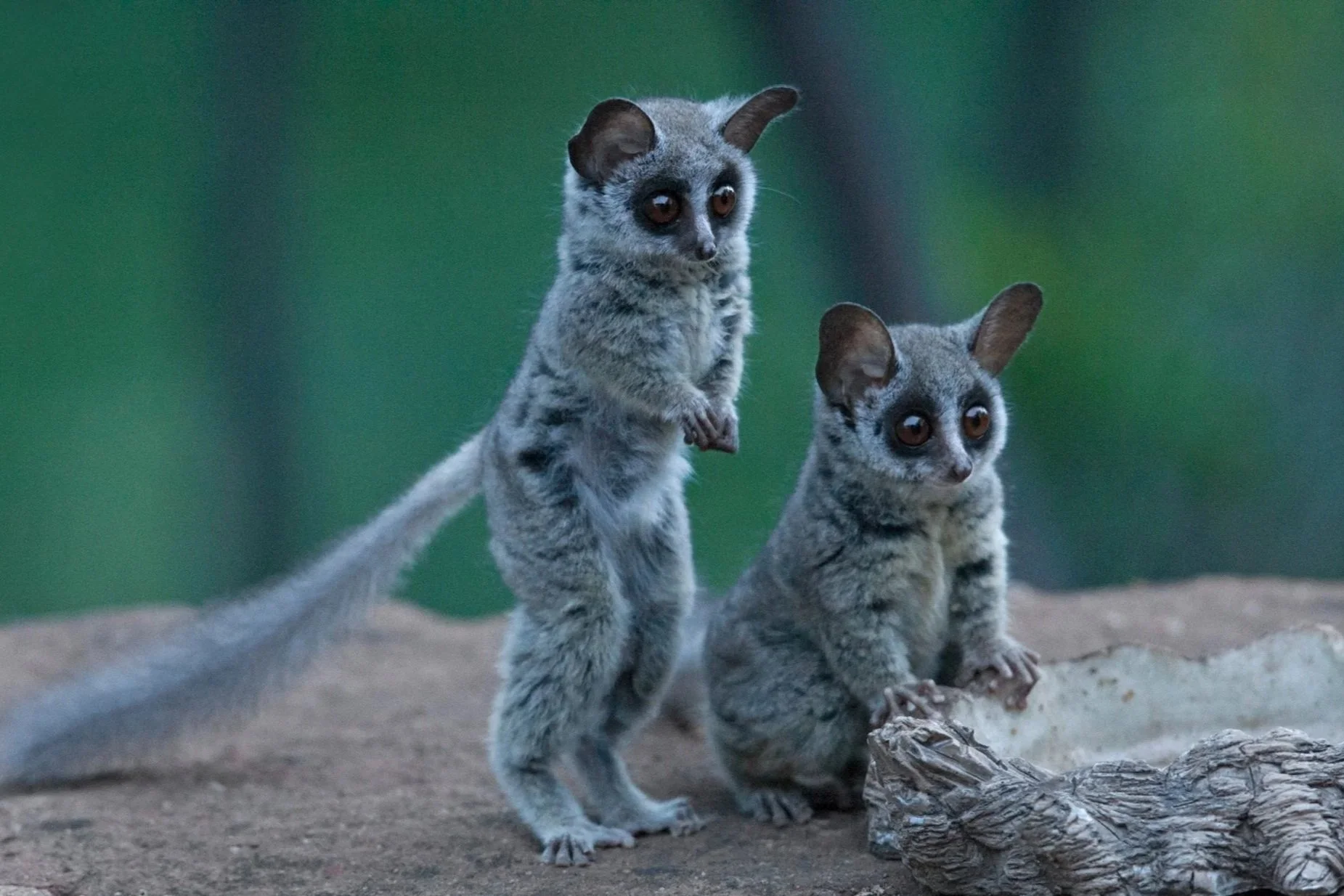
Uganda is home to 20 different primate species. Seven of these species are active at night. (Primate Species in Kibale National Park, n.d.) These creatures include the bush baby (also known as the galago), the potto, and the tree hyrax. They are small and elusive and rarely seen during daytime activities.
The best way to see these creatures is on a guided night walk. This guide covers the best destinations, what to expect, costs, and practical tips for spotting nocturnal primates in Uganda. The information comes from official Uganda Wildlife Authority sources and verified tour operators.
Where to Spot Nocturnal Primates in Uganda
Kibale Forest National Park: The Premier Destination
Kibale Forest National Park is the best location in Uganda for spotting nocturnal primates. The park is known as the primate capital of Africa. It is home to 13 different primate species, including chimpanzees, red colobus monkeys, and black-and-white colobus monkeys.
Kibale is also home to several nocturnal primate species. The most commonly seen are bush babies (galagos) and pottos. These creatures can be spotted on guided night walks that start from the Kanyanchu Visitor Centre.
The night walks in Kibale are led by experienced rangers from the Uganda Wildlife Authority. They are familiar with the behaviours and habits of the nocturnal creatures. The walks typically begin at 7:00 PM and last approximately two hours.
Kalinzu Forest Reserve: A Quiet Alternative
Kalinzu Forest Reserve is located in the Bushenyi district of Uganda, approximately 30 minutes from Queen Elizabeth National Park. The reserve covers 137 square kilometres and is known for its chimpanzee tracking. (Kibale National Park Information, 2024)
Kalinzu also offers night walks for visitors who want to see nocturnal primates. The reserve is home to pottos and two varieties of galago. Visitors also hear the eerie shrieking of the tree hyrax on night walks.
Bwindi Impenetrable National Park
Bwindi is famous for its mountain gorillas. The park is also home to several primate species, including chimpanzees, L'Hoest's monkeys, black-and-white colobus monkeys, red-tailed monkeys, and blue monkeys. Nocturnal primates can also be found in Bwindi, though night walks are less commonly offered than in Kibale.
What to Expect on a Night Walk
The Briefing
All night walks begin with a briefing session at the park headquarters. An experienced guide and armed rangers from the Uganda Wildlife Authority conduct the briefing.
During the briefing, visitors are informed about the rules and guidelines that govern the activity. These include maintaining a quiet presence, making use of minimal light to avoid scaring the animals, and always staying within the group.
The Walk
After the briefing, visitors immerse themselves in the tropical rainforest. They are escorted by an armed ranger and tour guide who ensure that the walk is both secure and informative.
The walk takes approximately two to three hours. Visitors use high-voltage spotlights to see the animals in the dark. For safety, groups are kept small and are always accompanied by a trained ranger and an armed Uganda Wildlife Authority guide. Rangers follow set protocols, including regular check-ins, established communication in case of emergency, and safety briefings at the start of each walk.
What You Might See
During the night walk, you can expect to encounter numerous nocturnal species. The notable ones include:
Bush babies (galagos): These are the most commonly seen nocturnal primates. They are often spotted leaping from one tree branch to another. The name comes from their call, which resembles that of a newborn. They have large saucer eyes and rotating collapsible ears.
Pottos: These are slow-moving primates that are often spotted in the trees.
Tree hyrax: These are small mammals that produce eerie shrieking calls.
Other animals: You may also spot wild cats, African civets, bats, giant forest hogs, and rare night birds such as African wood owls and nightjars. Insects like moths and crickets are also visible. Sightings of any wildlife during night walks are not guaranteed and depend on factors such as luck, weather, and the skills of your guide. Patience and quietness will increase your chances, but every walk is a unique experience.
Night Walk Costs and Practical Information
Costs
| Visitor Category | Cost |
|---|---|
| Foreign Non-Residents | USD 40 |
| Foreign Residents | USD 20 |
| East African Citizens | UGX 15,000 |
The cost does not include the entrance fees to the national park. For Kibale, entrance fees are $40 for foreign non-residents, $30 for foreign residents, and UGX 20,000 for East African citizens.
What to Bring
Spotlight torches (provided by the park or your guide)
Long-sleeved shirt and long trousers
Sturdy hiking shoes
Garden gloves
Camera and extra batteries
Insect repellent
Waterproof rain jacket
Warm sweater (nights can be cool in the forest)
Walking stick
Restricted Participants
Certain individuals may not be permitted to go on night walks. Children are generally not allowed due to physical fitness requirements. Sick tourists are also not permitted. Persons with disabilities may find it challenging to be ferried within the forest during a night walk, though some parks have developed stretcher beds for day activities.
Other Places for Primate Spotting
Semuliki National Park
Semuliki is located in western Uganda and is known for its lowland forest species. The park is home to several primate species, including chimpanzees. Night walks may be available for spotting nocturnal primates.
Budongo Forest (Murchison Falls National Park)
Budongo Forest is located within Murchison Falls National Park. The forest is home to chimpanzees and other primate species. Night walks may be available for spotting nocturnals.
Kyambura Gorge (Queen Elizabeth National Park)
Kyambura Gorge is located in Queen Elizabeth National Park. The gorge is known for its chimpanzee population. Night walks may be available for spotting nocturnal primates.
Kalinzu Forest Reserve
Kalinzu offers chimpanzee tracking for $40 per person, one of the most affordable options in Uganda. Six diurnal primate species live here, and nocturnal primates such as potto and galago can be seen on night walks.
Best Time for Night Walks
Night walks can be done throughout the year in Kibale Forest National Park. However, the best time is during the dry season, which runs from June to September and December to February. The trails are dry and passable during these months, making hiking easier. During the rainy season, the trails become muddy and slippery.
Booking a Night Walk
Night walks must be booked in advance. Visitors can book directly through the Uganda Wildlife Authority or through a licensed tour operator. Night walks often have limited capacity, so booking early is recommended.
Kwezi Tip: When booking your night walk, consider staying at Primate Lodge, located within Kibale Forest. The lodge is less than a five-minute walk from the chimpanzee trekking base. You will be immersed in the forest, surrounded by birdsong, butterflies, and the occasional monkey.
People Also Ask About Nocturnal Primate Tours in Uganda.
Q: Where is the best place to see nocturnal primates in Uganda?
A: Kibale Forest National Park is the premier destination for spotting nocturnal primates. Night walks from the Kanyanchu Visitor Centre offer the chance to see bush babies, pottos, tree hyrax, and other nocturnal creatures.
Q: How much does a night walk cost in Kibale Forest?
A: Night walks in Kibale Forest cost $40 for foreign non-residents, $20 for foreign residents, and UGX 15,000 for East African citizens. The cost does not include park entrance fees.
Q: What nocturnal primates can I see on a night walk?
A: You can see bush babies (galagos), pottos, and occasionally tree hyrax. Bush babies are the most commonly seen, often spotted leaping between tree branches.
Q: Are night walks safe?
A: Yes, night walks are conducted with experienced Uganda Wildlife Authority guides and armed rangers. Rangers ensure that walks are both secure and informative.
Q: What should I bring for a night walk?
A: Bring long-sleeved clothing, sturdy hiking shoes, insect repellent, a camera with extra batteries, a waterproof jacket, and a warm sweater. Spotlight torches are provided by the park or your guide.
Q: Can I combine a night walk with daytime primate tracking?
A: Yes. Kibale offers chimpanzee tracking during the day and night walks in the evening. The chimpanzee habituation experience offers several hours with a semi-habituated group. This combination gives a full primate experience.
Start Planning Your Nocturnal Primate Adventure
Uganda's nocturnal primates offer a wildlife experience that most visitors miss. Bush babies leaping through the canopy, pottos moving slowly through the trees, and tree hyrax shrieking in the dark are sights and sounds you will never forget. The best guided tours for spotting nocturnal primates in Uganda are night walks in Kibale Forest. With expert guides, spotlight torches, and a bit of patience, you can uncover the hidden world of Uganda's nighttime primates.
Kwezi Adventures designs custom itineraries that include night walks in Kibale and other parks. We handle permits, accommodation, transport, and expert guides.
Ready to discover Uganda's nocturnal primates?
Contact Kwezi Adventures today. Tell us your interests, travel dates, and group size. We will create a safari that takes you into the hidden world of Uganda's primates, both day and night. Your adventure starts here.
