
Lizards in Uganda: Scaly Residents of the Pearl of Africa
On a classic Ugandan safari, your gaze is naturally drawn to the grand spectacle of an elephant charge, the grace of a leopard, and the intense gaze of a gorilla. It's easy to step over, or even on, some of the country's most common yet captivating residents: the diverse array of lizards in Uganda.
At Kwezi Adventures, we believe a truly immersive safari experience means appreciating all layers of the ecosystem. This guide will introduce you to the fascinating types of lizards in Uganda, from the dazzlingly colorful Agamas sunning on rocks to the powerful Nile Monitor patrolling waterways. You'll learn to identify them, understand their behaviors, and discover where to spot these resilient reptiles. Additionally, we will touch upon the conservation status of these lizards, noting if any species are threatened or protected, which highlights the importance of ethical and responsible tourism.
We'll spotlight key species like the common agama, the formidable Nile monitor, and elegant skinks. We'll explore their habitats across national parks, explain their vital ecological roles, and share tips for observing them responsibly. Finally, we'll address your most frequently asked questions about these often-overlooked safari subjects.
The Ecological Importance of Lizards in Uganda
Lizards in Uganda are far more than just background actors; they are crucial indicators of ecosystem health and key players in the food web. As insectivores, many species help control populations of insects, including pests. They, in turn, serve as a vital food source for birds, snakes, and mammals. Their presence and diversity tell a story about the habitat's balance. From the sun-baked rocks of Kidepo Valley to the humid forest floors of Bwindi, these adaptable reptiles have colonized nearly every corner of the country, showcasing remarkable survival strategies. In Ugandan culture, lizards are often seen as symbols of renewal and regeneration due to their ability to shed tails and regenerate. Local folklore includes stories of the lizard's wisdom and resilience, often attributing to them an ability to adapt to changing circumstances with grace. This cultural context adds another layer to their ecological importance, enriching the safari experience with insights into local beliefs.
A Guide to Common Types of Lizards in Uganda
Uganda's varied landscapes host a wide variety of lizard species. Here are some of the most commonly observed types of lizards in Uganda you're likely to encounter on your travels:
1. Agama Lizards (Agamidae Family)

Identification: The most conspicuous lizards in Uganda. Males are incredibly vibrant, with bright orange, red, or blue heads and bodies during the breeding season, while females are more camouflaged in browns and grays. They have a robust, triangular head.
Species Example: The red-headed rock agama is a classic sight.
Habitat & Behavior: Love rocky outcrops, termite mounds, and buildings. They are diurnal (active by day) and often seen doing "push-up" displays to mark territory. You'll see them in virtually every national park, including Queen Elizabeth and Murchison Falls.
Key Fact: The bright coloration in Agamas is essential for communication within their species, helping them establish dominance and attract mates.
2. Nile Monitor Lizard (Varanus niloticus)
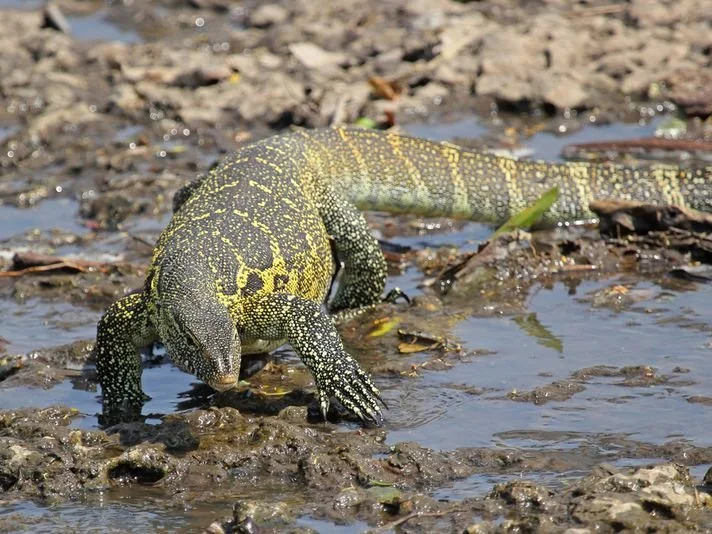
Identification: Uganda's largest lizard, reaching up to 2+ meters. They have powerful legs, sharp claws, a long, muscular tail, and a distinctive, forked, snake-like tongue. Their skin is greyish-brown with yellowish bands and spots.
Habitat & Behavior: A powerful semi-aquatic predator. Look for them near rivers, lakes, and swamps, such as the Kazinga Channel in Queen Elizabeth NP or the Nile banks in Murchison Falls. They are excellent swimmers and climbers.
Key Fact: Nile Monitor Lizards primarily eat available prey such as fish, eggs, small crocodiles, and carrion. By consuming these, they help control animal populations and clean up carrion in their ecosystems.
3. Skinks (Scincidae Family)
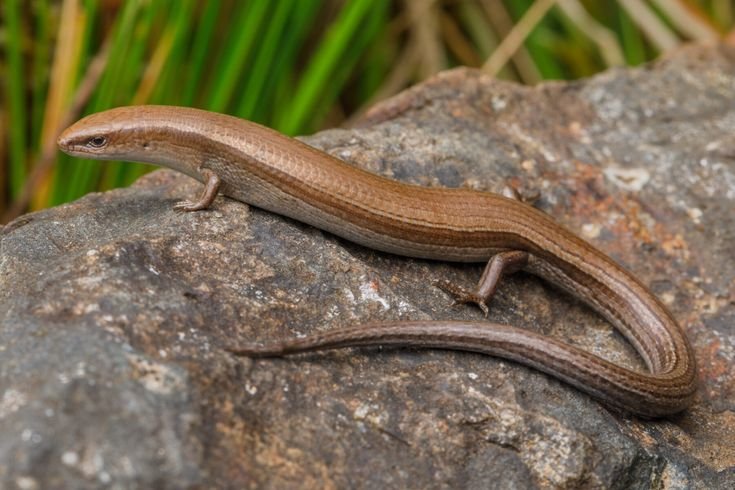
Identification: Generally sleek, smooth-scaled lizards with small legs, giving them a "snake-like" appearance as they move through leaf litter. Colors range from shiny bronze and copper to striped patterns.
Species Example: The Rainbow Skink (with iridescent stripes) is a beauty.
Habitat & Behavior: Found in forests, gardens, and under logs. They are fast-moving and insectivorous. Great places to spot them include the forest floors of Kibale National Park or Bwindi Impenetrable Forest.
Key Fact: Some skink species can voluntarily shed their tails (autotomy) to escape predators, which later regrow.
4. Plated Lizards (Gerrhosauridae Family)
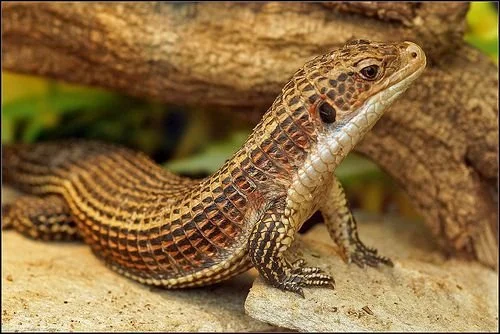
Sudan plated lizard
Identification: Medium to large lizards with bony plates (osteoderms) embedded in their skin, giving them a rough, armored appearance. The Sudan Plated Lizard is a common, sturdy-looking species.
Habitat & Behavior: Prefer savanna woodlands and rocky areas. They are terrestrial and often hide in burrows. Look for them in Lake Mburo National Park or drier sections of other parks.
Key Fact: Their plated armor provides excellent protection against predators in their open habitats.
Where and How to Observe Lizards on Safari
You don't need a special tour to see lizards in Uganda; you just need to know where to look. Here are Kwezi Adventures' top tips:
Rocky Outcrops & Kopjes: Scan sun-warmed rocks and boulders for basking Agamas.
Waterways: Be patient along riverbanks and lake shores for the impressive Nile Monitor.
Forest Trails: Look carefully on the ground and on fallen logs during guided walks in rainforests for skinks and other forest-dwelling lizards.
Around Lodges: Lodges and camps, with their outdoor lights and structures, are often fantastic for casual lizard-watching, especially at dusk.
Practice Respectful Observation: Observe from a distance. Never attempt to corner or provoke a lizard, especially a large monitor, which can deliver a powerful bite or tail whip in defense.
People Also Ask About Lizards in Uganda
Q: Are the lizards in Uganda dangerous?
A: The vast majority are completely harmless to humans. The Nile monitor lizard can be defensive if cornered or threatened and has sharp teeth and claws, so it should be given respectful space. Never attempt to handle wild lizards.
Q: What is the most common lizard you see in Uganda?
A: The colorful Agama lizard is undoubtedly the most widespread. Its habit of basking on prominent rocks and buildings makes it a ubiquitous sight on almost any Uganda safari.
Q: Can you eat the Nile Monitor Lizard in Uganda?
A: While monitor lizards are hunted for their meat and skin in some cultures, it is not a common practice offered to tourists in Uganda. Kwezi Adventures promotes and participates only in ethical, sustainable wildlife viewing that does not harm species populations.
Q: What is the difference between a lizard, a gecko, and a chameleon?
A: All are reptiles, but with key differences. Chameleons are a specialized family of lizards known for color-changing, projectile tongues, and grasping feet. Geckos are a different lizard family with sticky toe pads, often nocturnal, and vocal abilities. The general term "lizard" broadly encompasses these and many other families, including Agamas, Monitors, and Skinks.
Q: How can I take good photos of lizards on my safari?
A: Use a zoom lens to maintain a safe distance. A polarizing filter can help reduce glare from their shiny scales. Patience is key. Wait for them to resume natural behavior after you've approached slowly. Your Kwezi guide will help you spot and approach them carefully.
Q: Are there certain times of year when lizards are more active or visible on safari?
A: Lizards are ectothermic (cold-blooded), so they are most active and visible during the warm, sunny hours of the dry seasons (June-August and December-February). They bask more frequently to regulate their body temperature, making them easier to spot on rocks and trails. They are present year-round but may be less conspicuous during cool, cloudy, or rainy weather.
Q: What should I do if I accidentally encounter a Nile monitor or other large lizard up close?
A: Stay calm and do not run. Back away slowly and give the animal a wide berth. Do not corner it, make sudden movements, or attempt to touch or feed it. A Nile monitor will almost always choose to escape if given a clear path. Your Kwezi guide is trained to handle such situations and will ensure the safety of both you and the animal.
Q: Are there specific locations or times of day best for photographing lizards in Uganda?
A: Absolutely. Early morning and late afternoon provide the best light for photography and are peak basking times. For Agamas, focus on sunlit rocks and termite mounds on game drives. For Nile monitors, riverbanks at Murchison Falls or the Kazinga Channel in Queen Elizabeth NP are ideal. For skinks, take your time on shaded forest paths in Kibale or Bwindi.
Q: How can tourists contribute to lizard conservation or support local efforts during their visit?
A: You contribute positively simply by choosing an ethical operator like Kwezi Adventures. Your safari fees support park management and anti-poaching efforts that protect all wildlife. You can also follow guide instructions to minimize disturbance, report injured wildlife to your guide or lodge, support community-run conservation initiatives (often included in our itineraries), and choose eco-friendly lodges that minimize habitat disruption. Never purchase products made from reptile skins.
Book a Safari That Notices the Small Details
A journey with Kwezi Adventures is designed to awaken your curiosity about all of Uganda's natural wonders, big and small. Understanding the types of lizards in Uganda enriches your experience, turning a simple moment by a lodge fireplace or a slow drive through the savanna into an opportunity for discovery.
Ready to see Uganda in all its scaly, colorful detail? Contact Kwezi Adventures today to plan a safari that celebrates the entire ecosystem. From the mighty to the miniature, we’ll guide you to unforgettable encounters.
