
Chameleons in Uganda: A Colorful Guide to Africa's Masters of Disguise
Imagine stepping into the vibrant tapestry of a Ugandan rainforest, where the air is thick with the sounds of nature and the leaves shiver with hidden life. Suddenly, you catch a glimmer of unexpected color, a chameleon flashing from green to brilliant orange in the blink of an eye. Such encounters reveal the extraordinary adaptability and rich hues of these enchanting creatures. When you think of a Ugandan safari, visions of thundering elephants, lumbering gorillas, and prowling lions likely come to mind. It's easy to overlook the smaller, quieter wonders of the ecosystem. But in the leaves, branches, and undergrowth, a world of incredible adaptation and color is waiting with the chameleons of Uganda.
As your guide to Uganda's hidden wildlife treasures at Kwezi Adventures, we're pulling the curtain back on these captivating reptiles. This guide will introduce you to the major types of chameleons in Uganda, reveal where and how to spot them, and share astonishing facts about their behavior that will make you see these creatures in a whole new light.
We'll explore iconic species like the three-horned Jackson's Chameleon and the widespread Graceful Chameleon, delve into their unique habitats from rainforests to savannas, and provide expert tips for responsible wildlife viewing. We'll also answer your most curious questions about their color-changing abilities, diet, and conservation.
Why Uganda Is a Premier Destination for Chameleon Spotting
Uganda's incredible biodiversity isn't just about megafauna. Its varied ecosystems, from the dense Bwindi Impenetrable Forest and Kibale National Park to the savannas of Queen Elizabeth National Park and the volcanic slopes of Mgahinga, create perfect habitats for a wide array of chameleon species. The country's position in the Albertine Rift region makes it a hotspot for endemic and specialized reptiles. For the keen-eyed traveler, searching for these masters of camouflage adds a thrilling "micro-safari" element to any trip, offering a chance to appreciate the intricate balance of Uganda's natural world.
The Common Types of Chameleons in Uganda
While over 20 species may call Uganda home, here are some of the most notable types of chameleons you might encounter:
1. Jackson's Chameleon (Trioceros jacksonii)
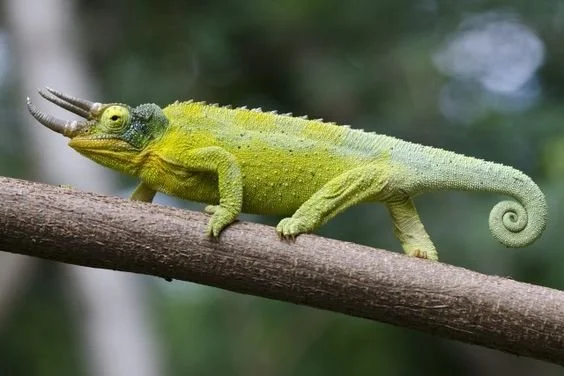
The best-known Ugandan chameleon, males have three horns: one on the nose and two above the eyes. Females may lack horns.
Found in cool, high-altitude forests, especially near Mgahinga and southwest Uganda.
Key Fact: This species gives birth to live young (ovoviviparous), rather than laying eggs, which is an adaptation to its cooler mountain habitat.
2. Graceful Chameleon (Chamaeleo gracilis)
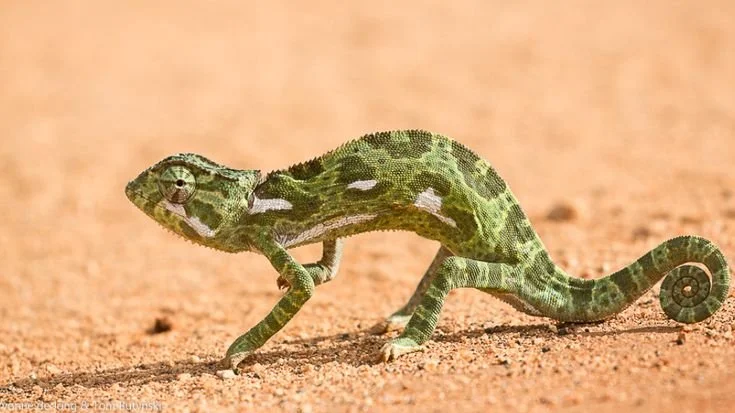
Identification: A widespread species. It is medium-sized, typically green or brown with a white lateral stripe, and lacks the dramatic horns of its cousin.
Habitat: Highly adaptable; found in rainforests, woodlands, and even savanna bushes across Uganda, including Kibale Forest and Murchison Falls National Park.
Key Fact: As its name suggests, it is a slender and elegant climber, often found on branches and reeds.
3. Flap-Necked Chameleon (Chamaeleo dilepis)
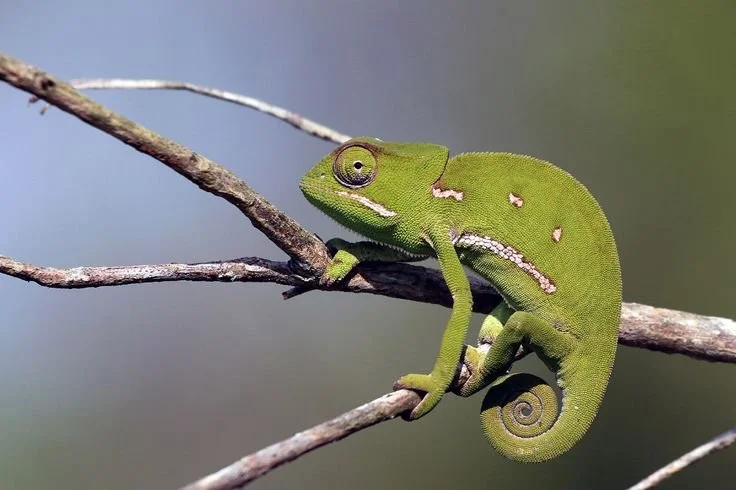
Identification: Known for the large, movable flaps (skin lobes) on the back of its neck, which it raises when threatened. Its color ranges from yellows and greens to browns.
Habitat: Prefers drier, bushland, and savanna areas. It is one of the chameleon species you might spot on a game drive in Queen Elizabeth or Lake Mburo National Park.
Key Fact: This is a particularly hardy and widespread species across Eastern and Southern Africa.
4. Elliot's Chameleon (Trioceros ellioti)
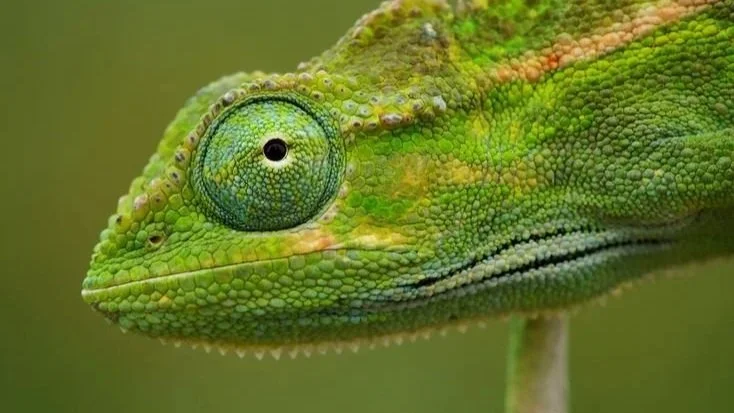
Identification: A smaller, highland chameleon, often showcasing beautiful blues, greens, and yellows. Males may have a small rostral horn.
Habitat: Found in montane grasslands, bamboo zones, and forest edges at higher elevations, similar to the Jackson's Chameleon range.
Key Fact: It is highly territorial and has a smaller home range than many other species.
Where and How to See Chameleons on Your Uganda Safari
Spotting these camouflaged experts requires patience and a sharp eye. Here’s how Kwezi Adventures enhances your chances:
Go on a Guided Nature Walk: The best way to see chameleons in Uganda is on a guided walk in a rainforest or woodland. Our expert guides in Kibale, Bwindi, or Mgahinga have trained eyes to spot these hidden gems. Nocturnal walks with a spotlight can be especially rewarding, as chameleons often turn a pale color at night, making them easier to find.
Time Your Walks: Early mornings and late afternoons are ideal times for chameleon spotting, as they are more active during cooler periods.
Wear Appropriate Clothing: Dress in comfortable, muted-colored clothing to blend with your surroundings and reduce disturbance to wildlife. Long sleeves and trousers are recommended for protection against insects.
Move Quietly: Adopt a slow and quiet walking pace to minimize disturbance to the wildlife and increase your chances of spotting these elusive reptiles.
Look in the Right Places: Focus on bushes, small trees, and reeds along paths. They are rarely on the ground. Your guide will know the specific plant species they favor.
Practice Responsible Viewing: We enforce strict guidelines: maintain a quiet distance, never attempt to touch or handle a chameleon (it causes them extreme stress), and use camera flashes with care. Our ethos is observation without disturbance.
The Importance of Chameleon Conservation in Uganda
Chameleons in Uganda face threats from habitat loss due to agriculture and deforestation, as well as the illegal pet trade. They are vital ecosystem components, controlling insect populations and serving as prey for birds and other predators, such as snakes. By participating in responsible, guide-led wildlife viewing, you support a tourism model that values all species and contributes to habitat conservation. Kwezi Adventures partners with guides and communities who are stewards of this delicate biodiversity.
People Also Ask About Chameleons in Uganda
Q: How many species of chameleons are there in Uganda?
A: While the exact number is subject to ongoing research, Uganda is home to over 20 species of chameleons, including several endemic or near-endemic species to the Albertine Rift region. This diversity makes it a fantastic destination for herpetology enthusiasts.
Q: What is the most famous chameleon found in Uganda?
A: The Jackson's Chameleon (Trioceros jacksonii) is arguably the most iconic, thanks to the male's distinctive three horns. It is a highland species often associated with the Mgahinga and Bwindi regions.
Q: Do chameleons in Uganda change color to match their background?
A: This is a common myth. While camouflage is a benefit, chameleons primarily change color to communicate (to attract mates, show aggression, or submit) and to regulate their body temperature (darker colors absorb heat, lighter colors reflect it).
Q: Can I see chameleons on a standard game drive, or do I need a special tour?
A: While you might get lucky on a savanna drive (especially with flap-necked chameleons), your chances increase exponentially on a guided forest walk in places like Kibale, Bwindi, or Mgahinga. We can easily incorporate these walks into any safari itinerary to enhance your wildlife experience.
Q: Are chameleons in Uganda dangerous or poisonous?
A: No. Chameleons in Uganda are not dangerous to humans. They are harmless, insect-eating reptiles. They have no venom or poison. It is important to observe them quietly and not handle them, as they are delicate and easily stressed.
Q: What is the best time of year or day to spot chameleons in Uganda?
A: Chameleons in Uganda can be seen year-round. For optimal spotting, early morning or late afternoon is best, as they are often more active in moving to basking or feeding sites. A guided night walk with a spotlight is also highly effective, as chameleons turn a pale, almost white color while sleeping, making them remarkably visible against dark foliage.
Q: What should I bring or wear for a chameleon-spotting walk?
A: Come prepared for quiet, slow-paced walking. Essential items include neutral-colored clothing (greens, browns, and khaki), sturdy closed-toe shoes, insect repellent, a small flashlight or headlamp (for night walks), and your camera. Binoculars can be useful for viewing details. Your Kwezi guide will lead the way and do the hard work of spotting!
Q: Are chameleon walks suitable for children or people with limited mobility?
A: These walks are generally excellent for children who enjoy nature and can walk quietly for short periods. The pace is slow and focused. For those with limited mobility, suitability depends on the specific trail. Many community and forest-edge walks are on relatively flat, clear paths. It is essential to discuss any mobility concerns with your Kwezi Adventures planner in advance so we can select the most accessible guiding location and route for you.
Q: How do I add a chameleon-focused walk to my safari itinerary with Kwezi Adventures?
A: It's simple! When designing your custom safari itinerary with your Kwezi Adventures consultant, simply express your interest in chameleon spotting or a guided nature walk. We will strategically recommend the best parks and lodges for these activities (e.g., adding a nocturnal walk in Kibale or a community walk in Bwindi) and ensure a specialist guide is arranged. It's a perfect way to add depth and a unique focus to your wildlife adventure.
Discover Uganda's Smaller Wonders with Kwezi Adventures
A safari with Kwezi Adventures is a journey of scale from the monumental to the miniature. Understanding the diversity of types of chameleons in Uganda opens up a new layer of appreciation for the country's intricate ecosystems.
Ready to look closer? Book your Ugandan adventure with us and let our expert guides reveal the hidden world of chameleons, turning a simple walk in the forest into a treasure hunt of color and adaptation. Contact Kwezi Adventures today to start planning a holistic safari that celebrates all of Uganda's wildlife.
