
Gorilla vs Chimpanzee Trekking

You're researching two of the world's most incredible wildlife experiences, and you've hit the quintessential traveler's dilemma: gorilla vs. chimpanzee trekking. It’s a fantastic problem to have, and we agree that choosing between these iconic adventures is a big decision that depends on your interests, fitness, and travel style.
This guide promises to be your definitive comparison. We’ll move beyond the surface to give you a clear, detailed breakdown of what each trek truly entails, from the physical demands in the forest to the emotional impact of the encounter, so you can make the perfect choice for your dream trip.
We’ll preview the core differences in terrain, cost, group behavior, and photography. You’ll get a side-by-side analysis of what to expect, practical planning advice, and a simple framework to decide which of these unforgettable primate encounters aligns with your adventure goals.
The Core Experience: Understanding the Encounter
Before comparing logistics, understand the fundamental nature of each encounter. Gorilla trekking is often described as a profound, almost spiritual meeting with serene "gentle giants" in a quiet, misty forest. Chimpanzee trekking is an energetic, dynamic observation of our closest genetic relatives, full of social drama, loud calls, and impressive arboreal acrobatics. This emotional tone is the first key to your decision.
Side-by-Side Comparison: Gorilla vs. Chimpanzee Trekking
Here is a detailed breakdown of the key factors to consider when choosing between gorilla and chimpanzee trekking.
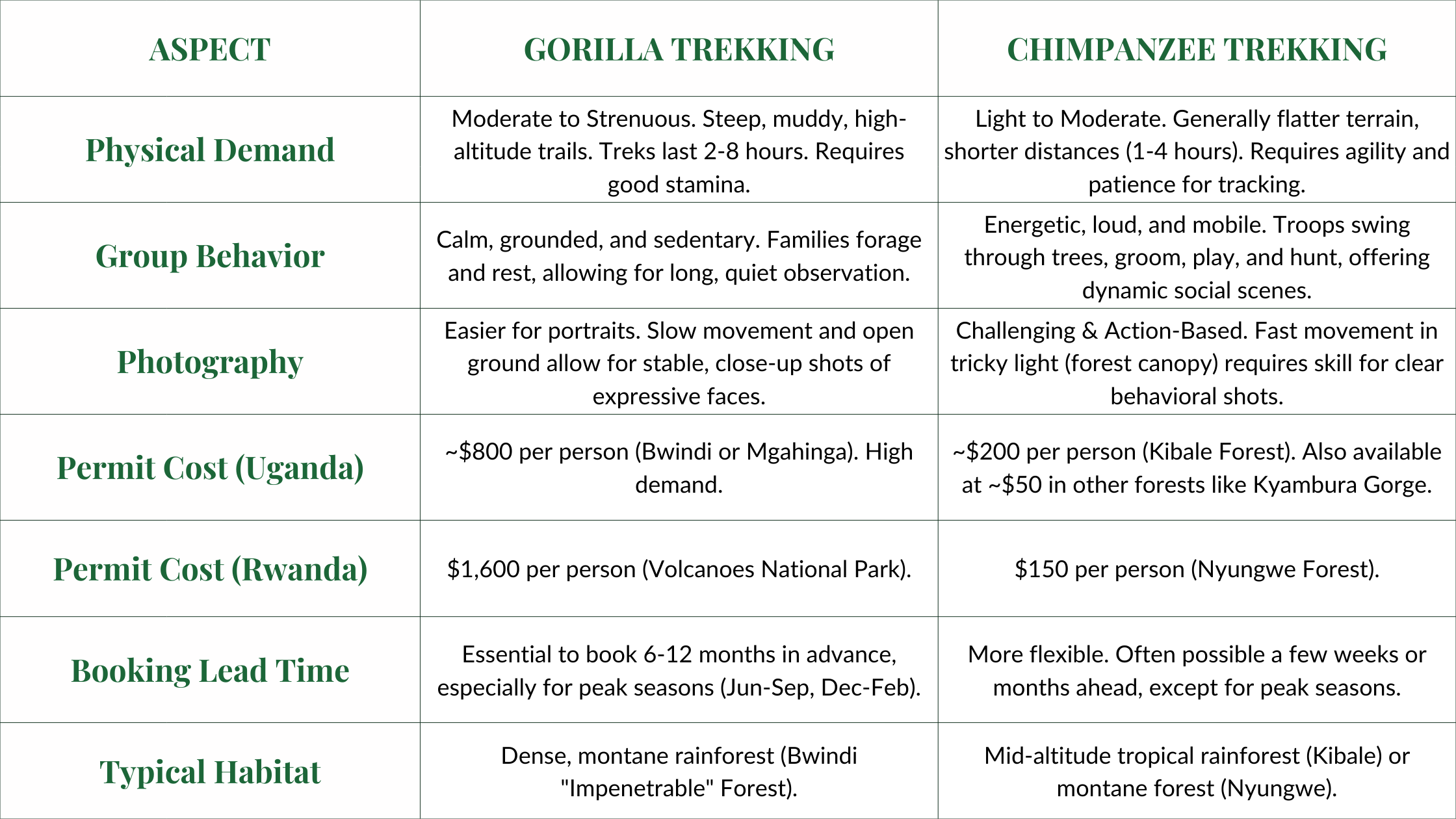
Detailed Breakdown: Choosing Your Adventure
1. Physical Terrain & Trekking Difficulty
Gorilla Trekking: The word "impenetrable" in Bwindi is a clue. Trails are often unmaintained, steep, and slick with mud at altitudes of 1,500-2,500 m. The search can be unpredictable, making it a true hike. Fitness is a major factor for enjoyment.
Chimpanzee Trekking: While still a real hike in a rainforest, the trails are typically less extreme. The challenge comes from keeping up with a moving troop through sometimes thick undergrowth. It’s less about endurance and more about steady tracking.
2. The Wildlife Encounter & Photography
Gorilla Trekking: You are granted one precious hour with a habituated gorilla family. The magic is in the quiet moments watching a silverback nap, infants tumble playfully, or a mother groom her baby. Photography is privileged with relatively still subjects.
Chimpanzee Trekking: The one-hour habituation experience (often a full-day program in Kibale) is a wildlife spectacle. You may witness feeding frenzies, territorial calls that deafen the forest, or even a hunt. Capturing the perfect shot is rewarding but requires quick settings adjustments.
3. Cost, Logistics & Planning
Gorilla trekking is a high-investment, high-reward experience. The permit cost is high, and it dictates your itinerary. It requires early, committed planning but results in a flagship, bucket-list achievement.
Chimpanzee trekking is more accessible and flexible. The lower permit cost makes it easier to combine with other activities (like safari or cultural tours) and allows for more spontaneous trip planning.
People Also Ask: Your Primate Trekking Questions Answered
Q: Can I do both gorilla and chimp trekking in one trip?
A: Absolutely, and it’s a fantastic combination. In Uganda, you can trek chimps in Kibale Forest and gorillas in Bwindi on a classic 7-10 day circuit. This offers the ultimate primate contrast and is highly recommended for true wildlife enthusiasts.
Q: Which is more likely to sell out, and how far in advance should I book?
A: Gorilla permits sell out far quicker. For peak season, aim to secure permits 9-12 months in advance. For chimpanzee trekking, 2-4 months is usually sufficient, though earlier is always better for securing preferred dates and lodgings.
Q: Is one trek more ethical or sustainable than the other?
A: Both treks, when operated by reputable companies like Kwezi Adventures, follow strict conservation protocols. Limited group sizes (e.g., 8 visitors per gorilla family), mandatory guide training, and permit revenue that funds protection and community projects make both activities vital pillars of ethical conservation tourism.
Q: For families with older children or less mobile travelers, which is better?
A: Chimpanzee trekking is often more suitable. The generally shorter and less strenuous trek, combined with the energetic display, can be more engaging and physically manageable. Gorilla trekking’s difficulty is assessed on a case-by-case basis.
Final Verdict: Which Trek Is Right for You?
Choose gorilla trekking if you seek a profound, bucket-list encounter and are prepared for a physical challenge. You have a higher budget and can plan well in advance to witness the majestic, quiet power of mountain gorillas.
Choose Chimpanzee Trekking if you want a dynamic, entertaining wildlife show and greater trip flexibility. You have a more moderate budget or are looking for an incredible primate experience that’s easier to book and physically access.
The Best of Both Worlds: You don’t necessarily have to choose. Combining both treks on a single Ugandan itinerary provides an unparalleled and contrasting insight into the world of great apes.
Ready to Transform Your Dream into an Itinerary? The path to the apes starts with expert planning. Contact Kwezi Adventures today to discuss your fitness, interests, and budget. We’ll help you navigate permit bookings, create your perfect primate-focused safari, and guide you to the life-changing encounter that’s right for you.
