

For over a decade, Kwezi Adventures has guided travelers through Uganda's most extraordinary landscapes. We have watched the mist lift over Bwindi's ancient rainforest as mountain gorillas emerged from the foliage. We have stood in reverent silence within the thatched walls of the Kasubi Tombs, feeling the weight of centuries of Buganda history. We have trekked the misty slopes of the Rwenzori Mountains, where equatorial glaciers meet Afro-alpine forests. These are not just places on a map. They are living, breathing testimonies to Uganda's natural and cultural heritage, recognized by UNESCO as treasures of global significance.
Uganda is home to three UNESCO World Heritage Sites, with a further eight sites on its tentative list. The first two Ugandan sites were listed in 1994, the Rwenzori Mountains National Park and Bwindi Impenetrable National Park, both for their natural significance. The Tombs of Buganda Kings at Kasubi, a cultural site, was listed in 2001. As Uganda-based safari specialists, we know these sites intimately, their history, their significance, and the unique experiences they offer discerning travelers.
The United Nations Educational, Scientific, and Cultural Organization (UNESCO) designates World Heritage Sites as places of "outstanding universal value" to humanity. Uganda's three sites meet this rigorous standard. Bwindi protects nearly half of the world's endangered mountain gorillas. The Rwenzoris, first documented by Ptolemy in AD 150 as the "Mountains of the Moon," feature Africa's third-highest peak and unique Afro-alpine flora. The Kasubi Tombs represent a masterpiece of traditional Buganda architecture constructed entirely from organic materials, wood, bamboo, reed, and thatch. Our information draws from UNESCO, the Uganda Wildlife Authority, the Metropolitan Museum of Art, and on-the-ground experience.
This guide provides accurate, current information about each UNESCO World Heritage Site, including its history, significance, and how to visit. We are honest about the challenges, including the 2010 fire at Kasubi and the glaciers' retreat in the Rwenzoris, while celebrating the extraordinary resilience and conservation success stories that define each site. When you book with Kwezi Adventures, our expert guides ensure your visit is respectful, safe, and profoundly enriching.
We will journey through Uganda's three UNESCO World Heritage Sites, exploring the spiritual heart of the Buganda kingdom at Kasubi, the misty gorilla sanctuaries of Bwindi, and the legendary "Mountains of the Moon" of Rwenzori. We will also introduce you to the iconic Ankole long-horned cattle, a living symbol of Uganda's pastoralist heritage. And we will answer all your questions about visiting these extraordinary places.
Tombs of Buganda Kings at Kasubi
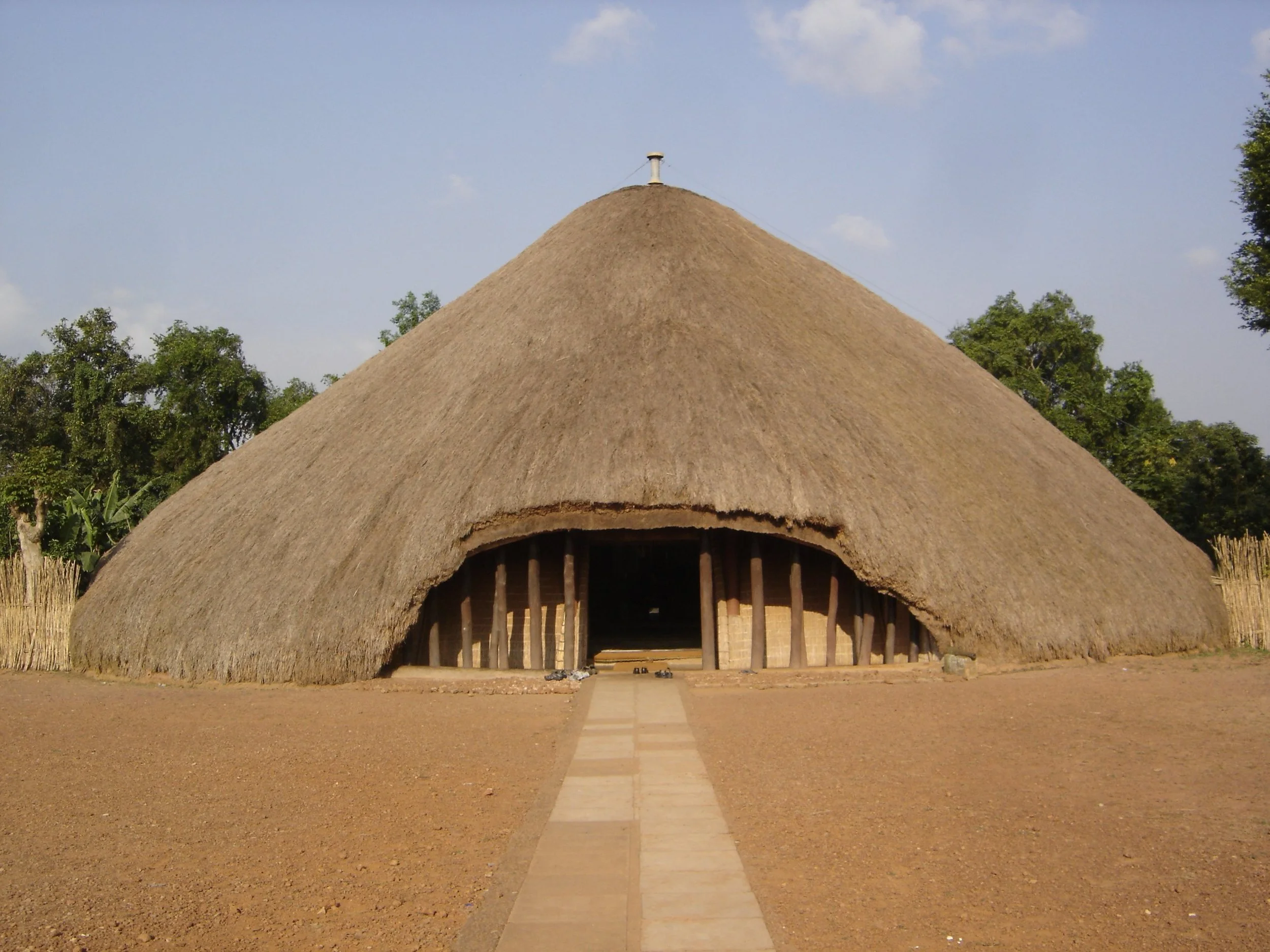
Located on a hilltop in Kampala, the Tombs of Buganda Kings at Kasubi represent one of Africa's most remarkable cultural treasures. This is not merely a burial ground; it is a living spiritual center for the Baganda people, a place where the living commune with their ancestors and where traditional architectural knowledge is passed down through generations.
The History of the Kasubi Tombs
In Baganda society, the palace of a kabaka, or king, traditionally became the site of his royal tomb after his death. The structure enclosing the kings' tombs at Kasubi was originally built as the palace for Kabaka Muteesa I (r. 1856-1884), the 35th kabaka of Buganda. After his death, the palace was repurposed as his burial site and came to include the burials of him and three of his successors: Mwanga II (r. 1884-1897), Daudi Chwa II (r. 1897-1939), and Sir Edward Muteesa II (r. 1939-1966).
The site is defined by three core areas: Bujjabukula, the historic gatehouse at the entrance; Olugya, the main courtyard; and Muzibu Azaala Mpanga, the former palace and current royal tomb which enshrines the four Buganda kings. The tombs remain active religious sites where traditional rituals are hosted by the current Kabaka and his representatives.
Architectural Marvel: Building with Nature
The Kasubi Tombs represent a masterpiece of traditional Ganda architecture. Muzibu Azaala Mpanga, the primary building of the complex, is circular in plan with a domelike overall shape. Its interior extends to a height of 7.5 meters, while the external diameter is 31 meters.
What makes this architecture extraordinary is its materiality. The structure is constructed entirely of organic materials, wooden poles forming the framework, bamboo for structural elements, reeds for binding, wattle and daub for walls, and a dense layer of thatching for the massive, conical roof. The thatch work extends all the way to the ground, a regionally unique technique passed down through generations.
The tomb's architecture is a powerful manifestation of Ganda cultural identity and spiritual belief systems. The interior funereal chambers, accessible only to a limited number of individuals, are designed to symbolize a sacred forest, the Kibira. Lemon grass and palm leaf mats cover the floor, while spears, drums, shields, medals, and photos of the kabakas cover the walls and other surfaces.
Site Stewardship: Living Heritage
Though the Kasubi Tombs are constructed of all-organic materials, theoretically more vulnerable to the elements, their continued use as an active religious and World Heritage site has contributed to their preservation. A high level of maintenance is bestowed upon them by two different clans charged with the architectural ensemble's upkeep. The Ngeye (Colobus Monkey) clan, for example, is the only people allowed to work on the intricate thatching work on-site. Knowledge of this thatching process is passed down from generation to generation.
The 2010 Fire and Remarkable Restoration
On March 16, 2010, a devastating fire destroyed much of the main tomb structure at Kasubi. The cause of the fire remains officially undetermined, though it was a profound blow to the Baganda people and to Uganda's cultural heritage. The site was immediately placed on UNESCO's List of World Heritage in Danger.
However, this tragedy also sparked an extraordinary international collaboration. Fortunately, the tombs had been digitally documented just one year prior by a volunteer partner with donated equipment. This future-oriented documentation proved invaluable for reconstruction. The Metropolitan Museum of Art, in collaboration with the World Monuments Fund, produced a documentary examining the tombs and the restoration efforts, which were supported by studying archival documentation and an earlier restoration of the precursor site at Wamala.
The tombs have since been carefully restored and removed from the endangered list. The restoration stands as a testament to the resilience of the Baganda people and the power of international cultural cooperation.
Visiting the Kasubi Tombs
Location: Kasubi Hill, Kampala (approximately 5 km from the city center)
Best Time: Year-round; mornings are cooler for walking
Duration: 1–2 hours
What to See: The main tomb structure (Muzibu Azaala Mpanga), the gatehouse (Bujjabukula), the main courtyard (Olugya), and the surrounding royal compound
Kwezi Insight: We arrange private guided tours with expert Buganda historians who can explain the spiritual significance, clan system, and architectural traditions in depth. Photography inside the main tomb is restricted out of respect; your guide will advise on protocols.
Bwindi Impenetrable National Park: Sanctuary of the Mountain Gorilla
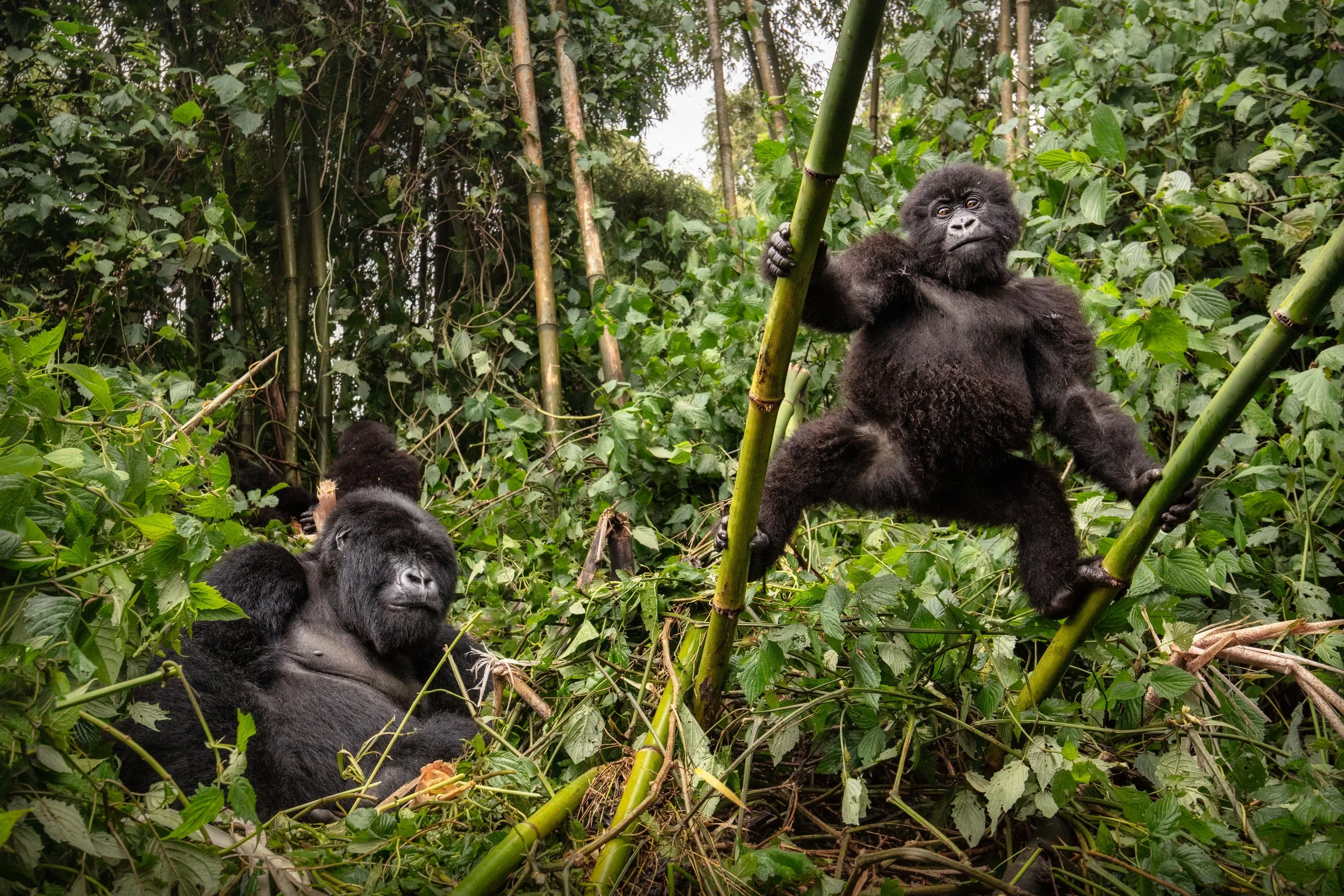
Deep in the misty highlands of southwestern Uganda lies one of Africa's most biologically diverse rainforests, Bwindi Impenetrable National Park. This ancient forest, dating back over 25,000 years, is one of Uganda's oldest and most extraordinary natural treasures.
A Biodiversity Hotspot
Bwindi encompasses a series of steep ridges and valleys and is the source of five major rivers that flow into Lake Edward. The park covers 331 square kilometers of dense, mist-shrouded forest so thick in places that sunlight barely penetrates the canopy, earning it the name "impenetrable".
The park is a designated Important Bird Area, with 347 bird species documented, including 23 species endemic to the Albertine Rift. It is also home to 120 mammal species, numerous butterflies, and an incredible diversity of plant life, including towering hardwoods, giant ferns, and delicate orchids.
Home to Nearly Half of the World's Mountain Gorillas
Bwindi's most famous residents are the mountain gorillas. The park is home to one of the two subpopulations of mountain gorillas in the world, the Bwindi-Sarambwe subpopulation. According to the IUCN A.P.E.S. database, the population has grown significantly over the past decades:
| Year | Estimated Population |
|---|---|
| 1997 | 292 gorillas |
| 2002 | 320 gorillas |
| 2011 | 400 gorillas |
| 2018 | 459 gorillas |
This remarkable increase led to a change in the IUCN Red List classification from Critically Endangered to Endangered in 2018. It is one of conservation's greatest success stories and one that your visit directly supports.
The Gorilla Trekking Experience
Gorilla trekking in Bwindi is the pinnacle of Uganda's safari offerings. The hike, which requires a reasonable amount of fitness, takes you through spectacular rainforest and bamboo-covered slopes, accompanied by expert guides and trackers. The walking can sometimes be tough and long, but when you catch a glimpse of a magnificent silverback and his family, your journey will be well worth the effort.
When sighted, visitors are guided to within a respectful distance of the gorillas. It is an extraordinary feeling sitting in the dense rainforest, surrounded by emerald green foliage and the flutter of butterflies, knowing you are in the company of these rare, intelligent, and gentle giants. You are allowed one hour with the gorillas before returning to the base station.
For the truly dedicated, the Gorilla Habituation Experience (available in Bwindi's Rushaga sector) allows up to four hours with a gorilla family undergoing the habituation process, accompanying researchers as they slowly acclimate the gorillas to human presence.
Conservation and Community
Bwindi was gazetted as a National Park in 1991 and declared a UNESCO Natural World Heritage Site in 1994. Conservation activities have focused on ecotourism programs, awareness raising, education, and regularly monitoring the health of habituated gorillas. Key threats are linked to high human presence, which poses some risk of disturbance and disease transmission, which is why the strict rules (maintaining distance, no trekking if ill) are so vital.
Visiting Bwindi Impenetrable National Park
Location: Southwestern Uganda, on the edge of the Albertine Rift Valley
Best Time: Dry seasons (June–August, December–February) for easier trekking; gorillas can be tracked year-round
Permit Cost (2026): $800 for standard trekking; $1,500 for the Gorilla Habituation Experience
Trekking Difficulty: Moderate to challenging; varies by gorilla family location
Kwezi Insight: We arrange private gorilla trekking experiences with dedicated guides, ensuring you are matched with a gorilla family appropriate to your fitness level. We also recommend combining your Bwindi visit with a Batwa cultural experience, walking with the forest's original inhabitants.
Rwenzori Mountains National Park: The Legendary "Mountains of the Moon"
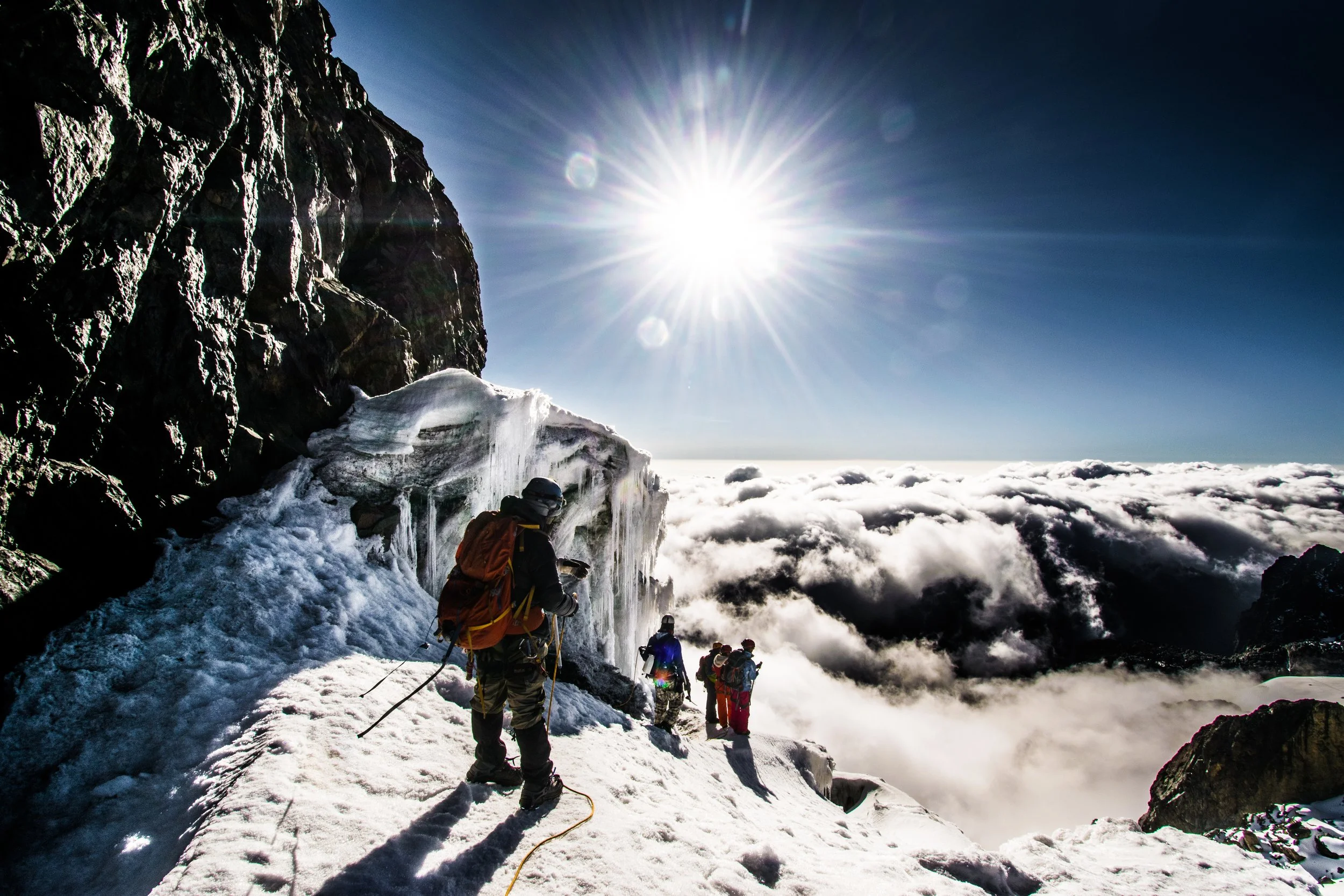
Rising majestically in western Uganda along the border with the Democratic Republic of Congo, the Rwenzori Mountains are unlike any other mountain range in Africa. Unlike the volcanic giants of Kilimanjaro and Mount Elgon, the Rwenzoris were formed by tectonic activity, with massive rock blocks thrust upward from the Western Rift Valley floor.
A Range of Extremes
The Rwenzori range stretches 120 kilometers in length and 65 kilometers in width, covering almost 100,000 hectares. It is home to some of the most breathtaking and diverse landscapes in Africa, from equatorial snow-capped peaks to lush montane forests, bamboo zones, and eerie giant lobelia-studded moorlands.
The highest point is Margherita Peak (5,109 meters) on Mount Stanley, making it Africa's third-highest peak. Unlike Kilimanjaro, which is a freestanding volcano, the Rwenzoris are a true mountain range with multiple peaks, including Mount Speke (4,890 m) and Mount Baker (4,843 m).
The "Mountains of the Moon"
The Rwenzoris have captured the human imagination for millennia. They were first documented by the Alexandrine geographer Ptolemy in AD 150, who referred to them as the "Mountains of the Moon" (Montes Lunae), believing them to be the source of the Nile River.
Later, on May 24, 1888, the explorer Henry Morton Stanley officially placed the Rwenzoris on the world map, recording the name "Ruwenzori," which he documented as meaning "Rain-Maker" or "Cloud-King" in the local language. The peaks are almost perpetually shrouded in mist and cloud, living up to their name.
Unique Afro-Alpine Flora
What makes the Rwenzoris truly extraordinary is their vegetation. The mountains are famous for their unique Afro-alpine flora, giant groundsels (Dendrosenecio), giant lobelias (Lobelia wollastonii), and giant heathers that have adapted to the extreme conditions of equatorial high altitude. Walking through these landscapes feels like stepping onto another planet or perhaps back in time to an ancient, lost world.
The park also contains glaciers, waterfalls, and alpine lakes that make it one of Africa's most beautiful alpine areas, according to UNESCO. However, climate change is taking a visible toll: by the end of 2006, the ice cap had retreated from 6.4 km² a century ago to less than 1.28 km².
Trekking the Rwenzoris
The Rwenzori Mountains are among Africa's premier hiking and climbing destinations. The park offers two main trekking experiences :
Summit Climbers: Reaching Margherita Peak requires a 9- to 12-day technical ascent, best suited for experienced mountaineers. You will traverse multiple vegetation zones, cross glaciers, and camp at high altitudes. In 2010, history was made when Ms. Beryl Park, at the age of 78, became the oldest recorded climber to reach Margherita Peak, proving that the Rwenzoris continue to challenge and inspire adventurers of all ages.
Mid-Level Treks: Shorter, non-technical treks (typically 5–7 days) allow climbers to explore the stunning landscapes and reach lower peaks without the extreme challenge of summiting. These treks still offer breathtaking views of the high peaks, glaciers, and unique flora.
Visiting the Rwenzori Mountains National Park
Location: Western Uganda, Bundibugyo District, along the Congo border
Best Time: Dry seasons (June–August, December–February) for clearer skies and safer trekking
Park Entry Fees (2026): $35 for foreign non-residents, $25 for foreign residents
Trekking Difficulty: Moderate to extreme, depending on route
Kwezi Insight: We arrange private guided treks tailored to your experience level and time constraints. Our expert mountain guides are among the most experienced on the mountain. For those not seeking to summit, we recommend the shorter Central Circuit Trek, which provides spectacular views without technical climbing.
The Ankole Long-Horned Cattle: A Living Cultural Symbol
While not a UNESCO World Heritage Site itself, the Ankole long-horned cattle are inseparable from Uganda's cultural landscape and are often encountered when traveling between the country's World Heritage Sites. These magnificent animals, with their iconic sweeping horns, are living symbols of Uganda's pastoralist heritage.
Origins and Distribution
The Ankole cattle are of the Sanga type, distributed from Lake Mobutu to Lake Tanganyika in eastern Africa. The original animals were thought to have been brought to northern Uganda by Hamitic tribes sometime between the 13th and 15th centuries. The Hima or Bahima tribe settled on the shores of Lake Victoria in Uganda, Kenya, and Tanzania, bringing their cattle with them. The Watusi or Tutsi tribe continued to Rwanda and Burundi.
Physical Characteristics
The purer Ankole cattle have a medium-long head, a short neck with a deep dewlap, and a narrow chest. The hump is cervico-thoracic, small, and barely visible on the cow. Coloration is typically red, but fawn, black, or pied is not uncommon. Their most distinguishing feature is, of course, the massive, sweeping horns, which can reach astonishing lengths and are highly prized by pastoralists.
Cultural Significance
For the Bahima people, Ankole cattle are far more than livestock. They are status symbols, wealth, and sacred heritage. The cattle are named at birth, with coat color or pattern being the main identification criterion.
Selection criteria for bulls are particularly stringent. According to a study published in the journal Tropical Animal Health and Production, pastoralists select bulls primarily focusing on a "big body frame and size, horns that are white, large and curved upward, and a plain dark red 'ruhogo' coat colour". Female cattle are mainly kept for milk production, income from sales, heritage, and aesthetics.
Other functions include savings, manure and butter production, and ceremonial use. Bloodletting is a common practice among some tribes, though few use the cattle for meat. In general, the animals are highly prized for ceremonial functions and not for their productivity. Their value is cultural as much as economic.
Experiencing Ankole Culture
On a journey between Bwindi and Queen Elizabeth National Park or on a dedicated cultural itinerary, Kwezi Adventures can arrange private visits to Ankole cattle farms. You will meet Bahima pastoralists, learn about traditional cattle husbandry, and even try your hand at milking. These encounters offer a profound window into a way of life that has persisted for centuries.
Comparing Uganda's UNESCO World Heritage Sites
| Site | Type | Year Listed | Key Feature | Best For |
|---|---|---|---|---|
| Kasubi Tombs | Cultural | 2001 | Traditional Buganda architecture, active spiritual site | History, culture, architecture |
| Bwindi Impenetrable NP | Natural | 1994 | Mountain gorillas (nearly half of world population) | Wildlife, trekking, conservation |
| Rwenzori Mountains NP | Natural | 1994 | Third-highest peak in Africa, glaciers, unique flora | Hiking, climbing, alpine landscapes |
Sample Itinerary: Uganda's UNESCO World Heritage Tour
For travelers seeking to experience all three UNESCO World Heritage Sites, Kwezi Adventures recommends the following 12-day itinerary:
| Day | Activity | UNESCO Site |
|---|---|---|
| 1 | Arrival in Entebbe, transfer to Kampala | — |
| 2 | Morning: Kasubi Tombs guided tour; afternoon: Kampala cultural sites | Kasubi Tombs |
| 3 | Transfer to Bwindi (charter flight or scenic drive) | — |
| 4 | Gorilla trekking in Bwindi Impenetrable National Park | Bwindi |
| 5 | Optional second trek or Gorilla Habituation Experience | Bwindi |
| 6 | Batwa cultural experience; transfer to Lake Bunyonyi | — |
| 7 | Lake Bunyonyi relaxation; transfer to Queen Elizabeth NP | — |
| 8 | Queen Elizabeth NP game drives and Kazinga Channel cruise | — |
| 9 | Transfer to Rwenzori Mountains; afternoon lodge orientation | Rwenzori |
| 10 | Rwenzori day trek (Central Circuit, non-technical) | Rwenzori |
| 11 | Morning Rwenzori exploration; transfer to Entebbe | Rwenzori |
| 12 | Departure | — |
People Also Ask About UNESCO World Heritage Sites in Uganda
Q: How many UNESCO World Heritage Sites are there in Uganda?
A: Uganda has three UNESCO World Heritage Sites, two natural (Bwindi Impenetrable National Park and Rwenzori Mountains National Park) and one cultural (Tombs of Buganda Kings at Kasubi). There are also a further eight sites on Uganda's tentative list.
Q: Why were the Kasubi Tombs listed as endangered?
A: The Kasubi Tombs were listed as endangered after a devastating fire destroyed the main tomb structure on March 16, 2010. The site has since been carefully restored and removed from the endangered list. Both the Rwenzori Mountains National Park was also at some point listed as endangered due to security issues and lack of monitoring by park staff, but has also been removed.
Q: How many mountain gorillas are in Bwindi Impenetrable National Park?
A: As of 2018, an estimated 459 mountain gorillas live in the Bwindi-Sarambwe ecosystem, representing nearly half of the world's total mountain gorilla population. The population has increased significantly from 292 in 1997, leading to a reclassification from Critically Endangered to Endangered in 2018.
Q: What is the highest peak in the Rwenzori Mountains?
A: The highest peak is Margherita Peak (5,109 meters) on Mount Stanley, making it Africa's third-highest peak after Kilimanjaro (5,895 m) and Mount Kenya (5,199 m).
Q: Who named the Rwenzori Mountains the "Mountains of the Moon"?
A: The Alexandrine geographer Ptolemy first documented them as the "Mountains of the Moon" (Montes Lunae) in AD 150, believing them to be the source of the Nile River.
Q: Can I combine visits to all three UNESCO World Heritage Sites on one trip?
A: Yes. Kwezi Adventures specializes in custom itineraries that include all three UNESCO sites. A typical journey lasts 10–14 days, combining gorilla trekking in Bwindi, a cultural tour of the Kasubi Tombs in Kampala, and trekking in the Rwenzori Mountains. We manage all logistics, permits, and accommodations.
Q: What is the Ankole cow, and where can I see it?
A: The Ankole long-horned cattle are a sacred breed central to the Bahima pastoralist culture. They are known for their massive, sweeping horns. You can encounter them on drives between Bwindi, Queen Elizabeth National Park, and the Rwenzoris. Kwezi Adventures can arrange private farm visits to meet the Bahima herders and learn about their traditions.
Q: What is the best time of year to visit Uganda's UNESCO sites?
A: The dry seasons (June–August and December–February) offer the best conditions for all three sites. Gorilla trekking is easier on drier trails, Rwenzori trekking is safer with clearer skies, and Kampala's Kasubi Tombs are accessible year-round but more pleasant in drier weather.
Your Journey to Uganda's UNESCO Treasures Begins Here
Uganda's three UNESCO World Heritage Sites represent the very best of what the Pearl of Africa has to offer: the living cultural traditions of the Buganda kingdom, the misty sanctuaries of the mountain gorilla, and the legendary, glacier-capped peaks of the "Mountains of the Moon."
At Kwezi Adventures, we have spent more than a decade guiding travelers to these extraordinary places. We know the gorilla families by name, the guides who protect them, the elders who maintain the Kasubi Tombs, and the trails that reveal the Rwenzoris' hidden wonders. Let us share our home with you.
Ready to explore Uganda's UNESCO World Heritage Sites?
Contact Kwezi Adventures today. Let us craft a bespoke journey that takes you to the heart of the Pearl of Africa from the spiritual center of the Buganda kingdom to the misty forests of the gorillas and the cloud-shrouded peaks of the Mountains of the Moon. Your adventure of a lifetime awaits.
