
Must-See Cultural Sites in Uganda
Start Your Cultural Journey
Kwezi Adventures designs cultural tours to Uganda's most significant heritage sites. Explore our cultural tour packages →
Introduction
Uganda's cultural landscape is as diverse as its wildlife. The country's history stretches back centuries, with traditions that continue to shape modern life. From the royal tombs of Buganda kings to the sacred waters of Ssezibwa Falls, from the martyrs' shrine at Namugongo to the Uganda Museum's ethnographic collections, the must-see cultural sites in Uganda offer visitors a window into the soul of the Pearl of Africa.
This guide covers the most significant cultural sites across Uganda. Each location tells a different story. Some speak of royal power and spiritual authority. Others commemorate sacrifice and faith. Some preserve ancient traditions for future generations. All are accessible to travelers who seek a deeper understanding of this remarkable country.
The experiences are educational, respectful, and designed to support heritage preservation. Whether you are a history enthusiast, a spiritual seeker, or simply curious about Ugandan culture, these sites will enrich your journey.
Kasubi Royal Tombs: Uganda's UNESCO World Heritage Site
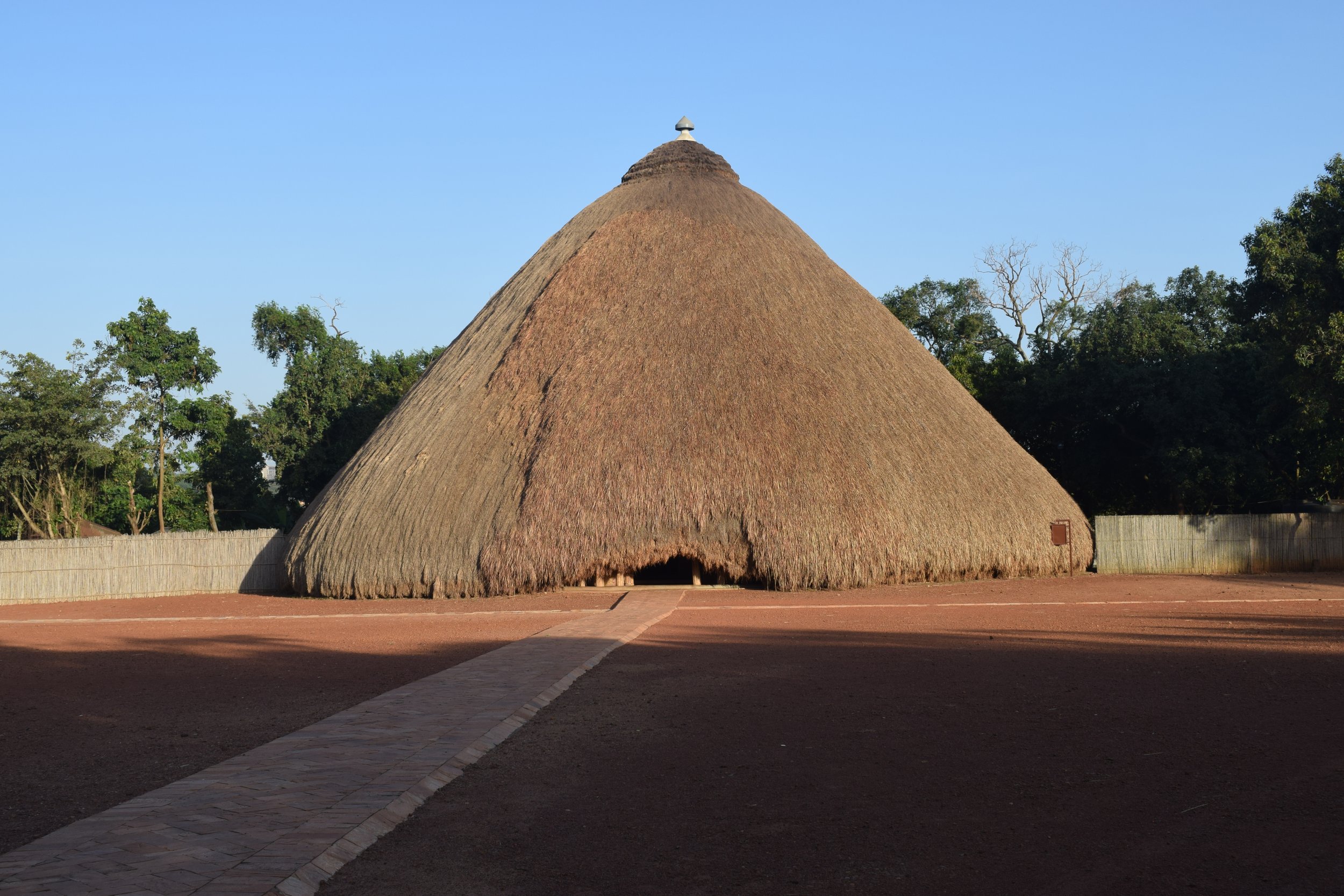
The Kasubi Tombs in Kampala are the burial grounds of four kings (Kabakas) of the Buganda Kingdom. This UNESCO World Heritage Site is one of Uganda's most important cultural landmarks and a masterpiece of traditional architecture.
What Makes Kasubi Special
The tombs were constructed in the late 19th century using traditional methods and materials: wooden poles, reed wattle and daub, and a thick thatched dome. The main building, Muzibu Azaala Mpanga, is circular in plan with a domelike overall shape, approximately 31 meters in circumference and 7.5 meters high.
The interior mirrors a sacred forest (Kibira) with 52 circular rings symbolizing all the Buganda clans. The tombs are housed behind a barkcloth curtain, concealed from public view.
Visitors can explore the gatehouse (Bujjabukula); the drum house (Ndoga-Obukaba), which houses the royal drums; the main circular courtyard (Olugya); and several traditional buildings, including "wives' houses" for the deceased kabaka's widows.
The site covers nearly 30 hectares on Kasubi Hill, about 5 kilometers northwest of Kampala city center.
The 2010 Fire and Restoration
On 16 March 2010, a devastating fire destroyed much of the site, including the main building. The cause of the fire remains unknown. The destruction sparked riots in Kampala, highlighting the deep cultural significance of the site to the Baganda people.
The Buganda Kingdom launched a fundraising campaign called Etofaali (Brick) to rebuild the tombs, with support from the government of Uganda and international partners, including Japan. Reconstruction started in 2014, with careful attention to both the physical architecture and the spiritual dimension of the site.
In 2023, the tombs were removed from the UNESCO List of World Heritage in Danger. The site has since reopened to the public and is experiencing a renewed surge of visitors.
Practical Information
Location: Kasubi Hill, Kampala, approximately 5 km from the city center
Opening Hours: 8:30 AM – 6:00 PM daily
Entry Fee: Approximately $10 for foreign non-residents
Best Time: Year-round; mornings are cooler for walking
Dress Code: Modest clothing, covered shoulders, and knees
Kwezi Tip: Book a guided tour with a Buganda historian for a deeper understanding of the spiritual significance and clan system. After 6 PM, the site is traditionally managed by the hereditary wives of the kings, and no male person should enter. Book a Kasubi Tombs tour →
Uganda Martyrs Shrine Namugongo: A Site of Faith and Sacrifice
The Uganda Martyrs Shrine in Namugongo commemorates 45 young Ugandans who were executed between November 1885 and January 1887 for refusing to renounce their Christian faith. The site is one of Africa's most important pilgrimage destinations.
The Martyrdom
In the late 19th century, Kabaka Mwanga II of Buganda saw the new Christian converts as a threat to his authority. He ordered the execution of young palace pages who refused to renounce their faith.
A total of 23 Anglican and 22 Catholic martyrs were executed between November 1885 and January 1887. Twelve of the 22 Catholic martyrs were burnt to death at Namugongo. Other martyrs were hacked to pieces or speared to death.
The Catholic martyrs were beatified by Pope Benedict XV on June 6, 1920, and canonized by Pope Paul VI on October 18, 1964. They are regarded as saints in the Catholic Church.
The Shrine Today
The Namugongo Martyrs Shrine was designed by architect Dr. Danhinden to look like an African hut wrapped around 22 copper pillars, signifying the 22 Catholic martyrs. The circular interior seats up to 1,000 people.
The shrine was built between 1967 and 1975. It was officially opened by His Eminence Cardinal Sergio Pignedoli on June 3, 1975, with thousands of pilgrims, including President Idi Amin, attending.
On February 7, 1993, Pope John Paul II made a pilgrimage to Namugongo and officially declared it a minor basilica. On November 28, 2015, Pope Francis said his pontifical Mass at Namugongo, becoming the third pope to visit the shrine.
Key Features
The Altar: Built on the spot where St. Charles Lwanga, the leader of the Catholic martyrs, was burnt to death on June 3, 1886
The Lake: A man-made pond that once served as a cleansing ground for executioners. Many pilgrims draw water from this lake and give testimonies about its healing powers.
The Torture Tree (Ndazabazadde): The tree where the martyrs were tied and tortured. Its name translates to "the woman's fate that delivers only her losing her offspring."
The Pilgrimage Route (Martyrs Way): A modern stone-paved ring around the amphitheater, altar, and three VIP pavilions
Annual Pilgrimage
Every year on June 3, pilgrims from all over the world gather at Namugongo to commemorate the martyrs. Thousands of Christians from all corners of Uganda and beyond honor the heroes of their faith through prayers, fasting, intercessions, healing and deliverance, and praise and worship, as well as helping the vulnerable and disadvantaged members of society.
Practical Information
Location: Kyaliwajjala, Kira Municipality, Wakiso District, approximately 16 km from Kampala
Opening Hours: 8:00 AM – 6:00 PM daily
Entry Fee: Free (donations welcome)
Best Time: Year-round; June 3 for the annual pilgrimage
Kwezi Tip: The shrine is an active place of worship. Visitors should dress modestly and behave respectfully. Photography is permitted outside the main basilica. Book a Namugongo tour →
Uganda Museum: East Africa's Oldest Museum
The Uganda Museum in Kampala is the oldest in East Africa, officially established in 1908 by the British protectorate government.
History and Collections
The museum's history goes back to 1902, when Deputy Governor George Wilson called for the collection of objects of interest throughout the country. The museum started in a small Sikh temple at Fort Lugard on Old Kampala Hill.
Between the 1920s and 1940s, archaeological and paleontological surveys and excavations were conducted by Church Hill, E. J. Wayland, Bishop J. Wilson, P. L. Shinnie, E. Lanning, and several others, who collected a significant number of artifacts to boost the museum.
The museum moved to its current location on Kitante Hill in 1954. In 2008, the museum turned 100 years old.
What to See
The museum's five galleries provide an overview of the region's rich history, from the prehistoric age to the present. Highlights include:
Ethnological Collections: Traditional life collections of Uganda's cultural heritage
Playable Musical Instruments: Traditional instruments from across Uganda
Archaeology and Paleontology: Artifacts from prehistoric sites across the country
Idi Amin Exhibition: Documentation of Uganda's complex history
Outdoor Village: Showcasing traditional architecture from across the country
Entomology: Insect collections
Practical Information
Location: Plot 5 Old Kira Road, Kitante Hill, Kampala (near Mulago Referral Hospital)
Opening Hours: 10:00 AM – 6:00 PM daily
Entry Fee: Approximately $5–$10 for foreign non-residents
Accessibility: Only the downstairs section is accessible for wheelchair users; there are no disabled bathroom facilities on-site.
Kwezi Tip: The craft shop outside the museum offers locally made souvenirs. Consider combining your museum visit with the Kasubi Tombs for a comprehensive cultural day. Book a Uganda Museum tour →
Ssezibwa Falls: Where Nature and Spirituality Meet
Ssezibwa Falls is not just a natural attraction. It is a sacred site where the River Ssezibwa plunges approximately 17 meters through a narrow rocky cleft into a deep, swirling pool below. Located about 32 kilometers east of Kampala, the falls hold profound spiritual significance for the Baganda people.
The Legend
Among the Baganda, Ssezibwa is not just a river. It is a being. Oral tradition tells of Nakangu Tebateesa, a woman who gave birth not to children but to twin rivers. One became Ssezibwa; the other flowed away as Bwanda (or Mubeya).
The river's name derives from the Luganda phrase "sizibirwa kkubo" (my way cannot be blocked). Standing at the falls, watching water force its way through rock, the meaning feels literal.
Spiritual Significance
For generations, Ssezibwa has been a spiritual destination where people come seeking answers, direction, healing, children, prosperity, or peace. What makes Ssezibwa unusual is how belief systems coexist here.
On one side of the river, traditional shrines sit beneath trees and rocks. Visitors leave offerings: coffee beans, eggs, bark cloth, and local brew. Not far away, Christians gather too, coming for prayer, retreats, and baptism ceremonies in the river's calmer stretches.
Nature and Activities
Beyond its spiritual life, Ssezibwa is a quietly rewarding nature destination. Monkeys rustle through branches overhead. Birds flit across clearings and perch near the riverbanks. Activities include:
Waterfall viewing and photography
Guided cultural storytelling and shrine visits
Forest and nature walks
Bird-watching and primate sightings
Picnics and relaxation
Spiritual retreats and meditation
Christian baptisms and prayer sessions (by arrangement)
Practical Information
Location: Kayanja, Mukono District, approximately 32–35 km east of Kampala, just off the Kampala–Jinja Highway
Travel Time: About 45 minutes to 1 hour from Kampala, depending on traffic
Entry Fee: $3 for Ugandans/East Africans; $5 for foreign non-residents per person
Guided Walks: $5 for Ugandans/East Africans; $10 for foreign non-residents
Accommodation: Riverside Woods Sezibwa (approximately 4 km from the falls, $35–$50 per night), Bushbaby Lodge ($100 per night)
Best Time: Year-round
Kwezi Tip: Ssezibwa Falls is an ideal day trip from Kampala or a stopover on the way to Jinja. A guided cultural walk adds depth to the experience. Book a Ssezibwa Falls tour. →
Karamoja Museum: Preserving Northern Heritage (Opening 2026)
The Karamoja Museum & Cultural Centre in Moroto District is under construction and nearing completion, with works estimated at 85–87% complete. Once finished, it will become the first museum in the Karamoja sub-region dedicated to preserving and showcasing the rich cultural heritage of the Karamojong people.
What to Expect
The museum is being implemented under the Ministry of Tourism, Wildlife, and Antiquities as part of government efforts to promote cultural tourism and heritage conservation.
The architectural design of the museum reflects the traditional manyatta style common in the region, blending cultural authenticity with modern construction standards.
Once completed, the museum will feature a variety of collections, including archaeological, ethnographic, and natural history exhibits such as traditional tools, artifacts, and fossils.
Why It Matters
The museum addresses a critical need. Karamoja is transitioning from traditional lifestyles to more settled ways of living. Having a museum ensures that future generations will still be able to understand and appreciate the region's cultural roots.
The museum is expected to boost tourism in the region and contribute to increased revenue from both domestic and international visitors, positioning Karamoja as a key cultural destination in Uganda.
Practical Information
Location: Moroto District, at the foot of Mount Moroto
Status: Nearing completion (estimated 2026 opening)
Best Time: Dry seasons (June–August, December–February) for travel
Kwezi Tip: The Karamoja Museum will pair well with game viewing in Kidepo Valley National Park, Uganda's most remote wilderness. Enquire about Karamoja tours →
People Also Ask About Cultural Sites in Uganda
Q: What is the most famous cultural site in Uganda?
A: The Kasubi Tombs in Kampala are the most famous cultural site in Uganda. They are a UNESCO World Heritage Site and the burial grounds of four Buganda kings. The site is considered "one of the most remarkable buildings using purely vegetal materials in the entire region of sub-Saharan Africa."
Q: What is the Uganda Martyrs Shrine?
A: The Uganda Martyrs Shrine in Namugongo commemorates 45 young Ugandans executed between 1885 and 1887 for refusing to renounce their faith. The site is a major pilgrimage destination, visited by three popes: Paul VI (1969), John Paul II (1993), and Francis (2015).
Q: What can I see at the Uganda Museum?
A: The Uganda Museum displays ethnological, natural-historical, and traditional life collections of Uganda's cultural heritage. Highlights include playable musical instruments, archaeological artifacts, an Idi Amin exhibition, and an outdoor village showcasing traditional architecture.
Q: What is the cultural significance of Ssezibwa Falls?
A: Among the Baganda, Ssezibwa is not just a river but a spiritual being. Oral tradition tells of a woman who gave birth to twin rivers. The falls are a place where people seek healing, direction, children, prosperity, or peace. Traditional shrines and Christian prayer sites coexist at the location.
Q: What cultural sites are near Kampala?
A: Several significant cultural sites are near Kampala. The Kasubi Tombs are located 5 km northwest of the city center. The Uganda Museum is 15 minutes from the city center. The Uganda Martyrs Shrine at Namugongo is 16 km from Kampala. Ssezibwa Falls is 32 km east of Kampala.
Q: What is the best time to visit cultural sites in Uganda?
A: Cultural sites can be visited year-round. The dry seasons (June–August and December–February) offer more comfortable conditions for walking and travel. For the annual pilgrimage to Namugongo, June 3 is the most significant date.
Q: What should I wear when visiting cultural sites in Uganda?
A: Dress modestly when visiting cultural sites in Uganda, especially religious sites. Shoulders and knees should be covered. Remove hats and sunglasses when entering sacred spaces. Follow your guide's instructions about photography and behavior.
Q: Are cultural sites in Uganda expensive to visit?
A: Most cultural sites in Uganda are affordable. Entry to the Kasubi Tombs costs approximately $10 for foreign non-residents. The Uganda Museum costs approximately $5–$10. Ssezibwa Falls costs $5 for foreign visitors. The Namugongo Shrine is free, but donations are welcome.
Q: Can I visit cultural sites on a self-guided tour?
A: Yes, many cultural sites can be visited independently. However, guided tours provide context that enriches the experience. At Kasubi, a guide explains the spiritual significance and clan system. At Ssezibwa, a guided walk reveals the stories and beliefs associated with the site.
Q: How do I combine cultural sites with wildlife viewing?
A: Uganda's cultural sites can be combined with wildlife viewing. Many travelers combine the Kasubi Tombs and Uganda Museum in Kampala with gorilla trekking in Bwindi. The Karamoja Museum will pair with Kidepo Valley National Park. Kwezi Adventures specializes in multi-destination itineraries that include both cultural and wildlife experiences.
Start Planning Your Cultural Tour
Uganda's must-see cultural sites offer a journey through the country's royal heritage, religious history, and living traditions. From the UNESCO-listed Kasubi Tombs to the sacred waters of Ssezibwa Falls, each location tells a story of resilience, faith, and cultural continuity.
At Kwezi Adventures, we design cultural tours that respect local traditions while providing meaningful experiences for visitors. We work with local guides, support heritage preservation, and ensure our visits benefit the communities we engage with.
Ready to explore Uganda's cultural heritage?
Contact Kwezi Adventures today. Tell us your interests, your travel dates, and your group size. We will create a cultural itinerary that connects you with the heart of the Pearl of Africa. Your cultural journey starts here.
