
Start Your Mount Kenya Trekking Adventure
Kwezi Adventures designs private trekking expeditions to Africa's second-highest mountain. Tell us your trekking goals →
Introduction
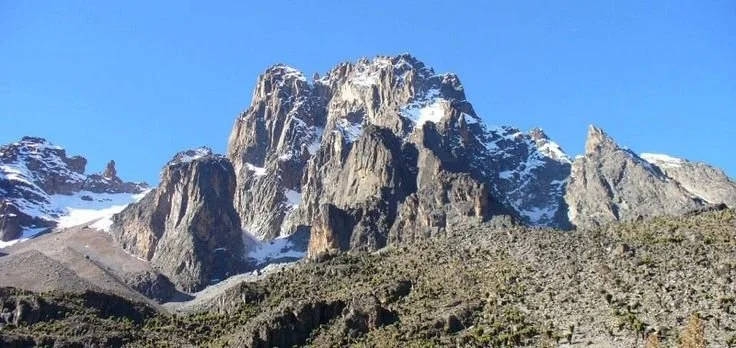
Mount Kenya National Park protects the area surrounding Africa's second-highest peak. The mountain rises 5,199 metres above sea level, making it the second-highest mountain in Africa after Kilimanjaro. Unlike Kilimanjaro, which is a freestanding volcano, Mount Kenya is an extinct shield volcano with a complex summit area featuring three distinct peaks.
The park was established in 1949 and covers 278 square miles of mountain terrain. In 1978, the summit and the park became a biosphere reserve. In 1997, UNESCO designated Mount Kenya National Park as a World Heritage Site.
What makes Mount Kenya different from other African peaks is its approachability combined with genuine wilderness. The trekking peak, Point Lenana, at 4,985 metres, requires no technical climbing experience. Yet the mountain retains a wild character that Kilimanjaro has lost to crowded trails and permanent hut infrastructure.
This guide covers everything you need for a 2026 Mount Kenya trek. We include current entry fees, route comparisons, altitude preparation, wildlife viewing, and packing essentials. The information comes from Kenya Wildlife Service sources and direct trekking experience.
Mount Kenya National Park 2026 Entry Fees
Mount Kenya National Park is managed by the Kenya Wildlife Service. The following fees are applicable for 2026.
| Visitor Category | Adult Fee (USD) | Child Fee (USD) |
|---|---|---|
| Non-Resident (International Visitor) | $80 | $35–$40 |
| Kenyan Citizen / EAC Resident | KES 800 | KES 400 |
Fees are per person per 24 hours. Most treks take four to six days, so you should budget for multiple days of park entry.
Mount Kenya National Park also requires a rhino sanctuary fee of approximately $10 per person for treks entering via the Sirimon or Naro Moru routes. This fee supports the protection of the mountain's black rhino population.
Camping fees within the park are additional. Huts managed by the Mountain Club of Kenya cost approximately $30 per person per night. Private tent camping costs approximately $15 per person per night.
Kwezi Fee Note: We include all park fees, camping fees, and hut fees in your quoted trekking package. No surprise charges will appear after booking.
The Mountain: Three Peaks, One Massif
Mount Kenya is a massive free-standing mountain with a diameter exceeding 100 kilometres. The central peaks are the eroded remnants of a volcanic plug that solidified approximately 2.6 million years ago.
The summit area comprises three peaks:
| Peak | Height | Technical Difficulty |
|---|---|---|
| Batian | 5,199 metres | Technical climbing, Grade IV |
| Nelion | 5,188 metres | Technical climbing, Grade IV |
| Point Lenana | 4,985 metres | Trekking, no technical equipment required |
Batian and Nelion are the two highest peaks. They are named after Maasai leaders. These peaks require rock climbing skills, ropes, and experience on exposed terrain. Only experienced mountaineers should attempt them.
Point Lenana is a trekking peak. It is accessible to fit walkers with proper acclimatisation. No ropes or technical climbing gear are required. The summit day involves a steep scramble over scree and rock, but no vertical climbing.
Most visitors to Mount Kenya National Park aim for Point Lenana. The trek takes four to six days, depending on the route and your acclimatisation schedule.
Mount Kenya National Park Vegetation Zones
Mount Kenya supports eight distinct vegetation bands from base to summit. Each zone represents a different ecosystem with unique plant and animal communities.
Cultivated Zone (Below 1,800 metres)
The lower slopes of the mountain are intensively farmed. Coffee, tea, maize, and beans are the main crops. The Kikuyu, Embu, and Meru peoples have cultivated these slopes for generations.
Montane Forest (1,800 to 2,500 metres)
A dense ring of forest covers the lower slopes. Cedar and yellowwood are prominent on the drier western and northern flanks. The forest is unusually luxuriant due to nutrient-rich volcanic soils and the equatorial location.
This zone supports the highest density of wildlife. Elephants, buffalo, black rhinos, and leopards live in these forests.
Bamboo Zone (2,500 to 3,000 metres)
Bamboo predominates on the upper margins of the forest. The bamboo is entirely natural, not the result of deforestation. It grows thickly on the wetter slopes but is sparse or absent on the drier northern side.
Timberline Forest (3,000 to 3,500 metres)
Smaller trees dominate this zone. African rosewood and giant St John's wort are characteristic. The trees decrease markedly in height with increasing elevation and merge into the heathland zone.
Heathland and Chaparral (3,200 to 3,800 metres)
Heathland dominates the wetter areas. Erica species are common. Chaparral dominates the drier areas with more aromatic shrubs, including African sage and sugarbush.
Afro-Alpine Zone (3,800 to 4,500 metres)
This zone is characterised by thin, dry air and huge temperature fluctuations. Vegetation becomes sparser. Giant groundsels and giant lobelias are the most spectacular plants in this zone. These plants have adapted to the extreme conditions with specialised growth forms that protect their growing tips from freezing night temperatures.
Nival Zone (Above 4,500 metres)
The nival zone is the area above most vegetation. Scattered giant groundsels and lobelias persist up to approximately 4,600 metres. Above that, bare rock, glaciers, and ice dominate.
Mount Kenya National Park Trekking Routes
Mount Kenya has three main trekking routes. Each offers a different experience in terms of scenery, difficulty, and crowd levels.
Sirimon Route
The Sirimon route approaches the mountain from the north-west. It is widely considered the easiest and most scenic route up Mount Kenya.
Key features of the Sirimon route:
Gradual ascent profile
Excellent views of the main peaks
Lower crowd density than Naro Moru
Good for acclimatisation
Typically 4 to 5 days
The route passes through rich forest before emerging into the sprawling moorlands of Mackinder's Valley. The ascent is steady and manageable, making it a good choice for first-time high-altitude trekkers.
The Sirimon route is popular with larger trekking groups because it follows the same trail up and down. Those unable to reach the summit can stay behind at lower camps and wait for the rest of the group to complete the trek.
Naro Moru Route
The Naro Moru route approaches the mountain from the west. It is the most direct and fastest route to Point Lenana.
Key features of the Naro Moru route:
Steepest ascent profile
Most direct route
Vertical bog sections can be challenging in wet conditions.
Popular with budget trekkers
Typically, 3 to 4 days
The route owes its popularity to the steady rate of ascent and the quick descent that is possible. However, the infamous "vertical bog" section becomes a slippery, energy-sapping climb in wet weather. Trekkers on this route should be prepared for mud.
Chogoria Route
The Chogoria route approaches the mountain from the south-east. It is unarguably the most scenic route up Mount Kenya.
Key features of the Chogoria route:
Most spectacular scenery
Views of Lake Michaelson and the Gorges Valley
Steeper ascent profile
Lower crowd density
Typically, 5 to 6 days
The Chogoria route features incredible sheer-sided gullies, tarns, and waterfalls. The approach by the 4x4 vehicle from Chogoria town cuts out the lower forest section, allowing trekkers to start at a higher elevation. The views of the peaks from this side of the mountain are unmatched.
Sirimon-Chogoria Traverse
The Sirimon-Chogoria traverse combines the best of both routes. Trekkers ascend via the gradual Sirimon route and descend via the spectacular Chogoria route.
Key features of the traverse:
Most comprehensive Mount Kenya experience
Gradual ascent, scenic descent
No repeating the same trail
Typically, 5 to 6 days
This is the recommended route for trekkers who have the time and want the complete Mount Kenya experience. You see two different sides of the mountain and avoid retracing your steps.
Mount Kenya National Park Sample Trekking Itinerary: Sirimon-Chogoria Traverse
The following 6-day itinerary is the most popular Mount Kenya trekking route.
Day 1: Nairobi to Nanyuki
Morning drive from Nairobi to the town of Nanyuki on the northwestern slopes of the mountain. The drive takes approximately three to four hours. Afternoon acclimatisation walk at a lower altitude. Overnight at a hotel or lodge in Nanyuki.
Day 2: Nanyuki to Old Moses Camp
Drive to the Sirimon Gate (2,650 metres). Enter the park and begin trekking. The trail follows a good path through the montane forest and bamboo zones. Arrive at Old Moses Camp (3,300 metres). Trekking time: 3 to 4 hours.
Day 3: Old Moses Camp to Shipton Camp
The trail climbs through the heathland zone into the Afro-alpine zone. The landscape opens up dramatically. Mackinder's Valley spreads below you with views of the main peaks. Arrive at Shipton Camp (4,200 metres). Trekking time: 5 to 6 hours.
Day 4: Shipton Camp to Point Lenana to Minto's Camp
Wake at 2:30 AM for the summit attempt. The trail climbs steeply over scree and rock. The pre-dawn start allows you to reach the summit for sunrise. From Point Lenana (4,985 metres), you can see Mount Kilimanjaro to the south, Mount Elgon to the west, and the Indian Ocean to the east on a clear day.
After summit photos, descend to Shipton Camp for breakfast, then continue down the Chogoria side to Minto's Camp. Trekking time: 10 to 12 hours.
Day 5: Minto's Camp to Chogoria Road Head
Descend through the spectacular Gorges Valley. Pass Lake Michaelson, one of the most photographed spots on the mountain. Arrive at the Chogoria Road Head (3,300 metres). Trekking time: 5 to 6 hours.
Day 6: Chogoria to Nairobi
Morning descent through the forest to Chogoria Gate. Transfer by vehicle to Nairobi, arriving in the afternoon.
Kwezi Customisation: All itineraries are fully customisable. Tell us how many days you have and your fitness level. Request a custom Mount Kenya trek →
Preparing for High Altitude
Altitude sickness is the main challenge on Mount Kenya. Point Lenana stands at 4,985 metres. At this elevation, the air contains approximately 50 per cent of the oxygen available at sea level.
Symptoms of altitude sickness include headache, nausea, dizziness, fatigue, and shortness of breath. In severe cases, it can progress to high-altitude pulmonary oedema or high-altitude cerebral oedema. These are medical emergencies requiring immediate descent.
Acclimatisation Strategies
The Sirimon route is recommended for first-time high-altitude trekkers because of its gradual ascent profile. The Naro Moru route is the most direct but also the steepest, offering less time for acclimatisation.
The standard acclimatisation principle is "climb high, sleep low". On Mount Kenya, this is most relevant on Day 3 when you climb to Kami Hut before descending slightly to Shipton Camp.
Drink three to four litres of water per day. Dehydration exacerbates altitude symptoms. Avoid alcohol and sleeping pills, which depress respiration.
Listen to your body. If you develop symptoms of altitude sickness, do not continue ascending. Descend immediately if symptoms worsen.
Physical Preparation
Mount Kenya trekking involves walking five to seven hours per day on steep, uneven terrain. You should be comfortable walking 10 to 15 kilometres with a daypack at moderate elevations before attempting the trek.
Cardiovascular fitness is important. Regular hiking, running, or cycling in the months before your trek will make the experience more enjoyable.
The summit day is the most demanding. You will walk for 10 to 12 hours, starting at 2:30 AM on steep terrain in cold conditions. Strong legs and good balance are essential.
Wildlife in Mount Kenya National Park
Mount Kenya National Park protects a variety of large mammals. Elephants, buffalo, black rhinos, and leopards live in the forest zones.
Elephant sightings are most common in the montane forest zone, particularly on the wetter southeastern slopes. Keep a respectful distance. Elephants on the mountain are wild and not habituated to vehicles.
Buffalo are also common in the forest zone. They are more dangerous than they appear. Do not approach them on foot.
Leopards are present but rarely seen. They are most active at night and typically avoid trekkers.
Black rhinos live in the forest zone but are extremely elusive. A small population is protected within the park's rhino sanctuary.
Several endangered and rare species also live in the park. These include the sunni buck and the albino zebra.
The mountain is an important bird area. Fifty-three of Kenya's 67 African highland biome species occur on Mount Kenya.
Best Time to Trek Mount Kenya in Mount Kenya National Park
Mount Kenya can be trekked year-round, but conditions vary significantly by season.
Dry Seasons: January to March and June to October
These months offer the best trekking conditions. The trails are dry. The skies are clear. The views of the peaks are unobstructed.
January to March is warmer than the mid-year dry season. June to October is cooler but still dry. Both periods are suitable for trekking.
Wet Seasons: March to May and October to December
The long rains fall from March to June. The short rains fall from October to December. Trekking during these months is more challenging.
The trails become muddy and slippery. The vertical bog section on the Naro Moru route is particularly difficult. The peaks are often shrouded in cloud.
That said, wet-season trekking has advantages. The mountain is quieter. The vegetation is lush and green. Bird watching is excellent.
Kwezi Recommendation: For most trekkers, the January to March window offers the best combination of good weather, clear views, and manageable crowd levels.
Packing for Your Mount Kenya National Park Trek
Clothing
Thermal base layers (top and bottom)
Fleece jacket or mid-layer
Insulated down or synthetic jacket (essential for summit day)
Waterproof and windproof outer jacket
Waterproof trousers
Trekking trousers (not jeans)
A warm hat that covers the ears
Gloves (liner gloves plus insulated mittens)
Buff or neck gaiter
Hiking socks (wool or synthetic, multiple pairs)
Footwear
Waterproof hiking boots with good ankle support
Camp shoes (trainers or sandals for around camp)
Gaiters (essential for the vertical bog on the Naro Moru route)
Equipment
Daypack (30 to 40 litres) for carrying your daily gear
Sleeping bag rated to -10 degrees Celsius
Sleeping bag liner for added warmth
Head torch with extra batteries (essential for summit day)
Trekking poles (reduce strain on knees during descent)
Water bottles or hydration bladder (3 to 4 litre capacity)
Sunscreen (high SPF; the equatorial sun burns quickly)
Sunglasses with UV protection (essential for snow glare)
Lip balm with SPF
Personal first aid kit
Diamox (for altitude sickness; consult your doctor)
Optional Items
Camera with extra batteries (batteries drain faster in the cold)
Power bank for charging devices
Books or cards for camp downtime
Earplugs for shared huts
Accommodation in Mount Kenya National Park
Mount Kenya has a mix of public huts, private lodges, and campsites.
Mountain Club of Kenya Huts
The Mountain Club of Kenya maintains huts at several locations on the mountain. These include Old Moses Camp, Shipton Camp, and Mackinder's Camp. The huts provide basic shelter with bunk beds and mattresses. Trekkers must bring their own sleeping bag.
Hut fees are approximately $30 per person per night. Bookings should be made in advance through the Mountain Club of Kenya or your tour operator.
Private Campsites
Tented camping is permitted at designated campsites. Your trekking operator will provide tents, sleeping mats, and cooking equipment. Camping offers more flexibility than huts but requires carrying more gear.
Lodge Accommodation
At the park boundaries, several lodges offer comfortable accommodation before and after your trek. The Fairmont Mount Kenya Safari Club and Serena Mountain Lodge are popular options for a night of luxury after the mountain.
People Also Ask About Mount Kenya National Park.
Q: What is Mount Kenya National Park best known for?
A: Mount Kenya National Park is best known for protecting Africa's second-highest mountain. The park features three summit peaks, with Point Lenana being the trekking peak at 4,985 metres. It is a UNESCO World Heritage site and a biosphere reserve.
Q: How much are the entry fees for Mount Kenya National Park in 2026?
A: For non-resident adults, entry fees are $80 per 24-hour period. Most treks take four to six days, so you should budget for multiple days of park entry.
Q: Do I need technical climbing experience to summit Mount Kenya?
A: No. The trekking peak, Point Lenana at 4,985 metres, requires no technical climbing equipment or experience. It is a steep trekking ascent over scree and rock. The higher peaks of Batian and Nelion require technical climbing skills and ropes.
Q: Which is the easiest route up Mount Kenya?
A: The Sirimon route is generally considered the easiest and most scenic route up Mount Kenya. It offers a gradual ascent profile and good acclimatisation opportunities. The Naro Moru route is more direct but steeper.
Q: What is the best time of year to trek Mount Kenya?
A: The dry seasons from January to March and June to October offer the best trekking conditions. The trails are dry, the skies are clear, and the views of the peaks are unobstructed.
Q: Can I see wildlife on Mount Kenya?
A: Yes. The montane forest zone is home to elephants, buffalo, black rhinos, and leopards. The mountain is also an Important Bird Area with over 50 species of highland birds.
Q: What is the altitude of Point Lenana?
A: Point Lenana stands at 4,985 metres (16,355 feet) above sea level. This makes it the third-highest peak on Mount Kenya after Batian (5,199m) and Nelion (5,188m).
Q: How many days do I need to trek Mount Kenya?
A: Most treks take four to six days, depending on the route and your acclimatisation schedule. The Sirimon-Chogoria traverse typically takes five to six days. The Naro Moru route can be completed in three to four days.
Q: Do I need a guide to climb Mount Kenya?
A: The Kenya Wildlife Service strongly recommends hiring a licensed guide for safety and navigation. Guides are familiar with the routes, altitude protocols, and emergency procedures. Kwezi Adventures provides experienced mountain guides on all treks.
Q: What should I pack for Mount Kenya?
A: Pack warm clothing for summit temperatures below freezing, waterproof layers for rain, sturdy hiking boots, a head torch for the pre-dawn summit start, and high SPF sunscreen. A detailed packing list is provided when you book.
Q: Is Mount Kenya harder than Kilimanjaro?
A: Mount Kenya is generally considered more challenging than Kilimanjaro for several reasons. The trails are steeper and less developed. The summit day involves a scramble over scree and rock rather than a straightforward walk. Altitude sickness is equally possible on both mountains.
Q: Can I combine Mount Kenya with a safari?
A: Yes. Many travellers combine a Mount Kenya trek with a wildlife safari in the Maasai Mara, Lake Nakuru, or Amboseli. Kwezi Adventures specialises in multi-destination itineraries.
Conservation and Responsible Trekking
Mount Kenya faces significant conservation challenges. The mountain is an important water tower, providing water for approximately 50 per cent of Kenya's population and producing 70 per cent of Kenya's hydroelectric power.
Human-wildlife conflict has increased on the lower slopes. As human settlements expand, wildlife corridors to the Aberdare Forest have been blocked. Elephants and buffalo occasionally raid crops, leading to conflict with farmers.
Climate change is affecting the mountain's glaciers. The small flank glaciers that surround the central peaks are relic remnants of a Holocene ice cap that was far larger when first observed by Europeans in the nineteenth century.
Trekking responsibly helps protect the mountain. Stay on designated trails to prevent erosion. Pack out all rubbish, including biodegradable waste. Do not feed or approach wildlife. Support local porters and guides by paying fair wages.
Start Planning Your Mount Kenya Trek.
Mount Kenya National Park offers a genuine high-altitude wilderness experience that rivals any mountain trek in Africa. The views from Point Lenana at sunrise are unforgettable. The giant groundsels and lobelias of the Afro-alpine zone create a landscape found nowhere else on Earth.
Kwezi Adventures has been guiding trekkers up Mount Kenya for over a decade. We know the best routes for your fitness level. We know the best camps for acclimatisation. We know how to manage altitude, weather, and logistics so you can focus on the mountain.
Ready to stand on Africa's second-highest peak?
Contact Kwezi Adventures today. Tell us your preferred route, your available days, and your trekking experience. We will create a custom itinerary that matches your goals. Your Mount Kenya adventure awaits.
