
Maasai Mara National Reserve Kenya
Start Planning Your Maasai Mara National Reserve Safari
Kwezi Adventures designs private safaris to Kenya’s most celebrated wildlife reserve. Tell us your travel dates →
Introduction
The Maasai Mara National Reserve sits in southwestern Kenya, forming the northern extension of the Serengeti ecosystem. This contiguous wilderness spans the Tanzania-Kenya border, allowing wildlife to move freely between the two countries. The reserve covers approximately 1,500 square kilometres of open grasslands, acacia woodlands, and riverine forests.
What makes the Maasai Mara different from other African parks is its wildlife density. Because the reserve is relatively compact, animals cannot easily disappear into vast expanses of wilderness. This concentration creates reliable sightings even on short visits. First-time safari travellers consistently leave with photographs of lions, elephants, giraffes, and zebras.
The reserve takes its name from the Maasai people, who have lived alongside this wildlife for centuries, and the Mara River, which flows through the reserve and provides the dramatic crossing points during the Great Migration.
This guide covers everything you need to know for a 2026 visit. We include current entry fees, month-by-month wildlife predictions, accommodation comparisons, and honest assessments of the main reserve versus private conservancies. The information comes from direct experience and verified official sources.
Maasai Mara National Reserve 2026 Entrance Fees
The Narok County Government sets the entry fees for the Maasai Mara National Reserve. Effective from 1 January 2026, the fees operate on a 12-hour ticket system. Your ticket is valid from 6:00 AM to 6:00 PM on the day of entry.
Maasai Mara National Reserve Non-Resident Entrance Fees
For visitors from outside Kenya and the East African Community, the fees are as follows:
| Season | Period | Adult | Child (9–17 years) |
|---|---|---|---|
| Low Season | 1 January – 30 June 2026 | USD 100 | USD 50 |
| High Season | 1 July – 31 December 2026 | USD 200 | USD 50 |
Children under 8 years of age at the time of exit are admitted free of charge. Children aged 9 to 17 inclusive pay the child rate regardless of season.
Important note for travellers staying outside the reserve: you must pay the daily entry fee each day you enter. Departure by road must occur by 10:00 AM. Exiting after this time will incur an additional day's fee. If departing by air, you must arrive at the airstrip by 10:00 AM.
Maasai Mara National Reserve East African Resident Entrance Fees
If you hold residency in Kenya, Uganda, Tanzania, Rwanda, or Burundi, you qualify for East African resident rates. You must present your passport displaying work permits or appropriate visas to prove your status. Kenyan citizens may present their national ID.
East African resident rates for 2026 are:
| Period | Adult | Child (9–17 years) |
|---|---|---|
| 1 January – 30 June | KSh 2,500 | KSh 1,000 |
| 1 July – 31 December | KSh 5,000 | KSh 2,000 |
Maasai Mara National Reserve Conservancy Fees
If you choose to stay in a private conservancy bordering the reserve, you will pay additional conservancy fees on top of the reserve entry fees. These fees typically range from USD 80 to USD 150 per person per day and are usually included in your lodge rate. The fees go directly to the Maasai landowners who lease their land for conservation and to the community conservancy operating costs.
Maasai Mara National Reserve Best Time to Visit Month by Month
The Maasai Mara offers excellent wildlife viewing year-round, but different months deliver different experiences. The following guide helps you match your travel dates to your priorities.
July
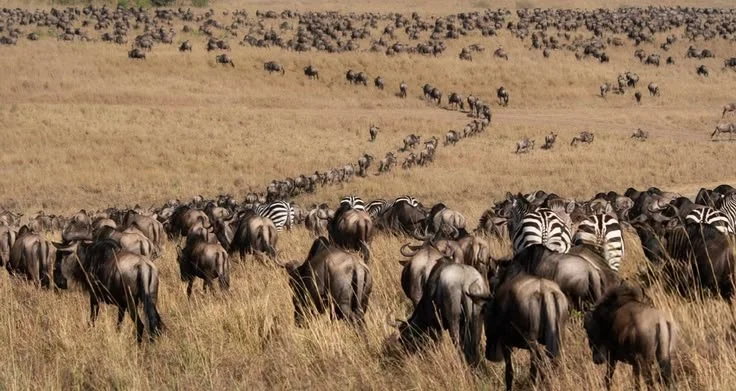
The first waves of the Great Migration arrive in July. Over one million wildebeest and hundreds of thousands of zebra and gazelle cross from the Serengeti into the Maasai Mara. The herds spread across the southern and western corridors of the reserve. Predator activity heightens immediately, with lions, leopards, cheetahs, hyenas, and crocodiles taking advantage of the herds’ movement. The weather is dry with clear skies, and the grass remains relatively short, making wildlife spotting easier than later in the season.
This month has slightly fewer visitors than August, offering a balance of migration action and crowd levels.
August
August is the peak of the Great Migration in the Maasai Mara. Over 1.5 million wildebeest and 200,000 zebras surge across the Mara River in what is one of nature’s most dramatic spectacles. Crocodiles wait in the water. Lions and cheetahs follow the herds on land. The river crossings are unpredictable, but August has the most consistent action.
For the best chance of witnessing a crossing, base yourself near the northern Mara River at camps in the Mara Triangle or near the Talek River confluence. Plan to stay at least three to four nights because crossings depend on herd movement and can happen at any time.
The downside of August is the crowds. The main reserve can feel congested, with multiple vehicles surrounding a single sighting. This is the month when booking 12 to 18 months in advance is recommended for premium camps.
September
The peak season continues through September. The migration herds are still present in the reserve, with the dramatic crossings often continuing into this month. The northern part of the reserve remains the focus of the migration action. The weather stays dry and sunny, with excellent visibility for photography.
Crowds remain high, and prices are at their peak.
October
October marks the final chapter of the Great Migration in the Maasai Mara. The last herds prepare to cross the rivers back into Tanzania. Predator activity peaks as lions, leopards, cheetahs, hyenas, and crocodiles seize their last opportunities before the herds depart. The Talek and Mara River regions are especially active during this period.
Vegetation thins as the dry season progresses, drawing more wildlife into the open. This creates some of the year’s most consistent big cat sightings. Book camps in the northern and central parts of the reserve for optimal access to the remaining herds.
November to May
The wet season, also called the green season, transforms the landscape. The dry golden grass becomes lush and green. This is the low season for tourism, meaning fewer vehicles and lower lodge rates. Wildlife viewing remains very good because resident animals do not migrate. The big cats, elephants, giraffes, and plains game stay in the reserve year-round.
For photographers, the wet season offers dramatic skies and soft post-storm light. For bird watchers, the migratory birds arrive from Europe and northern Africa. Birding is at its peak from November through April.
The occasional afternoon rain is typical. The mornings are often clear, and the midday heat can build before the clouds gather. Some sections of the road network become muddy, but the main roads remain passable.
December to February
The short dry season falls in December, January, and February. Wildlife viewing is excellent because animals gather around remaining water sources. The grass is shorter than in the wet season, making spotting easier. The wildebeest calving season happens during this period, though primarily on the Serengeti side of the border rather than in the Mara itself.
This period offers fewer crowds than the migration season and better weather than the full wet season. It is a good compromise for travellers who cannot visit between July and October.
Kwezi Recommendation for Your Maasai Mara Safari: If your priority is river crossings, book August or September. If you want excellent wildlife viewing with fewer vehicles, consider January or February. If you seek lower rates and lush landscapes, the green season from November to May suits you well. Contact us for help choosing your travel window →
Maasai Mara National Reserve Main Reserve versus Private Conservancies
The Maasai Mara National Reserve sits at the centre of a larger ecosystem that includes 24 community-owned conservancies covering over 450,000 acres. These conservancies are not government land. They belong to more than 17,000 individual Maasai landowners who lease their territory to tourism operators.
This distinction between the main reserve and the private conservancies affects your safari experience significantly.
Main Reserve
The main reserve is managed by the Narok County government. There are 49 camps located inside the reserve boundaries. During the peak migration season, popular sightings can attract 30 or more vehicles. This crowding bothers some visitors and clearly affects animal behaviour. The animals in the main reserve are habituated to vehicles, but they become more alert and less natural when surrounded by a ring of jeeps.
Activities in the main reserve are restricted to day game drives. Night drives are prohibited. Off-road driving is not permitted. You cannot leave your vehicle except at designated picnic sites.
The entry fees paid by visitors go to the county government. The proportion that reaches conservation and community programs has been questioned.
Private Conservancies
The private conservancies border the main reserve and operate on a different model. Each conservancy caps the number of vehicles strictly. For example, Naboisho Conservancy allows only one vehicle per 700 acres. This means you rarely see another vehicle during your game drive.
Activities permitted in conservancies include night drives with spotlights, walking safaris with armed guides, and off-road tracking. These additional activities dramatically increase your chances of seeing nocturnal animals and allow you to follow predators off the main tracks.
Importantly, conservancy fees go directly to the Maasai landowners who lease their land. Annual lease payments to landowners exceed USD 4.8 million. This money provides a financial incentive to keep land unfenced and open for wildlife. During the COVID pandemic, some camps continued making lease payments even while losing money themselves.
Research shows that wildlife corridors have been restored where fences once blocked migration routes. Wild dogs, which had vanished from the area years ago, have been spotted again in places where fences came down. Giraffes now migrate through corridors that did not exist five years ago.
The cost of staying in a conservancy is higher than comparable accommodation inside the main reserve. A night at a high-end eco camp in a conservancy runs between USD 1,200 and USD 2,500 per person. This rate typically includes meals, drinks, two daily game drives, and conservancy fees.
Comparison Table: Main Reserve vs Private Conservancy
| Factor | Main Reserve | Private Conservancy |
|---|---|---|
| Management | Narok County Government | Maasai landowners + tourism operators |
| Vehicle density | High (30+ vehicles at popular sightings) | Very low (capped by conservancy rules) |
| Activities | Day game drives only | Night drives, walking safaris, off road tracking |
| Animal behavior | More vehicle habituated, sometimes stressed | More natural, relaxed |
| Cost | Lower entry fees, moderate lodging | Higher all inclusive rates |
| Conservation impact | Fees to county government | Fees directly to landowners + conservation |
Kwezi Assessment: For travellers with a budget, we recommend staying in a private conservancy. The wildlife experience is superior, the exclusivity feels genuine, and your money does more direct conservation work. For travellers on a tighter budget or those visiting the Mara for the first time on a short trip, the main reserve still delivers excellent wildlife sightings. Discuss your budget with our safari specialists →
Maasai Mara National Reserve Wildlife
The Great Migration
The Great Migration is the movement of over 1.5 million wildebeest, 200,000 zebras, and hundreds of thousands of gazelles in an annual circuit across the Serengeti Mara ecosystem. The herds travel approximately 1,200 miles in a roughly circular route. They are constantly seeking fresh grass and water.
The migration arrives in the Maasai Mara between July and October. The most dramatic moments are the river crossings, where thousands of animals plunge into the Mara River while crocodiles wait below. Lions and other predators patrol the banks, picking off stragglers.
Witnessing a river crossing requires patience. The herds can spend days massing on the riverbank before crossing. Some visitors spend three or four full days on the river before seeing a crossing. When the crossing happens, it lasts only minutes. The combination of thundering hooves, splashing water, and screaming guides creates genuine adrenaline.
The best locations for crossing viewing are the Mara Triangle and the areas around the Talek River confluence. Camps near these areas provide the fastest access to crossing points.
Big Cats
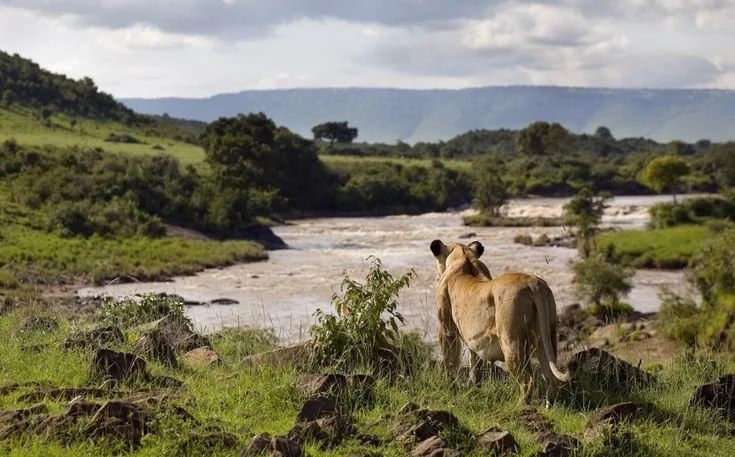
The Maasai Mara is famous for its predator density. Lions are abundant and easily seen. The reserve supports over 400 lions, making it one of the best places in Africa to observe lion behaviour. Lion prides can be found resting in the open grasslands or hunting at dawn and dusk.
Cheetahs are also common in the Mara. The open plains suit their hunting style, and the reserve has one of the highest cheetah densities in Africa. Female cheetahs with cubs are frequently sighted.
Leopards are more elusive than lions but still regularly seen, especially along the riverine woodlands. The thick cover of the riverbanks provides ideal leopard habitat. Early morning and late afternoon game drives offer the best chance of leopard sightings.
Elephants
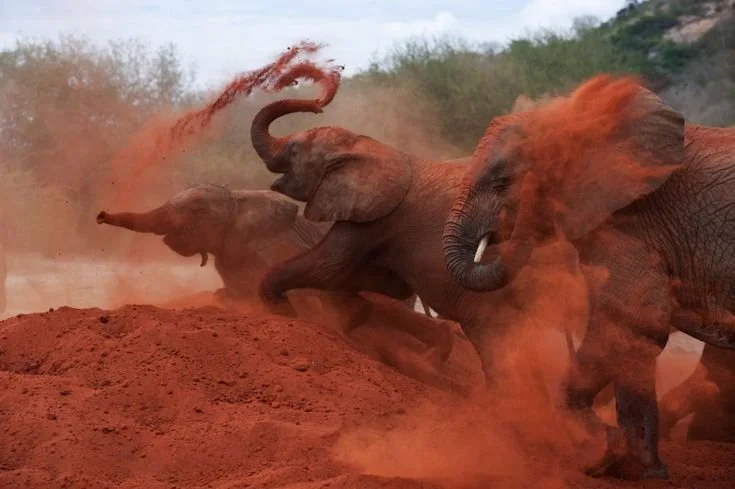
The Maasai Mara supports a healthy elephant population. Unlike Amboseli, where elephants are the main attraction, in the Mara, they are part of a complete wildlife community. Elephant herds are commonly seen on the open plains and in the woodlands.
Rhinoceros
Both black and white rhinos live in the Maasai Mara, though sightings require luck and patience. The rhino population is smaller than in Lake Nakuru or Ol Pejeta. However, visitors do see rhinos, especially in the quieter areas of the reserve away from the migration crowds.
Other Mammals
The reserve supports a complete range of safari animals. Hippos and crocodiles fill the Mara River. Giraffes browse the acacia trees. Buffalo herds gather in the hundreds. Zebras, wildebeest, topi, impala, and gazelles provide the grazing base that supports the predators. Hyenas and jackals complete the carnivore community.
Kwezi Wildlife Note: The Maasai Mara delivers the most consistent predator sightings in Africa. For first-time safari travellers, this reliability makes it the ideal destination. You will not leave wondering if you missed something. The animals are there, and with a competent guide, you will see them. Book your Mara safari with Kwezi Adventures →
Maasai Mara National Reserve Safari Activities
Game Drives
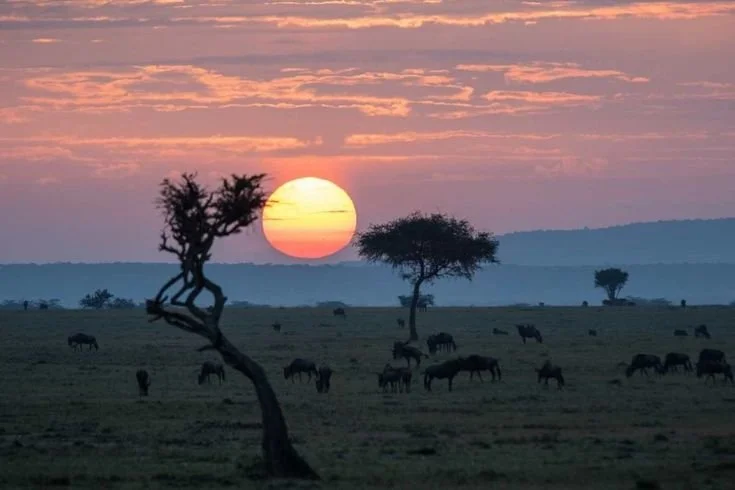
Game driving is the primary activity in the Maasai Mara. Most camps offer two game drives per day: one starting at dawn and another in the late afternoon, continuing into sunset. The morning drive typically runs from 6:30 AM to 10:00 AM. The afternoon drive runs from 4:00 PM to 6:30 PM.
The early morning and late afternoon provide the best light for photography and the highest animal activity. The midday heat makes animals rest in the shade, making them harder to see.
Most game drives use specially modified 4x4 vehicles with pop-up roofs. Your guide communicates with other guides using two-way radios, sharing information about recent sightings.
Maasai Mara National Reserve Hot Air Balloon Safari
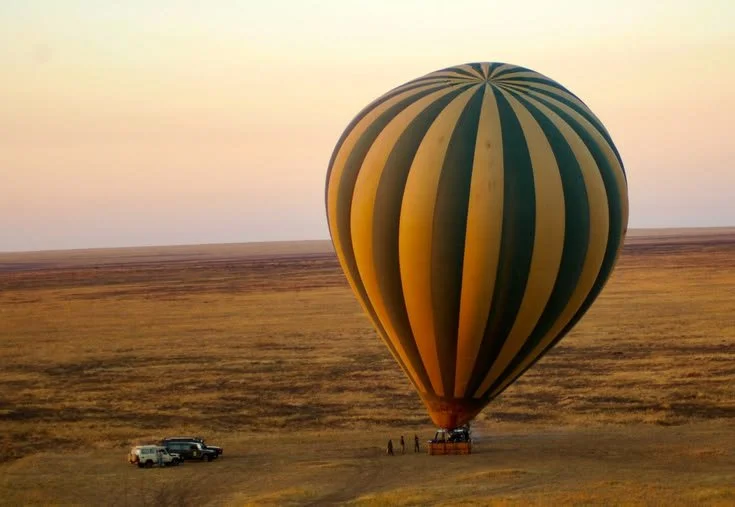
The hot air balloon safari has become a signature Maasai Mara experience. The flight takes off at dawn, carrying up to 16 passengers in a basket suspended beneath a massive balloon. The view from above the savannas and rivers is breathtaking. Herds of wildebeest and zebra spread across the grass like moving water. Hippos float in the river pools below.
After landing, the experience continues with a champagne breakfast set up in the bush. Tables are laid with white cloths, and staff serve a full cooked breakfast surrounded by wildlife.
The cost of a balloon safari in the Maasai Mara is approximately USD 600 per person. This does not include park entry fees or transport to the launch site. Bookings should be made well in advance, especially during the migration season.
Maasai Village Visit
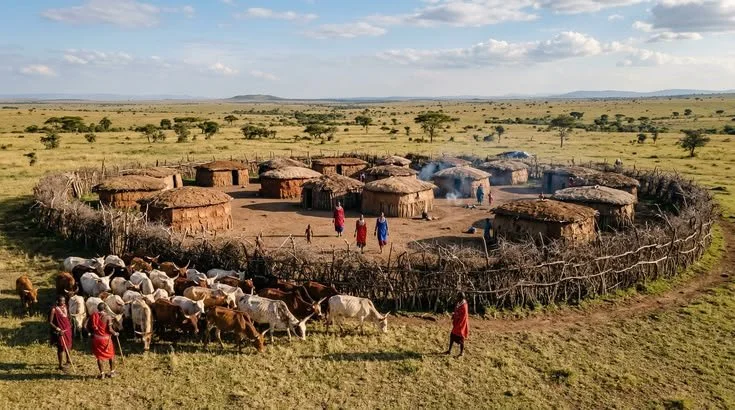
Visiting a Maasai village, called a manyatta, offers insight into the traditional pastoralist culture that has coexisted with wildlife for centuries. The visit typically includes a welcome song and dance inside the boma or corral, an explanation of village life, including the construction of the mud and dung houses, a fire-making demonstration, and an opportunity to purchase beadwork directly from the women who made it.
The entry cost for a village visit is approximately USD 20 per person. Villagers appreciate cash tips distributed directly to the families you visit.
Kwezi Cultural Note: We arrange village visits that respect local customs and ensure fair compensation. Photography requests should be made politely, and some villagers may ask for a small additional fee for photographs. This is normal practice and supports the community directly.
Maasai Mara National Reserve Accommodation: Camps and Lodges
The Maasai Mara and its surrounding conservancies offer accommodation for every budget. The following categories help you understand your options.
Budget Camps
Budget camps are located outside the reserve boundaries, usually within a short drive of the Sekenani or Talek gates. These camps provide basic but clean accommodation, often in permanent tents with shared bathroom facilities. Meals are simple but filling. Game drives use shared vehicles.
The main advantage of budget camps is price. A night at a budget camp may cost USD 80 to USD 150 per person, not including park entry fees. The trade-off is distance from the best wildlife areas, requiring longer drives to reach the reserve each morning.
Mid Range Lodges
Mid-range lodges offer comfortable accommodation with private bathrooms, mosquito nets, hot water, and reliable electricity. Many are located inside the reserve on the riverbanks, providing immediate access to wildlife. Rooms are often permanent structures with thatched roofs and stone walls.
A night at a mid-range lodge typically costs USD 200 to USD 400 per person, not including park entry fees. Basecamp Mara, which offers a 4-day fly-in package for USD 1,705 to USD 2,305 per person sharing, depending on season, represents a standard mid-range option.
Luxury Camps
Luxury camps offer exceptional service, gourmet meals, spacious tents with en suite bathrooms, private verandahs, swimming pools, and spa services. Many of the most famous names in African safaris operate in the Maasai Mara: Angama Mara, Mahali Mzuri, and Mara Plains.
Luxury camp rates range from USD 1,200 to USD 2,500 per person per night. These rates typically include meals, drinks, two daily game drives, and conservancy fees if the camp is located in a private conservancy.
The Ritz-Carlton Masai Mara opened in 2025 and charges upwards of USD 5,000 per night.
Kwezi Recommendation: For most travellers, mid-range lodges inside the reserve or luxury camps in the private conservancies offer the best balance of experience and value. Book as far in advance as possible, especially for travel between July and October. Let us recommend accommodation for your travel dates →
Maasai Mara National Reserve Location
By Road
The drive from Nairobi to the Maasai Mara takes five to six hours, depending on road conditions and which gate you use. The route follows the Nairobi Narok highway, passing through the Rift Valley town of Narok. The final section of the drive crosses the Maasai plains on a dirt road that can be rough, especially in the wet season.
Many tour operators include road transport from Nairobi in their package prices. The cost of a private 4x4 transfer for three to four passengers typically ranges from USD 300 to USD 500 round-trip.
By Air
Scheduled and charter flights operate daily from Nairobi’s Wilson Airport to several airstrips inside and near the Maasai Mara. The flight takes 45 to 60 minutes. Airstrips include Keekorok, Musiara, Kichwa Tembo, Ol Kiombo, and Serena.
Fly-in safaris are more expensive than road-based safaris but save valuable time. A 4-day fly-in package with mid-range accommodation costs approximately USD 1,700 to USD 2,300 per person sharing, including flights, accommodation, meals, and game drives. Flights alone cost approximately USD 300 to USD 500 round-trip per person.
Kwezi Logistics: We arrange both road and air transport based on your preferences. For travellers on a 3 or 4-day safari, flying saves two full days of driving. For longer safaris, the road trip offers scenic views of the Rift Valley and a more gradual immersion into the landscape.
Maasai Mara National Reserve Sample Itineraries
3 Day Fly-In Safari
This itinerary is ideal for travellers with limited time.
Day 1: Morning flight from Nairobi Wilson to the Mara. Afternoon game drive.
Day 2: Full day game drive with picnic lunch near the Mara River.
Day 3: Morning game drive followed by flight back to Nairobi.
This short safari allows approximately two full days of game viewing. It is best suited for the migration season when wildlife is most concentrated.
4 Day Road Safari
This itinerary works well for travellers combining the Mara with other destinations.
Day 1: Early departure from Nairobi. Scenic drive through the Rift Valley. Afternoon game drive in the Mara.
Day 2: Full day game drive.
Day 3: Morning game drive. Option of a hot air balloon safari.
Day 4: Morning game drive followed by the drive back to Nairobi.
5 Day Conservancy Focus
This itinerary is designed for travellers seeking exclusivity.
Day 1: Fly from Nairobi to a private conservancy airstrip. Afternoon game drive.
Day 2: Full day game drive in the conservancy with night drive option.
Day 3: Drive into the main reserve for the day with a picnic lunch.
Day 4: Walking safari with an armed guide. Afternoon game drive.
Day 5: Morning game drive and flight back to Nairobi.
Kwezi Customization: All of our itineraries are fully customizable. Tell us how many days you have, your interests, and your budget, and we will design a safari that fits. Request a custom Maasai Mara itinerary →
Maasai Mara National Reserve Packing List
Clothing should be neutral coloured. Greens, khakis, and browns work well. Avoid bright whites, blues, and reds. Safari vehicles are open, so you will be exposed to dust and sun. Long sleeves and long trousers protect your skin. Mornings and evenings can be cool, especially from June to August. Bring a fleece or light jacket.
Footwear should be sturdy, closed-toe shoes. Walking safaris may be offered if you stay in a conservancy. Hiking boots or trail shoes are suitable.
Photography gear should include a camera with a zoom lens of at least 200mm. Wildlife often stays at a distance, and without reach, you will miss shots. Extra batteries and memory cards are essential because charging opportunities may be limited during full days on safari.
Binoculars are useful for bird watching and distant predator sightings. Not all vehicles provide binoculars.
Sun protection is critical. The equator sun burns quickly. Bring high SPF sunscreen, a wide-brimmed hat, and polarised sunglasses.
Insect repellent containing DEET is necessary from dusk onward. Mosquitos are present year-round.
A reusable water bottle is useful because most vehicles provide bottled water, and you need to stay hydrated during long game drives.
Tipping is an expected part of the safari economy. For your guide, USD 10 to USD 15 per person per day is standard for excellent service. For lodge staff, a communal tip of USD 5 to USD 10 per person per day is appropriate. Tip in cash, preferably US dollars or Kenyan shillings.
Maasai Mara National Reserve Health, Safety, and Practical Information
Yellow fever vaccination is mandatory for entry into Kenya. You must present your yellow fever certificate upon arrival. The vaccination must be administered at least ten days before travel.
Malaria prophylaxis is strongly recommended. Consult your travel doctor before departure. The Maasai Mara is not a high-risk zone compared to coastal areas, but the risk is present year-round. Use mosquito repellent, sleep under the provided nets, and cover your skin from dusk.
Travel insurance that covers medical evacuation is essential. The nearest major hospital is in Nairobi. Medical evacuation insurance provides peace of mind.
Safety during game drives is straightforward. Stay inside the vehicle unless your guide instructs otherwise. Keep your arms and head inside when animals are close. Do not stand up through the roof when predators are near. Speak quietly during sightings. Follow your guide’s instructions without question.
Photography rules require some common sense. Do not lean out of the vehicle. Do not use flash photography during night drives. Do not demand that your guide move closer than safety permits.
Connectivity in the Maasai Mara varies by lodge. Most luxury and mid-range camps offer WiFi in the main areas. Connectivity can be unreliable. Consider this part of the safari experience rather than a problem. Several days without constant notifications will be refreshing.
Electricity for charging devices is available in most accommodations. Some vehicles also offer charging ports. Bring a universal adapter for Kenyan sockets, which use the British standard three rectangular pin plug.
People Also Ask About the Maasai Mara National Reserve
Q: What is the difference between the Maasai Mara and the Serengeti?
A: The Maasai Mara and Serengeti are two names for one ecosystem divided by the Kenya-Tanzania border. The Serengeti is much larger at 30,000 square kilometres. The Mara is approximately 1,500 square kilometres. The Mara has higher wildlife density. The Serengeti offers more solitude and a more remote wilderness feel. The migration spends about nine months in the Serengeti and three months in the Mara.
Q: What is the best month to see the river crossings?
A: August and September have the most consistent river crossing activity. The crossings can start in late July and continue into October, but August is the peak month.
Q: What are the 2026 entry fees for the Maasai Mara?
A: For non-resident adults, fees are USD 100 from 1 January to 30 June and USD 200 from 1 July to 31 December. Child fees for ages 9 to 17 are USD 50 year-round. Children under 8 enter free.
Q: Which is better, staying inside the main reserve or in a private conservancy?
A: Private conservancies offer lower vehicle density, night drives, walking safaris, and off-road tracking. The main reserve offers a lower cost and still delivers excellent wildlife viewing. For travellers who can afford the premium, conservancies provide a superior experience.
Q: How many days do I need in the Maasai Mara?
A: Three nights allow for approximately two full days of game viewing. This is sufficient but rushed. Four or five nights allow for a more relaxed pace and better chances of witnessing specific events like river crossings.
Q: Can I do a day trip to the Maasai Mara from Nairobi?
A: Day trips are possible but not recommended. The drive takes five hours each way, leaving only two hours of game viewing. A two or three-night stay is the minimum for a worthwhile experience.
Q: Is the Maasai Mara safe for solo travellers?
A: Yes. Travelling with a tour operator and staying in lodges ensures safety. Game drives are conducted with experienced guides. Solo travellers often join group safaris or pay a single supplement for private vehicles.
Q: Do I need a visa for Kenya?
A: Most nationalities require an e visa to be applied for online before travel. The standard tourist visa costs approximately USD 51 and allows 30 days of travel. Apply well in advance.
Q: What should I budget for a Maasai Mara safari?
A: For a mid-range 4-day safari including transport from Nairobi, accommodation, meals, and game drives, budget approximately USD 600 to USD 900 per person per day, including park entry fees. A luxury conservancy safari costs USD 1,500 to USD 2,500 per person per day. A budget camping safari can be as low as USD 250 per person per day.
Q: Can I combine the Maasai Mara with other Kenyan parks?
A: Yes. The most common combination pairs the Maasai Mara with Lake Nakuru for rhinos and Amboseli for elephants. This 7 to 10-day circuit covers Kenya’s best wildlife destinations. Kwezi Adventures specializes in multi-park itineraries.
Q: Is the Maasai Mara worth visiting outside migration season?
A: Yes. Resident wildlife density remains high year-round. The big cats, elephants, giraffes, and plains game do not migrate. The wet season offers lower rates, fewer crowds, lush landscapes, and excellent birding. Many experienced safari travellers prefer the green season for photography.
Start Planning Your Maasai Mara National Reserve Safari
The Maasai Mara National Reserve remains one of Africa’s most reliable and rewarding wildlife destinations. Whether you are tracking lions on the open plains, floating above the migration at dawn, or sitting with Maasi elders around a village fire, the reserve delivers moments that stay with you for years.
Kwezi Adventures has been designing custom Maasai Mara safaris for over a decade. We know the best guides, the most suitable camps for your style, and the optimal routes to avoid the crowds. Our focus is on creating seamless, private experiences that let you focus on the wildlife and the landscape.
Ready to plan your Maasai Mara safari?
Contact Kwezi Adventures today. Tell us your travel dates, your interests, and your budget. We will create a custom itinerary that matches your vision. Your encounter with the Mara’s wildlife awaits.
