
Safari Emergency Planning
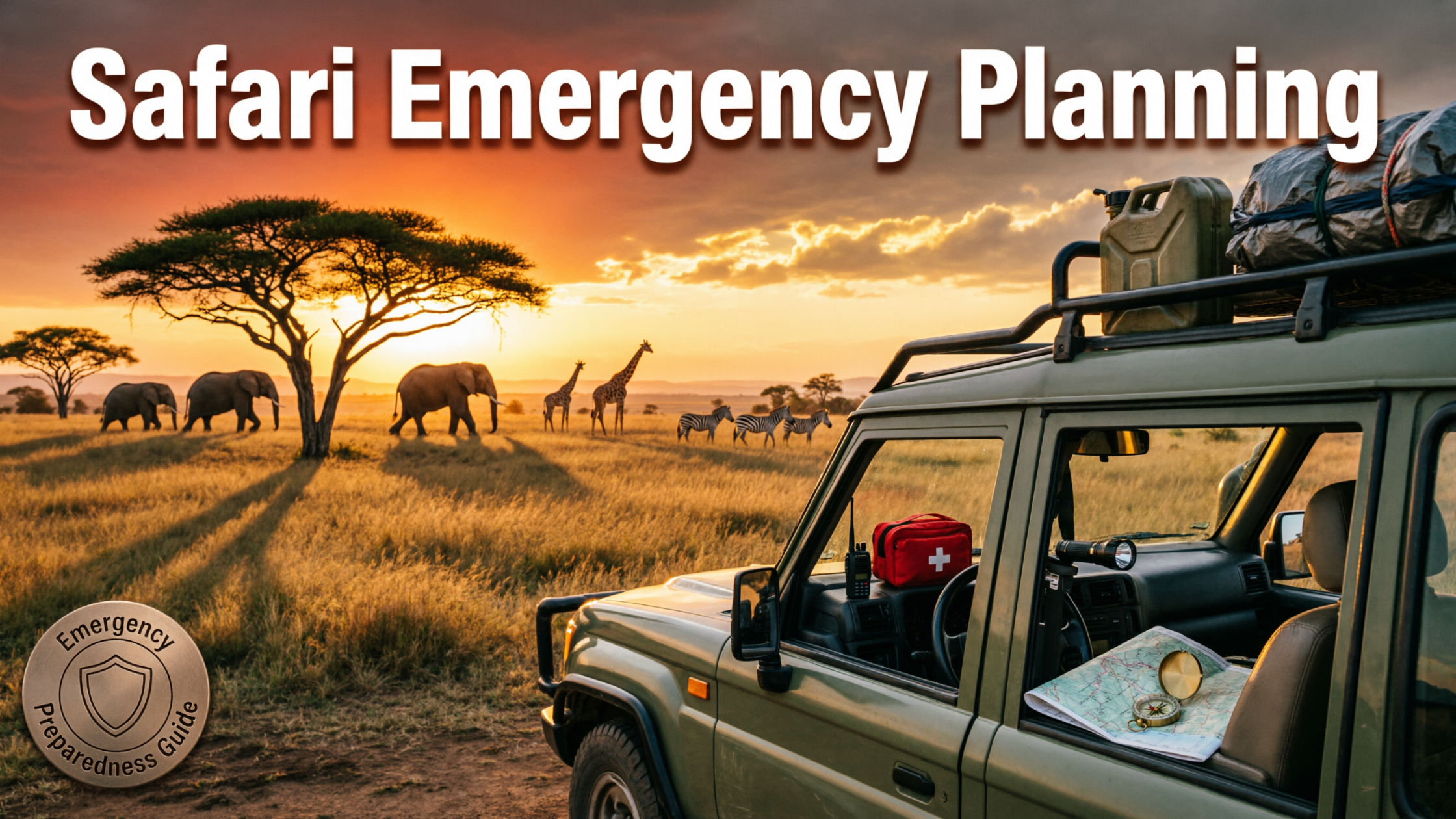
Let's be honest, when you dream of an African safari, you picture golden savannahs, majestic elephants, and breathtaking sunsets. You don't picture flat tires, insect bites, or medical emergencies. However, the truth is that even the most perfectly planned adventure exists within the real world. While serious incidents on safari are rare, what we call "low-probability events," the remote and wild nature of the bush means that preparation isn't just smart; it's essential.
This guide promises to be your comprehensive checklist for peace of mind. We're not here to scare you; we're here to empower you. By the time you finish reading, you'll know exactly what to pack, how to communicate, and what protocols are in place to handle the unexpected. With proper safari emergency planning, you can reduce risk, eliminate stress, and focus entirely on the magic of Uganda.
We'll walk you through every aspect of Uganda safari preparation, from medical readiness and vehicle safety to wildlife encounters and emergency communication. We'll also highlight Kwezi Adventures' partnership with Bar SOS and Rescue. Co., ensuring you know exactly what support is available. Finally, we'll answer the most common questions travelers have about staying safe in the bush so you arrive confident, prepared, and ready for the adventure of a lifetime.
Medical Readiness: Your Health, Your Responsibility
The foundation of safe travel is personal preparation. Before you even board the plane, there are crucial steps to take.
Carry Personal Prescriptions with Copies: Always pack more than enough of your regular medications to last your entire trip, plus a few extra days in case of travel delays. Keep them in your carry-on luggage, not checked bags. Additionally, carry copies of your prescriptions and a letter from your doctor explaining your medical needs. This can be invaluable if you need to visit a clinic or refill medication abroad.
Pack a Basic Medical Kit: A well-stocked personal kit is your first line of defense against minor ailments. Include essentials like
Rehydration salts (crucial for combating dehydration from travel or stomach bugs)
Insect bite treatment and anti-itch cream
Antiseptic wipes and bandages
Pain relievers and anti-diarrhea medication
Any personal first-aid items you routinely use
Share Allergies and Conditions Before Arrival: This is critical. Before your safari begins, inform your Kwezi Adventures guide and lodge staff about any serious allergies (especially to foods or insect stings) and pre-existing medical conditions. This allows them to be prepared and respond appropriately if an issue arises.
Medical Support on Safari: Help Is Never Far Away
While you'll be exploring remote wilderness, Uganda's safari infrastructure includes reliable medical support systems, and Kwezi Adventures has gone a step further to ensure your safety.
Major Parks Sit Within Reach of Regional Clinics: National parks like Murchison Falls, Queen Elizabeth, and Bwindi are not completely isolated. They are located within a reasonable distance of regional clinics and hospitals equipped to handle common medical issues. Your guide will know the nearest facilities.
Air Evacuation Operates from Entebbe and Key Airstrips: For serious emergencies, Uganda has a reputable air evacuation network. Chartered flights can reach major parks and airstrips to transport patients to top-tier medical facilities in Entebbe or Kampala.
Kwezi Adventures' Evacuation Partnership: To provide an extra layer of security, Kwezi Adventures is partnered with Bar SOS and Rescue.Co to help ease medical evacuations for our clients. This means that in the unlikely event of a serious medical emergency, you have access to verified, professional evacuation services coordinated by experts who know Uganda's terrain and medical infrastructure.
Guides Maintain Radio or Satellite Phone Access: In the bush, cell service is unreliable. That's why every professional Kwezi Adventures guide carries a radio or satellite phone. They are always in contact with lodge bases, park authorities, and our 24-hour operations team, ensuring help can be summoned immediately if needed.
Vehicle and Road Incidents: Prepared for the Journey
Safari roads vary from smooth highways to rugged, remote tracks. Delays and minor incidents are possible, but preparation minimizes their impact.
Safari Vehicles Carry Recovery Tools and Spare Tires: Our vehicles are not standard cars; they are purpose-built for African terrain. Each is equipped with recovery gear, multiple spare tires, and basic repair tools. Your guide is trained to handle common mechanical issues safely.
Delays Occur in Remote Areas. Plan Buffer Days: This is one of the most important pieces of Uganda safari preparation advice. Weather, road conditions, or wildlife crossings can cause unexpected delays. By building buffer days into your itinerary, you ensure that a flat tire or washed-out road doesn't cause you to miss your international flight or a once-in-a-lifetime gorilla trek.
Stay Inside the Vehicle Unless Instructed: This rule is non-negotiable. Vehicles are your safe zone in wild areas. Your guide will tell you exactly when and where it is safe to exit and when you must remain seated.
Wildlife Encounters: Respect the Wild
Safari is about observing animals in their natural habitat. Respecting their space ensures your safety and theirs.
Follow Guide Instructions at All Times: Your guide's knowledge is your greatest asset. They understand animal behavior, know safe distances, and can read the subtle signs that indicate an animal is stressed or agitated. Listen to them without question.
No Walking Outside Designated Areas: Never leave the vehicle or designated walking paths unless your guide explicitly says it's safe. In bush camps or lodges, stick to lit pathways at night and never walk alone after dark.
No Feeding or Calling Animals: Feeding wildlife alters their natural behavior and can make them dangerous. Similarly, attempting to call or attract animals can provoke unpredictable responses. Observe quietly and let the animals be wild.
Communication: Staying Connected When It Matters
Knowing how to communicate in an emergency provides immense peace of mind.
Local SIM Cards Work in Towns and Many Parks: For general communication, purchasing a local SIM card (MTN or Airtel) upon arrival is affordable and effective. Coverage is good in towns, along major roads, and even in many park areas.
Remote Zones Rely on Lodge Radios or Satellite Phones: In deep wilderness, think Kidepo Valley or deep forest lodges, cell service disappears. Here, lodges maintain radio systems and satellite phones for essential communication. Your guide and lodge staff can always reach help.
Share Emergency Contacts with Your Guide: At the start of your safari, provide your guide with your emergency contact details at home. Likewise, note down the lodge's emergency contact information and Kwezi Adventures' 24-hour operations number.
Documents and Contacts: Digital and Physical Backups
In the chaos of an emergency, having quick access to documents is a lifesaver.
Keep Digital Copies of Passport and Visa: Before you travel, scan your passport, visa, and travel insurance documents. Email them to yourself and store them securely in cloud storage (like Google Drive or Dropbox). This way, you can access them from any device if physical copies are lost or stolen.
Store Insurance and Evacuation Provider Details Offline: Take screenshots or save PDFs of your insurance policy number and the 24/7 emergency contact numbers for your provider and evacuation company. Store them in an offline folder on your phone that doesn't require internet access.
Note Embassy Contact Details Before Travel: Look up the contact information for your country's embassy or consulate in Uganda (all are based in Kampala). Save the address and phone number. You'll likely never need it, but knowing it's there is reassuring.
What Your Operator Should Provide: The Kwezi Adventures Standard
You should never have to wonder if your safari company is prepared for an emergency. Here's what Kwezi Adventures provides to every guest:
Clear Emergency Procedures Briefing on Day One: Upon arrival, your guide will conduct a thorough safety briefing. This covers vehicle protocols, wildlife rules, communication methods, and what to do in various scenarios. No detail is overlooked.
Verified Evacuation Partnership: We work exclusively with verified air evacuation and medical support partners, including Bar SOS and Rescue.Co. . We don't just hand you a phone number; we have established relationships to ensure rapid response if needed.
24-Hour Operations Contact: Emergencies don't keep office hours. Kwezi Adventures maintains a 24-hour operations center. You, your family at home, or your guide can reach a real person at any time, day or night.
People Also Ask: Your Safari Safety Questions Answered
Q: Is it safe to go on safari in Uganda?
A: Absolutely. Uganda is a welcoming, stable, and professionally managed safari destination. With thousands of travelers visiting safely each year, the key is choosing a reputable operator like Kwezi Adventures that prioritizes safety protocols and employs experienced guides.
Q: Do I really need travel insurance for a safari?
A: Yes, without question. Comprehensive travel insurance that specifically covers medical evacuation is essential. While the likelihood of needing it is low, the cost of an emergency evacuation without insurance can be financially devastating. It's not worth the risk.
Q: What happens if there's a medical emergency in a remote park?
A: Your guide will immediately contact the lodge or park headquarters via radio or satellite phone. They will coordinate with regional clinics and, if necessary, arrange an air evacuation from the nearest airstrip. Having insurance with evacuation coverage and knowing Kwezi Adventures is partnered with Bar SOS and Rescue.Co ensures this process happens smoothly.
Q: Are safari vehicles safe?
A: Yes. Reputable operators use modified 4x4 vehicles designed for African terrain. They are equipped with seatbelts, recovery gear, and spare tires. Always wear your seatbelt while the vehicle is moving.
Q: What should I do if I encounter wildlife while walking?
A: This is why you never walk without a guide. If you encounter wildlife unexpectedly, stay calm, stand still, and follow your guide's whispered instructions. Do not run, scream, or make sudden movements.
Q: Can I use my cell phone on safari?
A: In towns and many park areas, yes, especially with a local SIM card. However, in remote zones, service is unavailable. We recommend informing family back home that you may be out of contact for periods and reassuring them that you have emergency communication tools available.
Q: What if I have a serious allergy?
A: Inform Kwezi Adventures at the time of booking and remind your guide upon arrival. Carry your own epinephrine (EpiPen) if prescribed, and know where it is at all times. Lodge kitchens can also accommodate allergies if notified in advance.
Q: Are children safe on safari?
A: Safaris can be wonderful for children, but they require extra vigilance. Children must be supervised constantly and educated about wildlife safety rules before arrival. Private vehicles and family-friendly lodges are recommended.
Q: What documents should I carry physically versus digitally?
A: Carry physical copies of your passport, visa (if not an e-visa), and insurance certificate. Keep digital backups of everything in the cloud. Leave copies of your itinerary and passport with a trusted contact at home.
Conclusion: Prepare for Peace of Mind
The goal of safari emergency planning isn't to dwell on what could go wrong; it's to empower you to relax, knowing you're prepared for anything. When you've packed your medical kit, shared your allergies, and confirmed your insurance coverage, you free your mind to be fully present. You can watch that lioness stalk through the grass without a flicker of anxiety. You can listen to the hippos grumble at dusk without worrying about how to reach home.
At Kwezi Adventures, your safety is our silent partner in every safari we design. Our guides are trained, our vehicles are equipped, and our protocols are proven. With trusted partners like Bar SOS and Rescue.Co standing behind us, we handle the logistics so you can handle the wonder.
Ready to explore Uganda with confidence? Contact Kwezi Adventures today to book your safari. We'll provide a detailed pre-departure guide, answer every question, and ensure you arrive not just excited, but truly prepared.
