
10 Luganda Phrases Every Traveler to Uganda Should Know
You've booked your dream safari to the Pearl of Africa. You can already picture yourself tracking gorillas in Bwindi, watching elephants along the Kazinga Channel, and standing beneath the thunderous Murchison Falls. Yet as your departure date approaches, a small question nags at you: how will you truly connect with the people who call this extraordinary country home?
Learning just a few Luganda phrases for tourists will transform your journey from a simple safari into a rich tapestry of human connection. At Kwezi Adventures, we've witnessed countless times how a simple greeting in the local language opens doors, sparks smiles, and creates moments that become the heart of your travel stories. We promise to equip you with the essential words that will unlock genuine warmth wherever your Ugandan adventures take you.
We'll introduce you to ten carefully selected phrases that cover greetings, politeness, everyday situations, and cultural insights. You'll learn not just what to say, but when and why, because understanding context is as important as vocabulary. We'll also explore how these phrases connect you to deeper Ugandan cultural experiences, from traditional village visits in Uganda to Buganda kingdom tours, and answer all your questions about language, culture, and meaningful travel.
Why Learn Luganda Before Your Safari?
Uganda is home to over 56 distinct tribes and languages, yet Luganda is the language of the Buganda kingdom and serves as the most widely spoken indigenous language, particularly in the central region, including Kampala. While English is the official language and widely understood, making an effort to speak Luganda demonstrates respect and a genuine interest in local culture.
The benefits extend far beyond politeness. Speaking even basic Luganda phrases for tourists:
Builds instant rapport with guides, vendors, and community members
Transforms market interactions from transactions to conversations
Creates warmer welcomes in rural areas and traditional villages
Demonstrates cultural respect that Ugandans deeply appreciate
Opens doors to authentic experiences that casual visitors miss
As one travel guide notes, "Learning Luganda phrases for a traveler to Uganda is one of the simplest yet most powerful ways to elevate your journey".
The 10 Essential Luganda Phrases
1. Oli Otya? (Oh-lee oh-tee-ah) — How are you?
This all-purpose greeting is your key to every conversation in Uganda. It can be shortened to simply "Chi kati" in casual settings, but the full phrase is universally welcomed.
The appropriate response is "Gyendi" (Jen-dee) — "I'm okay" or "I'm fine".
When to use it: Greet anyone you meet, your guide, lodge staff, market vendors, or villagers. Always greet before asking a question; it's considered rude to launch directly into business.
2. Wasuze Otya Nno? (Wah-soo-zeh oh-tee-ah nno) — Good morning / How did you sleep?
This morning greeting literally asks how you spent the night. The response is "Bulungi" (Boo-loon-gee) "Fine" or "Well".
Cultural insight: Morning greetings are important in Ugandan culture. Taking a moment to ask about someone's night shows genuine care and respect.
3. Ssebo / Nnyabo (Seh-boh / Ny-ah-boh) — Sir / Madam
These respectful titles are essential for polite conversation. Use Ssebo when addressing a man and Nnyabo for a woman.
Examples: "Thank you, ssebo" or "How are you, nnyabo?" You'll hear these constantly throughout your journey. They're the foundation of respectful communication.
4. Weebale (Weh-bah-leh) — Thank you
This simple word carries enormous weight. For extra emphasis, add "nnyo" (nyoh) — "very much" — to say "Weebale nnyo".
The typical response is "Kale nnyabo/ssebo" — "Alright, madam/sir" or "You're welcome".
When to use it: After every interaction, ordering food, receiving directions, completing a purchase, or finishing a tour. Gratitude is deeply valued in Ugandan culture.
5. Mpa... (M-pah...) — Give me...
This phrase is invaluable for ordering food, requesting items, or asking for assistance. Pair it with nouns like "amazzi" (water) or "emmere" (food).
Polite version: Add "mwattu" (please) for extra courtesy. "Mpa amazzi mwattu" — "Please give me water".
6. Kigula Ssente Mmeka? (Kee-goo-lah sen-teh meh-kah?) — How much does it cost?
Essential for markets, craft villages, and any transaction. Vendors appreciate the effort, and you'll find bargaining becomes friendlier when conducted in Luganda.
Follow-up phrases:
"Kya bbeeyi nnyo" — "It's too expensive."
"Nkendereza ku bbeeyi" — "Reduce the price."
"Nina ssente ntono" — "I have little money"
7. Tugende (Too-gen-deh) — Let's go
Your guide will likely use this phrase each morning as your safari adventure begins. It captures the excitement and anticipation of discoveries.
Cultural connection: You'll soon associate "tugende" with the thrill of setting out to find lions, elephants, or gorillas, the giddy anticipation of unknown wonders ahead.
8. Mukwano (Moo-kwah-noh) — My love / My friend
This term of endearment is used widely between friends, within families, and even in pop music. It conveys warmth and affection.
When to use it: With people you've come to know during your stay, or in casual, friendly contexts. It's not appropriate for first meetings, but it becomes natural as connections deepen.
9. Nnyinza Okubuuza? (N-yin-zah oh-koo-boo-zah?) — May I ask?
Starting with this polite question before seeking directions or information shows respect and patience. Ugandans appreciate the courtesy and will respond warmly.
Follow-up: "Ekkubo liri ludda wa?" — "Which direction is the road?" or "Kampala eriwa?" — "Which way to Kampala?"
10. Webale Nnyo Okunyaniriza (Weh-bah-leh nyoh ok-nyah-nee-ree-zah) — Thank you for welcoming me
This beautiful phrase is perfect for concluding your stay, whether leaving a lodge, finishing a village visit, or saying goodbye to new friends.
Why it matters: Expressing gratitude for hospitality resonates deeply in a culture where welcoming strangers is a cherished value.
Pronunciation Guide: Luganda's Unique Sounds
Luganda pronunciation differs from English in several key ways :
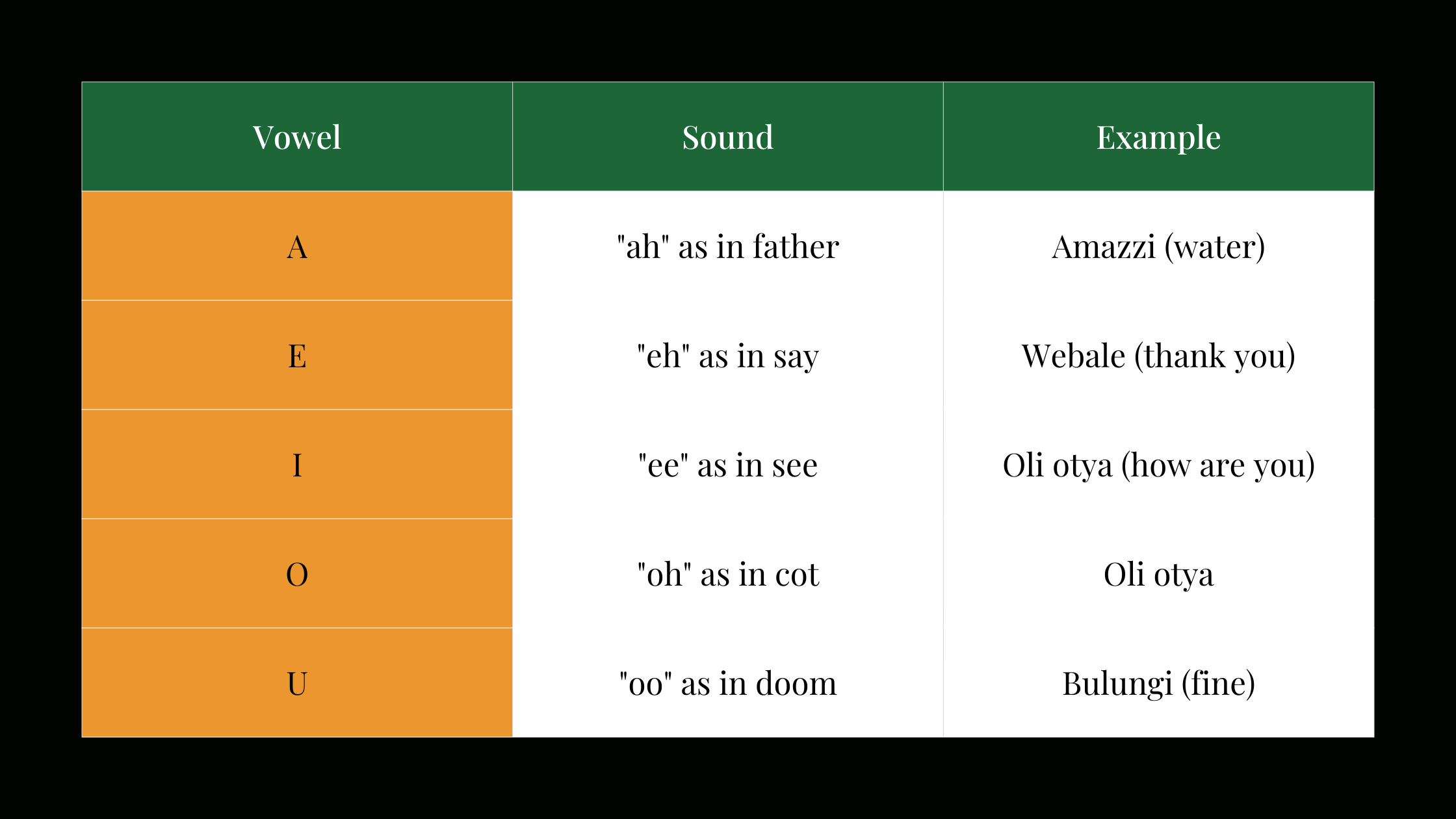
Special consonants:
"ny" is pronounced like the "ny" in lasagna
"ŋ" (rare) is pronounced like the "ng" in singing
"Ki" is pronounced "chi" — so "Kampala" sounds like "Champala."
Connecting Language to Cultural Experiences
Learning Luganda phrases for tourists becomes truly meaningful when you use them during authentic Ugandan cultural experiences. Here's how your new language skills enhance specific adventures:
Traditional Village Visit in Uganda
Imagine arriving at a rural village, stepping out of your vehicle, and greeting your hosts with a warm "Muli mutya!" (How are you all?) The smiles that follow are genuine and immediate. During your traditional village visit in Uganda, phrases like "Weebale nnyo" (thank you very much) and "Mpa amazzi" (give me water) transform you from observer to participant.
Villages like Ewaffe Cultural Village in Mukono district offer immersive experiences where you'll learn to make banana juice, prepare matooke, and grind millet, all opportunities to practice your growing vocabulary. The guides explain that girls traditionally fetched water from wells like "Nalongo" (meaning mother of twins), where young men would court them by carrying water or offering mangoes. Understanding these stories in context makes your phrases come alive.
Buganda Kingdom Tours
The Buganda kingdom, Uganda's largest traditional monarchy, offers profound cultural immersion through sites like the Kasubi Tombs (a UNESCO World Heritage Site), the Kabaka's Palace (Lubiri), and the Bulange Parliament building.
On a Buganda kingdom tour, using "Ssebo" and "Nnyabo" when addressing guides and elders shows proper respect for royal protocol. At the Kasubi Tombs, where four kings are buried in an architectural masterpiece of wood, reed, and grass, your guide will explain the spiritual significance while you practice responses like "Nnyinza okubuuza?" (May I ask?) .
The Royal Mile (Kabaka Anjagala Road) connecting the palace to Bulange is lined with 52 trees, each representing a Buganda clan. Walking this path while greeting locals with "Oli otya" connects you to centuries of tradition.
Ndere Cultural Centre Performances
At Kampala's Ndere Cultural Centre, you'll witness performances from Uganda's 56+ ethnic groups, the energetic Bakisimba of Buganda, spirited Runyege of the Banyoro, and warrior dances of the Karimojong. After the show, approach the dancers with "Mukwano, weebale nnyo okuzina!" (My friend, thank you very much for dancing!) The connection created by speaking their language elevates the experience from entertainment to genuine cultural exchange.
Batwa Cultural Experience
In southwestern Uganda, near Bwindi Impenetrable Forest, the Batwa people known as the "Keepers of the Forest," offer profound insights into their ancestral hunter-gatherer lifestyle. Walking with Batwa guides through the forest they once called home, you'll learn how they made fire, used medicinal plants, and hunted with bows and arrows. Greeting them in Luganda (or learning a few words of their own language) honors their dignity and shows respect for their preserved traditions.
Kampala's Vibrant Markets
Nakasero Market and Owino Market explode with color, sound, and activity. Here, your Luganda phrases for tourists become essential tools. Asking "Kigula ssente mmeka?" (How much does it cost?) and negotiating with "Nkendereza ku bbeeyi" (Reduce the price) transforms market visits from tourist spectacles into genuine interactions. Vendors appreciate the effort, and you'll likely receive better prices and warmer service.
Homestays and Rural Encounters
For travelers seeking authentic immersion, homestays in areas like Fort Portal, Kabale, or Mbarara offer opportunities to participate in daily life, cooking, farming, or visiting local schools. Here, phrases like "Njagala Uganda" (I love Uganda) and "Tulina essanyu" (We are happy) create bonds that transcend language barriers.
Beyond Luganda: Uganda's Cultural Diversity
While Luganda serves as your entry point, remember that Uganda's cultural richness extends far beyond the Buganda kingdom. The Karamojong people in northeastern Uganda, near Kidepo Valley National Park, maintain pastoral traditions and warrior culture. Visiting villages like Nakapelimoru, East Africa's largest cultural village, offers glimpses into homesteads called "manyattas," traditional dances, and a way of life centered on cattle.
The Ankole people in southwestern Uganda revere their magnificent long-horned cattle, symbols of beauty and wealth. The Bagisu people near Mount Elgon celebrate the Imbalu circumcision ceremony, marking boys' transition to manhood through elaborate rituals.
Each region and tribe has its own language and customs. Your efforts to learn even basic Luganda demonstrate openness that will be appreciated everywhere, even where other languages dominate.
People Also Ask About Language and Culture in Uganda
Q: Do I really need to learn Luganda phrases for my Uganda safari?
A: While English is widely spoken, especially in tourist areas, learning even a few Luganda phrases for tourists dramatically enriches your experience. Ugandans are famously warm and hospitable, and hearing a visitor make the effort to greet them in their language creates instant connections. You don't need fluency; just a handful of phrases opens doors to authentic interactions.
Q: What are the most important Luganda phrases to learn first?
A: Start with greetings: "Oli otya" (how are you), "Wasuze otya nno" (good morning), and the polite responses "Gyendi" (I'm fine) and "Bulungi" (well). Add "Weebale" (thank you), "Ssebo/Nnyabo" (sir/madam), and "Mpa..." (give me...). These eight phrases will serve you well in 90% of everyday situations.
Q: Is Luganda spoken everywhere in Uganda?
A: Luganda is most prevalent in the central region, including Kampala and surrounding areas. Uganda has over 56 tribes with their own languages in the north, languages like Acholi and Langi dominate; in the east, Lusoga and Lugisu; in the west, Runyankole and Rutooro. However, Luganda serves as a widely understood lingua franca, and English connects you everywhere, especially with guides and tourism professionals.
Q: What cultural experiences in Uganda pair well with learning Luganda?
A: Traditional village visits in Uganda, like Ewaffe Cultural Village, offer perfect practice opportunities where you'll learn traditional cooking, banana juice preparation, and craft-making while using your phrases. Buganda kingdom tours of the Kasubi Tombs, Kabaka's Palace, and Bulange provide a rich historical context. The Ndere Cultural Centre showcases music and dance from across Uganda. For deeper immersion, consider homestays in rural communities.
Q: Are there any cultural taboos or etiquette rules I should know?
A: Yes! Always use your right hand or both hands when giving or receiving items; the left hand is considered unclean. Greet people before asking questions or conducting business. Use respectful titles like "Ssebo" and "Nnyabo" even with younger people. When visiting royal sites like the Kabaka's Palace or Kasubi Tombs, dress modestly and follow your guide's instructions about photography. Smile, be patient, and embrace the warm, unhurried pace of Ugandan hospitality.
Q: Can I visit a traditional village or kingdom site on my safari?
A: Absolutely. Kwezi Adventures specializes in incorporating Ugandan cultural experiences into custom itineraries. You can combine wildlife viewing in Queen Elizabeth National Park with a visit to the Buganda kingdom sites in Kampala. Add a traditional village visit in Uganda, like Ewaffe, for hands-on cultural immersion. Or venture north to Kidepo Valley National Park and include the Nakapelimoru cultural village for an authentic Karimojong experience. We tailor every journey to your interests.
Q: How do I say "I love Uganda" in Luganda?
A:"Njagala Uganda" (N-jah-gah-lah Uganda). This phrase, along with "Webale nnyo okunyaniriza" (thank you for welcoming me), makes a beautiful farewell to the friends and communities who have shared their culture with you.
Your Journey into Uganda's Heart Begins with Words
Language is the gateway to understanding. When you arrive in Uganda armed with a few carefully chosen Luganda phrases for tourists, you signal something important: you're not just passing through. You're here to connect, to learn, to honor the people whose homeland you're privileged to explore.
From the moment you greet your guide with "Oli otya, ssebo?" to your final "Weebale nnyo" to lodge staff who've become friends, each phrase builds bridges. In markets, your attempts at bargaining in Luganda will be met with delighted laughter and better prices. In villages, your "Wasuze otya nno" to elders will earn nods of approval. At the Kasubi Tombs, your respectful "Nnyinza okubuuza?" shows proper reverence for sacred ground.
At Kwezi Adventures, we design journeys that go beyond wildlife; we connect you to Uganda's soul. Whether you're tracking gorillas in Bwindi, exploring the Buganda kingdom tours in Kampala, or spending time in a traditional village visit in Uganda, we ensure every encounter is meaningful, respectful, and authentic.
Ready to experience Uganda's warmth firsthand?
Contact Kwezi Adventures today. Let's craft a personalized safari that includes cultural immersion, wildlife wonders, and opportunities to practice your new language skills. The Pearl of Africa awaits, and now you have the words to greet her properly.
